
Home Secretary Shabana Mahmood Backs Ban on Police Marching in Pride Events in Uniform, Promises New Impartiality Standard
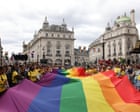
Home Secretary Shabana Mahmood has backed a ban on police officers marching in Pride events in uniform, saying there had been 'a few examples' of two-tier policing.
Mahmood said there was no systematic or routine two-tier policing, but that 'a new impartiality standard' was necessary to reverse the fall in the public's faith in law enforcement.
As an example, she cited police officers taking part in a Pride event in Northumbria last year, which a court found had breached a duty of impartiality.
Mahmood said: 'The judgment found that they got the balance wrong … and that marching … was not acceptable and not impartial.' She added: 'Today at those marches, you will often have campaigners, on gender identity … and those issues are now contested … the marching alongside looks like a political act.'
Nik Adams, the deputy commissioner of City of London police who is also the LGBTQ+ lead for police chiefs, said: 'Using the language about LGBTQ issues being contested makes LGBTQ people in policing and wider society feel less safe, makes their lives feel less valued. LGBTQ is a protected characteristic in law. The rights are hard won.'
Wiltshire police, meanwhile, faces a court challenge next week for setting up a stall at a Pride event in Swindon, after claims it had exposed a lack of neutrality amid disputes over transgender rights.
Asked if she was accepting there was two-tier policing, Mahmood said: 'There's no systematic, systemic, routine two-tier policing in this country. I reject that charge.' She called what Reform and others would have the public believe — that officers practise two-tier policing every day — 'utter, complete, ridiculous rubbish.'
But she added: 'There have been examples of differential treatment, and those have had an impact on confidence in policing, and they've allowed that false perception of two-tier policing to take hold. I accept that there are few examples, and I know that actually the best way to deal with that is to make sure that we have a new impartiality standard.'
Mahmood also said police had to improve its record on recruiting more black officers, noting there were barely any more than there had been 30 years ago.
The home secretary criticised the old police anti-racism commitment, saying the pursuit of equality could lead instead to differential treatment in 'misguided attempts at course correction.' She said it was 'patently absurd' to tell officers that fair policing 'does not mean treating everyone the same,' as was the document's guidance that officers should not be 'colour blind.'
She said officers should engage with the community to discuss local issues, but not with activist groups and campaigners who are pushing their own political agenda.
One police leader told the Guardian the rhetoric was concerning as forces tried to navigate the culture wars buffeting Britain while serving all communities. Another source said: 'It's an easy slogan, but dig into the details and it becomes more complicated.'
Gavin Stephens, the chair of the National Police Chiefs Council, said: 'Public trust depends on the police being seen to act fairly and impartially. Barriers to justice remain, discrimination still exists within our own ranks, and we rely on the trust and confidence of all communities to do our job. A diverse service is a stronger service.'


