Jamaat-Shibir Ban Was Imposed to Crush the Uprising, Prosecutor Tamim Tells Tribunal
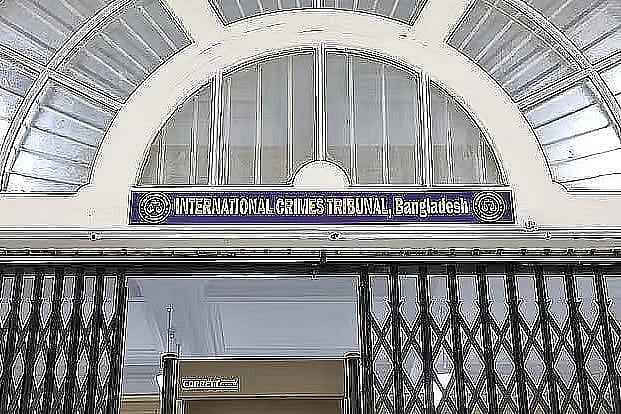
Movements have taken place in Gopalganj and Gazipur after the International Crimes Tribunal handed down sentences, but no one has been shot at there, prosecutor Gazi Monawar Hossain Tamim told a hearing at Tribunal-2.
The hearing concerned the framing of formal charges in a crimes against humanity case against Md Jahangir Alam, a former secretary of the Public Security Division of the Ministry of Home Affairs, and Dhananjay Kumar Das, a former joint secretary of the same division. In the case, which concerns offences alleged to have been committed during the July mass uprising, both the prosecution and the defence presented their submissions before Tribunal-2.
Seeking the framing of formal charges against the two accused, prosecutor Gazi Monawar said the claim that Jahangir Alam did everything in accordance with the law is not correct. His allegation is that it was Jahangir Alam who issued the gazette notification banning Jamaat-e-Islami and Islami Chhatra Shibir during the July mass uprising.
According to the prosecution, the notification banning Jamaat-e-Islami and Islami Chhatra Shibir, issued on August 1, 2024, bore the signature of Jahangir Alam as the then secretary of the Public Security Division of the Ministry of Home Affairs.
Prosecutor Tamim further told the hearing that the purpose of imposing a curfew during the July mass uprising was to kill people. His argument was that killing students would have created pressure, but killing protesters after labelling them as Jamaat-Shibir would not have created as much pressure. The prosecution's allegation is that Jamaat-Shibir was banned precisely in order to suppress the movement, so that protesters could be killed and passed off as Jamaat-Shibir activists.
In reply, Jahangir Alam's lawyer said the decision to ban Jamaat-e-Islami and Chhatra Shibir was a political decision and was not Jahangir Alam's own decision. By issuing the notification he only performed his official duty, and therefore he cannot be held responsible for it, the defence argued.
The defence lawyer further said his client had no authority to conduct operations during the mass uprising and that he only carried out his official duties. According to the lawyer, there is no evidence that Jahangir Alam gave any instruction for repression during the mass uprising. The lawyer said that, being innocent, Jahangir Alam continued to serve as home secretary even after the mass uprising and did not flee. On these grounds, the lawyer sought his client's discharge from the case.
Of the accused in the case, Jahangir Alam is under arrest and was produced before the tribunal on the day. The other accused, Dhananjay Kumar Das, remains absconding.