Seven skills university students should build during their degree
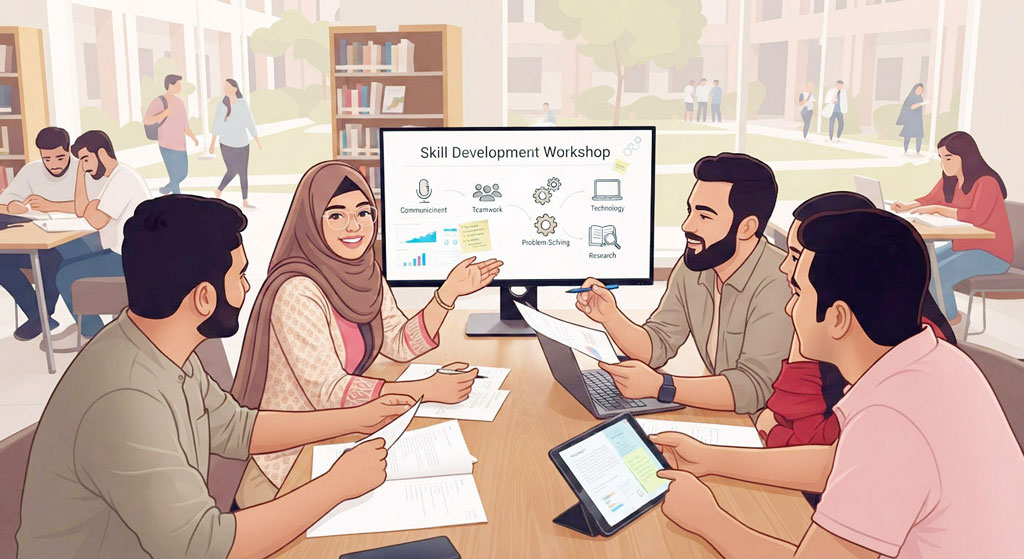
Admission to university opens a new door to learning. Alongside textbook knowledge, students need to understand themselves, work with other people and prepare for the future. After entering working life, it becomes clear that good results alone are not enough and that a range of skills is also needed.
The four years at university are not only a time to earn a degree but also an opportunity to build one's own capabilities. Practising seven skills during this period can have a positive effect on studies, personal life and career, the report says.
The first skill is communication. Asking questions in class and taking part in group discussions and presentations can improve communication. Listening attentively to others and respecting differing views matter alongside speaking well, and students are advised to build the habit of speaking and writing clearly in both Bangla and English.
The second skill is critical thinking. Students are advised not to accept information as true on hearing it, but to look for evidence and to identify the root cause of a problem before choosing the most suitable solution. For assignments, research and decisions, they should build the habit of asking 'why' and 'how', and treat mistakes as opportunities to learn rather than failures.
The third skill is using technology. Alongside departmental software, students should understand documents, spreadsheets, online collaboration platforms, information searching and digital security. Even when using AI tools, answers must be verified; technology should be used as an aid to thinking, not a substitute for it.
The fourth skill is leadership and teamwork. Leadership can be practised by joining university clubs, organisations, projects and competitions. Students should build the habits of dividing work, handling disagreements and understanding others' opinions. Leadership does not only mean holding a post; it also involves taking initiative, responsibility and a cooperative attitude.
The fifth skill is time management. To balance classes, exams, assignments and personal life, students are advised to make task lists and break large tasks into small steps to be completed in order of priority. Avoiding unnecessary phone use and keeping time for rest and adequate sleep are also advised.
The sixth skill is reading and writing. Clear and fluent language in emails, reports and assignments requires a regular habit of reading and writing. Information should be checked before use, gathered from reliable books, research papers and publications of recognised institutions, with proper sources cited.
The seventh skill is adaptability and lifelong learning. People's ideas about time, interests, goals and professions can change, so students should build a mindset of learning new subjects and adapting to changed circumstances. Knowledge and skills can be increased through courses, books, workshops and small projects.
The seven skills do not need to be acquired all at once. Students can start by focusing on one or two — taking part in a presentation, writing a short piece each week, or taking responsibility in a project. A degree shows educational qualification, while the skills acquired show how far that knowledge can be applied in real life.