Trump Weighs Renewed Strike on Iran as Netanyahu Presses for War
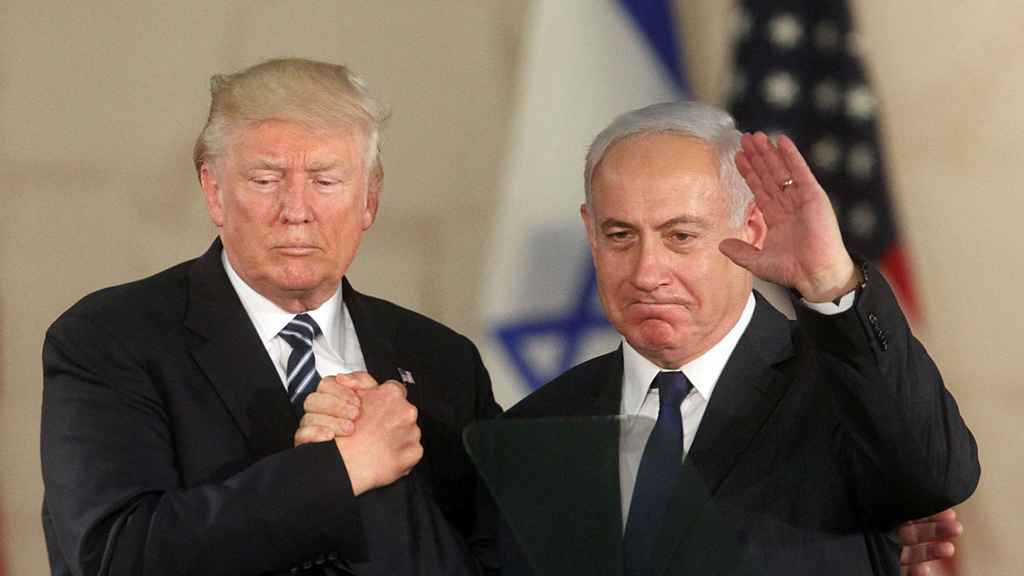
Israeli Prime Minister Benjamin Netanyahu is pressing US President Donald Trump to launch a fresh military campaign against Iran, raising the allegation that Iran is developing chemical weapons. Amid that lobbying, Trump is considering another large joint strike on Iran together with Israel, the US outlet Axios reported, citing two sources familiar with the matter.
Last week Trump had described the chance of another major strike on Iran as 'very low'. But his position is not yet final. After he returns from his Asia tour late this week, the discussion and decision-making on the question may intensify.
Israel would also take part in the possible US military campaign. Among the targets would be Pickaxe Mountain, one of Iran's suspected nuclear sites. Bridges, power plants and Iran's military and civilian leaders could also be targeted.
On Wednesday, however, Trump indicated that a strike on Iran is not imminent. He told Fox News: 'We will see. A new year is coming. We will see what happens after January 1. They have behaved very badly. They are very bad people.'
Trump faces pressure from different sides over whether to enter a full-scale war with Iran again. Netanyahu has taken the position that war against Iran should resume as soon as possible. Gulf leaders, on the other hand, fear that Iran could retaliate devastatingly and that their countries' oil and gas installations could be targeted. They are therefore urging Trump to hold back from military action and instead increase economic pressure on Iran.
Trump's national security team is also divided. Several senior officials, such as Defense Secretary Pete Hegseth, favour a major military step. But Trump and senior administration officials have said publicly and in private discussions that Washington is giving weight to the Gulf countries' advice. Even so, Trump keeps bringing the option of striking Iran back into consideration.
A US official said: 'As President Trump and Secretary of State Marco Rubio have said, our economic pressure campaign has devastated Iran so much that the President has no need to launch a major military operation. But to make sure Iran can never build a nuclear weapon, President Trump has all options available.'
The White House has meanwhile asked the Pentagon and intelligence specialists for assessments of how Iran might respond to different possible strike plans. Two sources familiar with the matter said Washington wants to know which of the strike options prepared by the US military would make it possible to avoid a devastating Iranian retaliation against Gulf oil and gas installations.
Israel is putting Iran's alleged chemical weapons activity at the front of its argument for fresh military action. To that end, Mossad director Roman Gofman visited the United States last week. In Washington and Miami he met CIA director John Ratcliffe and White House special envoy Steve Witkoff.
An Israeli source said Gofman, a very close associate of Prime Minister Netanyahu, was sent to argue for restarting the war against Iran. US and Israeli sources said that in the meetings Gofman raised Israel's concerns about Iran's chemical weapons activity. Israel claims it has intelligence suggesting Iran has expanded research and development on chemical weapons and has also tested such weapons.
A US official said Trump has been briefed on the new intelligence. Trump later told Fox News: 'There are indications that Iran is thinking about gas and biological weapons. Because we have blocked the path of their nuclear programme. Building a nuclear weapon is very hard. So they are now turning to gas and biological weapons. That is not good at all.'
But within the US and Israeli governments themselves there is disagreement over how imminent Iran's chemical weapons threat is. Officials of both countries say that although Iran has expanded its chemical weapons research and activity, it currently has no capability to carry out such an attack. A source familiar with the matter said: 'Gofman's argument was that if the US and Israel do not act now, they will have to take military action later, but by then the situation will be harder.' Several senior US officials, however, expressed deep scepticism about Gofman's claim; one of them felt a particular motive was behind his remarks.
US Central Command (CENTCOM) chief Admiral Brad Cooper visited Israel on Wednesday. There he met Israeli Defense Forces (IDF) Chief of Staff General Eyal Zamir and Mossad chief Roman Gofman. The IDF said the meeting discussed the Iran situation and 'strengthening coordination and joint readiness to deal with various possible scenarios'. Cooper then visited Saudi Arabia, where he met Saudi Crown Prince Mohammed bin Salman and the country's military officials to discuss Iran and the war situation in Yemen.