Judges begin reading ICJ verdict in Rohingya genocide case, as Cox's Bazar camps hope for justice and a way home
Judges have begun reading the International Court of Justice (ICJ) verdict in the ethnic cleansing case against Myanmar. Rohingya sheltering in Bangladesh hope Thursday's verdict will bring them justice and open a path back to their own country.
ICJ judges have conducted the trial for seven years in the case brought by The Gambia alleging a violation of the United Nations' 1948 Genocide Convention.
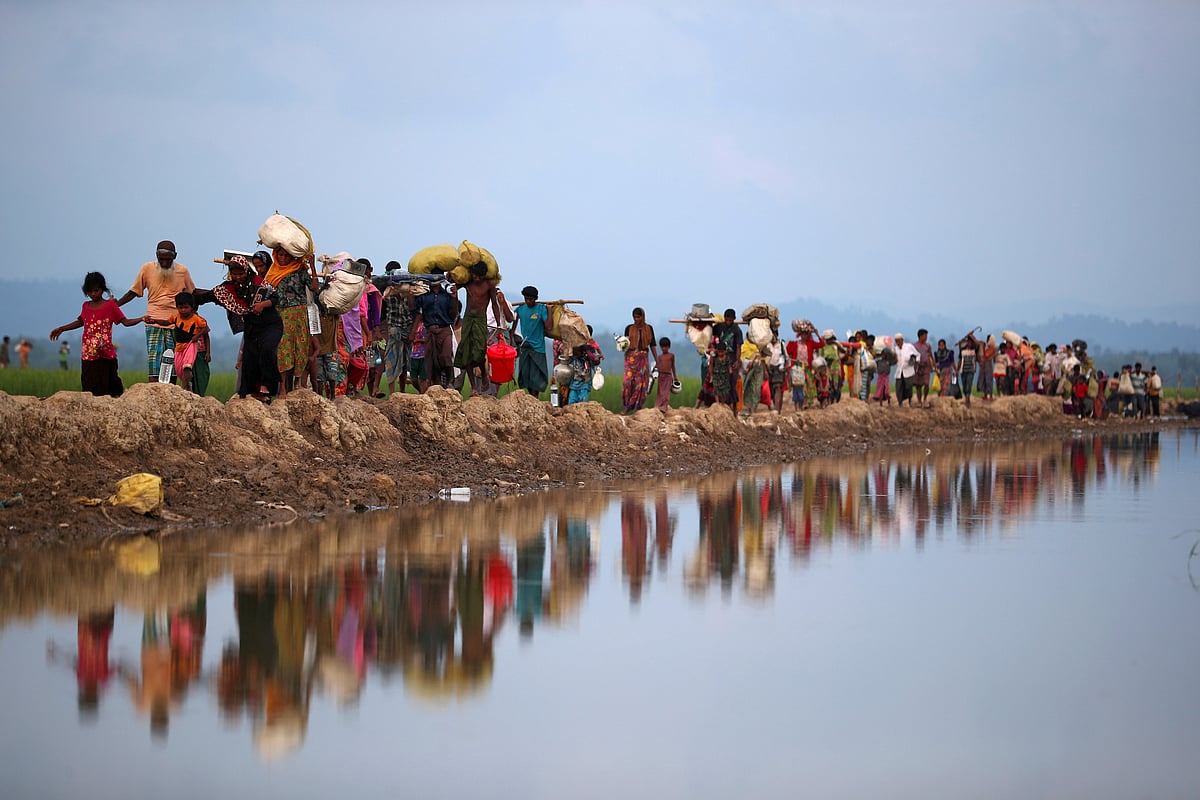
In 2017, hundreds of thousands of Rohingya fled to Bangladesh during a brutal crackdown by Myanmar's military. Experts say the historic verdict in the case alleging ethnic cleansing of the Rohingya in that operation could widen the path to recognition for the Rohingya and create a route for their repatriation.
More than one million Rohingya refugees live in camps of bamboo and tarpaulin in Cox's Bazar. While the verdict has raised new hope, it has also brought back horrific memories for many of them.
A 23-year-old woman was raped during the Myanmar military operation. She now lives with her family in a Rohingya camp. She told AFP: 'I want justice.'
Speaking on condition of anonymity, the woman said: 'Those who raped women should be severely punished. The ICJ should say something separately on this.'
Recalling the abuse, the woman said she was first shot in the leg. She was then raped by four or five soldiers in Myanmar uniforms. She said: 'After the abuse I was bleeding heavily. Everyone was running however they could to save their lives. I fell behind. I was only 14 years old then.'
Rohingya refugee Mohammad Osman hopes that after the verdict he will be able to return to Myanmar and complete the burial of his murdered mother, father and younger brother. Osman, 20, told AFP: 'The soldiers shot my father dead.' His mother was abused by soldiers. Their house was then set on fire.
Osman said: 'I started running. I kept looking back, hoping no one in my family had died. Maybe they were coming right behind me.' Later, surviving villagers were forced to bury and burn the dead in mass graves. Osman also demanded that the Arakan Army be held accountable. The armed group has controlled large parts of Rakhine State since 2024. Thousands of Rohingya were displaced by violence it carried out that year as well.
Rohingya leaders say they have been disappointed for years, so they are not expecting much this time either. Syed Ullah, former president of the United Council of Rohingya, said past international initiatives brought little real change. But he believes this ICJ verdict will bring some good results. In his view, it will increase international pressure on Myanmar and could open the path for them to return home.
Arun Jagan, head of humanitarian operations at the France-based international medical charity Doctors Without Borders (MSF), said: 'The ICJ verdict is important to ensure accountability for the atrocities the Rohingya have described for years.' He added: 'In 2017 we saw planned violence against the Rohingya. Even now, in Myanmar and across the region, they are being deprived of their basic rights.'
Bangladesh's Refugee Relief and Repatriation Commissioner Mohammad Mizanur Rahman said Dhaka hopes the ICJ verdict will go in The Gambia's favour. He hopes the verdict will strengthen the Rohingya people's demand for recognition, because Myanmar does not accept the Rohingya as part of the country's recognised ethnic groups and often calls them Bangladeshi immigrants instead. Mizanur believes the verdict will put Myanmar's rulers under pressure to sit in talks with the Rohingya. He said: 'We hope the world will take more steps for the Rohingya, so that they can return to their own country.'
The International Court of Justice has no mechanism of its own to enforce its verdict. But if the genocide allegation against Myanmar is proven, international pressure on the country's leader Min Aung Hlaing will grow further. Min Aung Hlaing led the Myanmar military operation in 2017.
Myanmar's junta has repeatedly denied allegations of ethnic cleansing against the Rohingya. It claims the operation was carried out to suppress insurgent military activity after 12 members of the security forces were killed. The country's military has also denied allegations of rape and other sexual violence during the operation.