ICJ finds Myanmar guilty of Rohingya genocide, orders reparations
The International Court of Justice (ICJ) has held Myanmar responsible for genocide against the Rohingya people. In a verdict delivered on Thursday (19 November) after a seven-year judicial process, the court said Myanmar's military carried out planned crimes in Rakhine State, including killing, rape and torture of Rohingya and the destruction of their homes.
This is the first time since its establishment in 1945 that the ICJ has directly established a state's responsibility for genocide. The court's verdict is final and there is no scope for appeal.
On Thursday, at the Peace Palace in The Hague, Netherlands, Japanese judge and court president Yuji Iwasawa read out the verdict over nearly three hours. Nine of the 15 judges on the panel voted to establish Myanmar's responsibility for genocide. They also decided on reparations for the victims.
The West African country of The Gambia filed the case against Myanmar in 2019. It alleged decades of persecution of the Rohingya, including rendering a large part of them stateless through Myanmar's 1982 citizenship law.
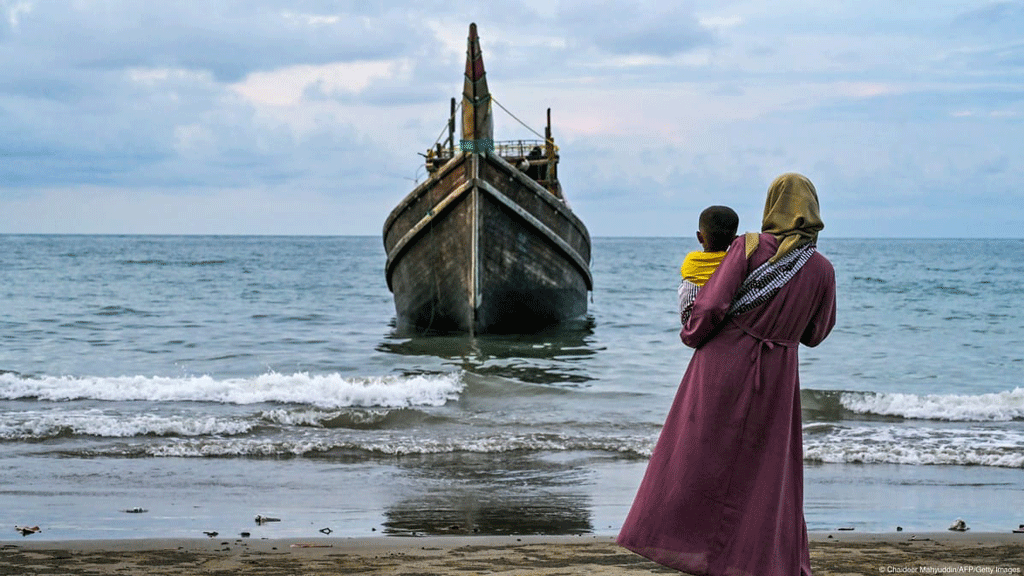
In 2017, a Myanmar military operation took that persecution to a horrific level. In that operation, about 750,000 Rohingya were forced to flee their homes to Bangladesh.
About 10,000 Rohingya were killed in the early phase of the operation. Many also died in boat capsizes in the Bay of Bengal while fleeing. Survivors said the army and its allied armed groups carried out widespread killings, rape and torture.
The ICJ observed that Myanmar's security forces in Rakhine State killed thousands of Rohingya. Alongside widespread sexual violence against women and children, they showed extreme cruelty targeting children.
Rohingya villages were destroyed in a planned manner. The court's observations also noted that permanent structures were later built there and non-Rohingya people resettled. The military deliberately inflicted serious physical and mental harm on the Rohingya. Senior officials also spread hate speech portraying them as an inhuman and violent people.
The court said that, particularly from the crimes committed against children, evidence is found of an intent to prevent births within the Rohingya people. Because of the destruction of villages and homes, displaced Rohingya people's opportunity to return to their own country has effectively closed.
According to the court, the participation of armed civilians and allied militias in the military operation created a risk of genocide. Despite knowing of that risk, Myanmar did not take effective measures to prevent it, and thus also violated its international obligation to prevent genocide.
The verdict ordered Myanmar to immediately stop all violence and to investigate the persons involved in the crimes. Alongside bringing those responsible to trial and ensuring punishment, Myanmar was also told to give assurances that such crimes will not happen again in the future.
As part of reparations, an environment must be created for the safe and voluntary repatriation of the Rohingya, destroyed land and property must be returned or replaced, missing persons must be traced, and proper burial of the dead must be arranged. Physical and mental rehabilitation of torture victims and protection from future persecution must also be ensured.
The court did not determine the financial amount of reparations. However, Myanmar was ordered to prepare a plan on the matter and submit a report within two years.
The Gambia's lead counsel Arsalan Suleman described the verdict as a historic victory for the Rohingya. In his view, it is an important step towards establishing justice and accountability.
Rohingya human rights activists say that after decades of persecution, this verdict is major progress in their struggle for justice. However, there is uncertainty over implementing the verdict in practice.
The ICJ has no enforcement force of its own to implement its verdicts. However, if The Gambia wishes, it can raise the matter at the UN Security Council and call for action against Myanmar.
Currently, about 1.2 million Rohingya live in the refugee camps of Cox's Bazar in Bangladesh. In Myanmar, meanwhile, there are about 520,000 Rohingya, whose movement and civil rights are strictly controlled.
After the military seized power in 2021 by overthrowing Aung San Suu Kyi's elected government, civil war spread across the country. An estimated 100,000 people have been killed and more than 3.5 million displaced. Conflict in Rakhine State between Myanmar's army and the Arakan Army has also further complicated the Rohingya's security situation.
International law expert Michael Becker believes that however broad the ICJ verdict may be, implementing it quickly will be difficult in Myanmar's current political situation.
Kiaw Min Saber, founder of a Rohingya human rights initiative, hopes that through this verdict a path will be created for the Rohingya to return safely to their own country and live with equal civil rights.
Human rights activists say that not only financial compensation, but also restoring the Rohingya's citizenship, recovering their seized land and property, and ensuring education, healthcare and livelihood opportunities should be part of the reparations plan.