Job guarantees and profit promises: allegations that Tech Defender Hub took crores through an online trap
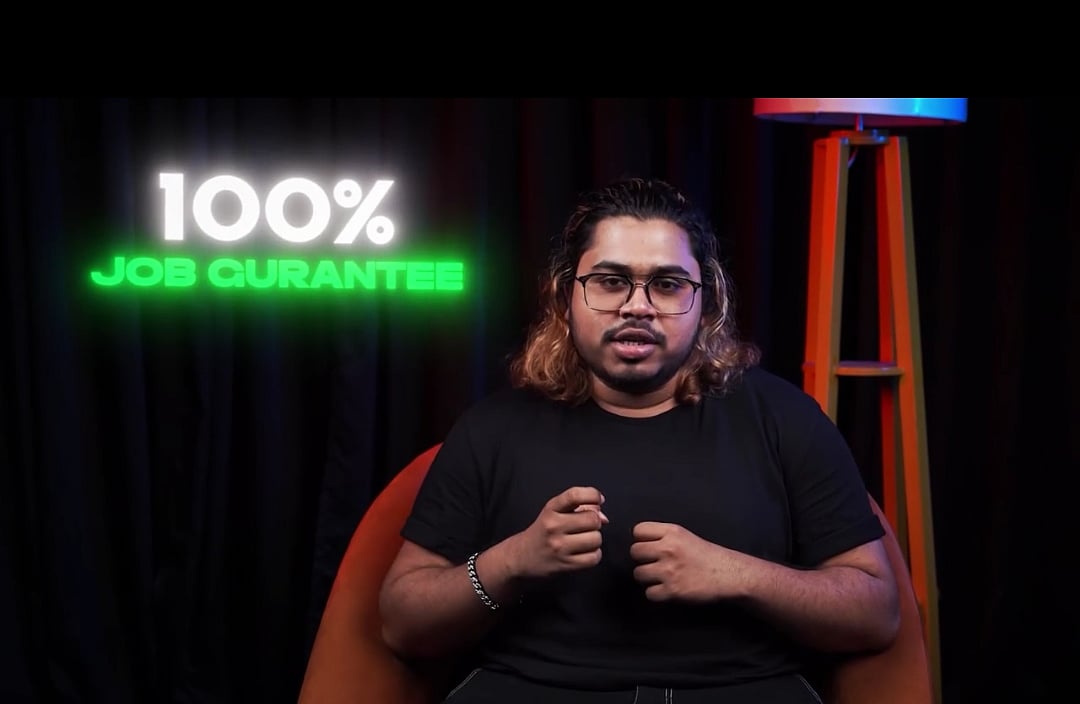
With adverts promising a cyber security course with a 100 percent job guarantee — saying students would be given jobs after finishing, could work full-time with the provider, or work part-time and earn independently the rest of the time — Fazle Rabbi Khan collected IT trainees online. His organisation is called Tech Defender Hub.
The organisation offered training in cyber security, ethical hacking, advanced Python and other subjects, along with a promise of a job at the end of the course. The courses lasted six months and were held online. It also advertised an office in Banani, but many of those who say they were cheated later searched for that office and could not find it.
Despite the job promises, Fazle Rabbi did not give them jobs. Instead, students allege, more money was taken from them with promises of work on foreign projects and profits in return for investment.
Victims allege that Fazle Rabbi's Tech Defender Hub took more than a crore of taka in the name of course fees and investment. Money was also taken from employed people and businesspeople, not only students, with promises of investment in foreign projects.
Twenty people who trained on various Tech Defender Hub courses were spoken to, and transaction evidence and Messenger and WhatsApp conversations were reviewed. Some victims paid 20,000 taka, some several lakh, and there is evidence that 20 lakh taka was taken from one person.
Documents show that students enrolling at Tech Defender Hub were first charged a course fee of 14,000 taka each. When they contacted the provider after finishing without getting a job, they were first tempted with work on a foreign project. Money was demanded as a security deposit or investment to join the project, with a promise that several times the investment would be returned when the project ended.
Mehedi Hasan of Madaripur fell victim after paying money on such a promise. After passing his higher secondary exams he did not study further and works at a factory in Jatrabari in the capital. With basic computer skills, he enrolled on an ethical hacking course at Tech Defender Hub after seeing an online advert, hoping for a good job and extra skills.
Mehedi Hasan said on November 16 that after enrolling for 14,000 taka he completed the course after nine months, but gained no real qualification and got no job anywhere. When he contacted Fazle Rabbi, he was told a project had arrived from abroad, was promised earning opportunities from working on it, and was asked for 20,000 taka as a security deposit, with an assurance that ten times that amount would be returned when the project ended.
Mehedi said that, lured by this, he first paid 20,000 taka late last year and later paid more at various times, giving Fazle Rabbi 1 lakh 20 thousand taka in total. He said he runs his family on a low salary, enrolled to earn a little more, and invested all his savings in the supposed project — but got neither project work nor profit. When he asked for his money back, Fazle Rabbi kept stalling with excuses and eventually blocked his phone number.
Mehedi was a student of Tech Defender Hub's 62nd batch. He claims 27 students of that batch paid Fazle Rabbi various amounts but received none of the promised benefits, gained no real skills from the course, and did not even receive the certificates that were supposed to be issued at the end of training.
After the Special Response Battalion (SRB) detained Fazle Rabbi, Mehedi and several students from different batches together filed a case at the Chief Metropolitan Magistrate's Court.
Many employed people and businesspeople also say they were cheated in the name of Tech Defender Hub training and investment. One of them, Al Imran, is a banker. He trained in the organisation's 67th batch and paid Fazle Rabbi 55,000 taka in total. He said he first joined the course to improve his skills, and that Fazle Rabbi later made business investment proposals through various promises. He paid trusting those promises, but now cannot reach him by phone.
Another employed person, who did not want to be named considering his social standing, had 20 lakh taka taken by Fazle Rabbi, according to transaction evidence. He deposited the money into Tech Defender Hub's account last May and June. He said Fazle Rabbi stalled when he asked for the profit money, and that he realised he had been cheated after Fazle Rabbi was detained by the SRB last October.
On October 8, the SRB detained Fazle Rabbi from the Dhanmondi area of the capital on allegations of selling citizens' personal information. He was accused of selling national identity card information, mobile phone locations, call lists and other personal data. He was later handed over to Kadamtali police station.
On November 15, SRB-2 deputy director (media) M Mubin Rahman said that after the detention Fazle Rabbi had been handed over to Kadamtali police and that they had no further information about him. It has since been learned that Fazle Rabbi was released on bail on October 25, and has again started enrolling students for training through Tech Defender Hub.
When contacted, Fazle Rabbi denied the allegations and said a group was conspiring against him. When shown several money transaction records and asked whether they were correct, he said the transaction information was correct and that he had taken the money. However, he said he would discuss the amounts with the students and return all the money quickly. He did not want to state a specific total. Asked about his claim of bringing projects from abroad, he could not show a project name or any related document or proof.
The case filed by the victims at the Chief Metropolitan Magistrate's Court has been assigned to the Detective Branch (DB) of Dhaka Metropolitan Police for investigation. DB deputy commissioner Md Tarikul Islam said on November 16 that the number of victims, the amount of financial loss, and money transaction information through banks and mobile financial services would be investigated, and that steps would be taken to verify the online communications, job promises and foreign-project investment offers and to identify those involved.
The DB official advised victims to preserve money transaction receipts, transaction identification numbers, bank account statements and evidence of online conversations. He also advised that no one should newly pay money to the accused person.