Losing Ground in Rakhine, Myanmar's Junta Turns to Air War Against Arakan Army's Administration
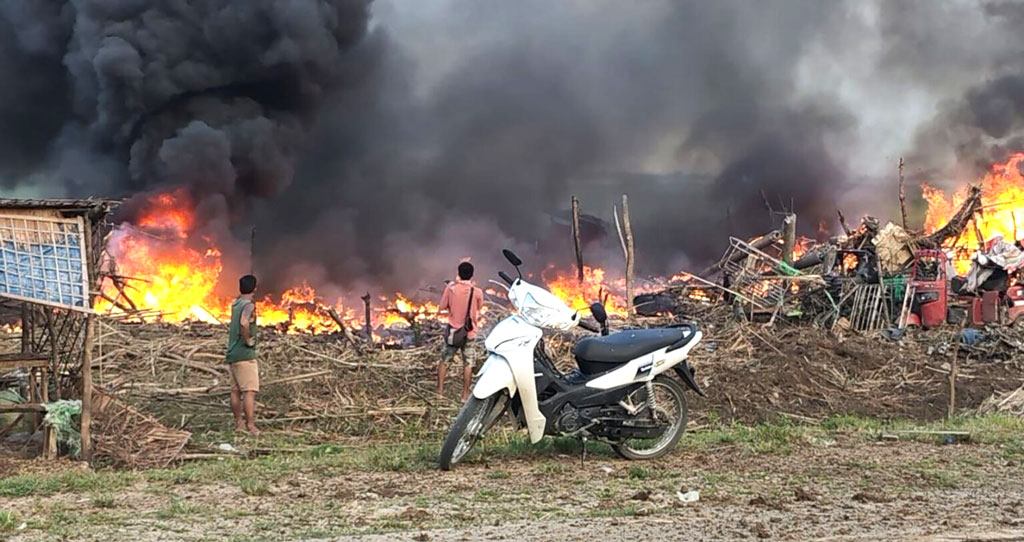
Myanmar's military junta has lost control of most of Rakhine State. But even after losing territory, it has kept its capacity to carry out devastating attacks from the air. A series of strikes on markets, hospitals, camps for displaced people and communications infrastructure is costing lives and disrupting ordinary life, deepening the humanitarian crisis even in areas that have slipped from the junta's control.
The Irrawaddy, a Myanmar English-language news outlet published from Thailand, reported that the ethnic armed group the Arakan Army (AA) has seized most of Rakhine since fighting resumed in November 2023. As the group, which fights for greater autonomy for the state, captured one military base and town after another, the junta's military position, administrative authority and political influence on the ground weakened. But while it has lost control on land, Myanmar's military retains the ability to attack using aircraft, naval shelling and long-range artillery.
With retaking territory proving difficult, the junta is using air strikes to pressure AA-controlled areas without deploying ground troops. So even though it has lost administrative control of much of the state, it keeps the capacity to destroy civilian lives and infrastructure. Yet the change in who controls the land has not made local people any safer.
On 28 September, Myanmar's military carried out an air strike around India Market and the Kisapanadi bridge in the Kyauktaw area. According to the Development Media Group (DMG), at least 50 civilians were killed and 58 injured. The United Nations reported a similar casualty figure. Independent investigators found evidence of the air strike and extensive damage but could not confirm the full toll.
The strike damaged the market, an important centre of the local economy. With the market destroyed, the livelihoods of traders, transport workers, small entrepreneurs and families dependent on daily buying and selling are under threat. The disruption to supply chains has also made it harder to obtain food and daily essentials. The attack created a new crisis for Rakhine's trading system, already weakened by long conflict and movement restrictions, and pushed up the cost of living.
On 1 November, five people, including a newborn, were reported killed in an air strike on a temporary maternity home in the Mrauk-U area. The news agency Reuters documented the incident, and the international medical and humanitarian organisation Medecins Sans Frontieres (Doctors Without Borders) condemned the attack.
With a medical facility damaged, access to treatment for pregnant women and seriously ill patients is narrowing further. Insecurity may lead patients to delay seeking care or avoid hospitals altogether. In a Rakhine already short of medicine, doctors and equipment, the closure of even one functioning treatment centre can put many lives at risk.
Camps sheltering people who fled their homes because of the war are not safe from the junta's air strikes either. On 13 November, an air strike hit the Biarla camp for internally displaced people in Ponnagyun Township. According to local rescuers and eyewitnesses, 12 people, including children, were killed and 18 injured.
Earlier, on 4 October, six displaced people were killed in an air strike on the same camp. The repeated strikes have made the safety of displaced families even more uncertain. Beyond destroying shelters, the attacks are disrupting humanitarian aid work, and families already living with limited access to food and medicine face the risk of being displaced all over again.
Roads, bridges and other key communications infrastructure are also being damaged in the junta's air strikes. An attack in early November damaged communications in Kyauktaw Township, and strikes on several more bridges were later reported in the Minbya, Kyaukphyu and Ramree areas. The bridges matter not only for military movement but for ordinary life: taking farm produce to market, getting patients to hospital and delivering food, medicine and humanitarian aid. With bridges destroyed, travel between settlements is disrupted and transport costs are rising. Supplies into Rakhine have in any case been squeezed by a land and sea blockade since late 2023, leaving residents of AA-controlled areas dependent even on goods coming from India's Mizoram through Paletwa in Chin State.
The impact of the repeated strikes on markets, hospitals, camps and communications infrastructure is not limited to immediate loss of life. They are disrupting the local economy, healthcare, supply chains and people's movement, making it harder for the Arakan Army to run the areas under its control. Alongside military operations, the group must spend its limited resources on emergency relief, medical services, infrastructure repair and keeping essential services running. This raises the question of whether the junta, having failed to retake territory on the ground, is trying to weaken the AA's administrative and governing capacity through attacks from the air.
Myanmar's military authorities have long claimed their operations target armed opponents, and they have rejected accusations of deliberately targeting civilians. But the repeated loss of civilian life and strikes on important facilities keep alive the demand for an independent investigation.