Smart Car Apps and Digital Keys Can Be Misused to Abuse Former Partners, Researchers Warn
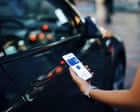
Perpetrators of domestic violence can misuse smart car tracking and monitoring functions and digital key access to facilitate abuse, researchers at the University of New South Wales in Australia have warned. Their report, released on Tuesday, found that functions that could be misused were prevalent across major car brands.
Katharine Kemp, a data privacy and consumer protection expert at UNSW and a co-author of the report, said, 'There is an urgent need for carmakers to adopt safety by design principles from the early stages of designing both the apps and the cars.'
The report cited three cases. Earlier this year a man in Australia was found guilty of using a connected car app to harass his former partner, including restricting the speed at which she could drive, sometimes to 40km an hour.
In 2022 in the US, a woman found her former husband had used a car app associated with her car to track her; the carmaker then allegedly refused to terminate the former partner's digital access to the vehicle.
In another case in the US in 2020, a woman found a baseball bat her former partner had used to threaten her in the back seat of her car.
The researchers said problems emerged as many of the cars' functions, which include tracking and monitoring functions, remote control functions and digital key access, could be controlled remotely via an app.
The report said there were three main scenarios that could open the functions to misuse: the abuser being the owner of the car and having created the account themselves; they were granted access as a secondary user of the car; or the victim-survivor is impersonated and the perpetrator creates an account on their behalf.
The report said the problematic functions are mainly marketed by the car manufacturers as being for the purpose of enabling the car owner to 'keep an eye on' and protect their car.
The report highlighted an advertisement on the carmaker Kia's Australian website for 'Kia Connect', which mentioned geofence and time fencing alerts that let the owner know when another user strays outside preset limits of geographical areas or time limitations. Kia was contacted for comment.
The report mapped how prevalent potentially problematic functions were, and whether these functions were advertised, by 15 of the top car brands.
Geolocation, which allows the geographical location of the car in real-time or when it is parked, was advertised by 100% of the 15 car brands. The researchers said this tool could be misused to track people.
The researchers found 60% of the top 15 brands also advertised a 'zone exit alert', which allows users to set an alarm if a car leaves a designated area. They warned this function could be used to set a zone of 3km from the family home to receive an alert if the victim-survivor attempts to leave or fails to follow an abuser's rules limiting travel.
Meanwhile, 20% advertise speed or acceleration restrictions. Carmakers explain this function as setting speed limits for young drivers or valet parkers. But the report warned it could be misused to set a speed limit of 40km/h so that a victim-survivor cannot safely use highways or escape at speed.
The researchers also raised concerns about digital key access, which allows drivers to use their mobile phone to unlock the car or start the engine and was advertised by 67% of car brands in the Australian market. The report warns an abuser could remotely deactivate the victim-survivor's digital key access or set speed restrictions, effectively stranding the victim-survivor in an unsafe location and limiting their ability to escape the abuser's violence.
Emma Buxton-Namisnyk, a co-author of the report, warned this was an emerging problem that could get worse.