TIB Study: Dhaka Plot Buyers Pay Up to Tk 14.5 Lakh Extra Per Katha, 'Mafia Rule' Alleged in Housing Sector
Buyers of plots in Dhaka's private housing projects have to spend extra money under various heads beyond the advertised price to take possession of their plots. In some cases, a buyer bears additional costs of up to Tk 14.5 lakh per katha. The picture has emerged in a study by Transparency International Bangladesh (TIB).
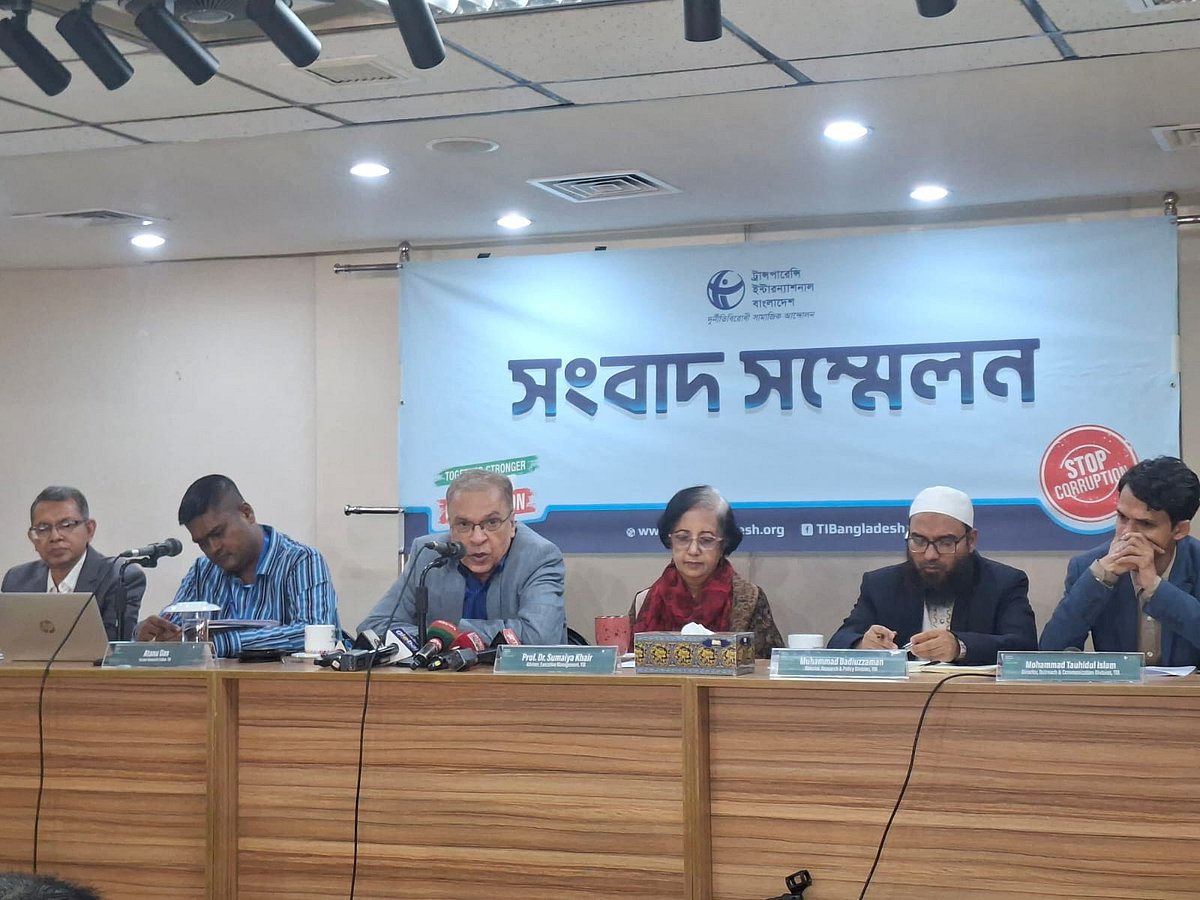
The findings of the study, titled 'Governance Challenges in Land Development in the Private Housing Sector in Dhaka City', were presented at a press conference at TIB's Dhanmondi office on Wednesday morning. The study was conducted from August 2024 to July 2026 and drew on interviews with real estate companies, plot buyers and landowners.
The study gives a breakdown of the extra costs. Development fees or service charges run from Tk 25,000 to Tk 5 lakh per katha, utility deposits from Tk 1 lakh to Tk 2.5 lakh per plot, and water connection and processing fees from Tk 30,000 to Tk 1.5 lakh. Boundary walls and internal roads add a further Tk 4 lakh to Tk 5 lakh per katha. The money is taken under heads including development fees, service charges, utility connections and infrastructure construction.
At the press conference, TIB Executive Director Iftekharuzzaman said there are widespread governance deficits in the private housing sector, particularly in law enforcement, institutional capacity, transparency, information disclosure, participation and accountability. As a result, a section of housing companies is doing business in an uncontrolled and unaccountable manner, and in many cases irregularities and fraud occur in collusion with sections of regulatory bodies, the administration and utility authorities, he said.
Iftekharuzzaman said irregularities have in many cases become institutionalised. With the housing sector largely controlled by businesspeople, landowners and plot buyers are effectively held hostage. He said a kind of 'mafia rule' has grown out of collusion among political connections, middlemen, land-grabbing interest groups and sections of the administration, and that this nexus has also taken the policy framework hostage.
The TIB executive director further said some influential housing companies obstruct the publication of news against their interests, intimidate journalists and tempt them with financial benefits or plot allotments. In some cases, the media too is being used to protect their interests, he alleged.
Asked about a way out of the crisis, Iftekharuzzaman said the government itself must lead the effort to stop irregularities and land grabbing in the housing sector. Regulatory institutions must be strengthened and given an environment to work independently, and those involved in irregularities must be brought to account with exemplary measures, he said.
The study says that to develop a housing project on 25 acres of land, between Tk 4.116 crore and Tk 9.352 crore changes hands outside the rules at various government offices. TIB documented such transactions at stages including land classification change, mutation, project design and approval, land-use clearance and environmental clearance, naming the AC Land office, RAJUK, DPDC, Wasa, the Department of Environment and the DTCA.
Irregularities were also found in plot sales and allotments. Some housing companies raise the plot price after the contract is completed and demand extra money, threatening to withhold handover if buyers refuse. There are also allegations of extra charges extracted on the pretext of registration costs or litigation expenses, as well as demands for additional money after contracts, delays in handover and refusal to refund money already paid.
The study also records allegations of pressure on landowners during land collection and acquisition, including intimidation, forcible occupation of land, forcing sales below market price and delays in paying for land.
As an example, the study cites a project of an influential housing company in Dhaka's Joarsahara and Kathaldia mouzas. According to the allegations, the project began in 1988 with 305 acres and was expanded to nearly 7,000 acres through political influence, administrative connections and various irregularities. About 800 acres of government khas land, 216 acres of Bhawal Estate land, and rivers, canals and waterbodies were included in the project. Control over some 1,421.48 acres allegedly transferred government and natural resources worth an estimated Tk 50,000 crore to Tk 86,000 crore into private hands.
The study also covers the filling of wetlands, lowlands and flood-flow zones to expand housing projects, warning of risks to environmental balance and the city's drainage system. Citing a project in the capital's Holan and Ashkona areas, it says approval existed for 43 acres, yet around 230 acres of unauthorised wetland and lowland were filled to extend the project boundary.
The influence of housing businesses also appears in amendments to Dhaka's Detailed Area Plan (DAP). The study says the DAP was amended 158 times between 2010 and 2018. Within a year of the 2022–2035 DAP being formulated, at least four official initiatives were taken to change it following demands from housing businesses, two of which produced major gazette amendments. A further amendment in October 2025 created a legal opportunity to double building heights, and the conversion of protected wetlands and flood-flow zones into housing areas also features in the study.
Analysing advertisements of more than 150 housing companies, the study found their marketing is aimed mainly at high-income and investment-capable buyers, emphasising luxurious living and profitable investment. It noted a lack of business models and institutional capacity for building affordable housing suited to the purchasing power of low- and middle-income people.
TIB made several recommendations to ensure transparency and accountability in the private housing sector. These include making it mandatory to disclose development fees, utility charges and other extra costs alongside the advertised plot price, and clearly stating refund and instalment policies. The organisation also recommended forming an inter-agency coordination platform of the government bodies and experts concerned, instant information exchange, and mandatory publication of approval, design and utility information for all housing projects.