Trump Administration Plans New Tariffs on Bangladesh and 15 Other Partners, Investigation Findings May Come Tuesday
The United States is planning to impose new tariffs on 16 major trading partners including Bangladesh. Reuters reported, citing three sources, that an investigation into allegations of excess industrial production capacity in these countries is under way, and that the Trump administration plans to impose tariffs on various products imported from them based on the investigation's findings.
The partners under investigation are China, India, Japan, South Korea, Mexico, Vietnam, Taiwan, Thailand, Malaysia, Indonesia, Switzerland, Norway, Singapore, Bangladesh and Cambodia. The European Union is also included.
The sources told Reuters that the investigation's findings could be released as early as Tuesday afternoon local time. The Office of the United States Trade Representative (USTR) could then propose new tariffs. The new tariffs would be added to those already imposed during President Donald Trump's second term.
The new tariffs would also serve as a replacement for part of the tariffs the US Supreme Court struck down in February. Tariffs imposed by the Trump administration have partly raised consumer prices in the United States. A Reuters and Ipsos opinion poll after the midterm elections last November found 62 percent of respondents would support an initiative to withdraw the tariffs.
It is not yet clear which products would face what tariff rates. One of the people involved said the rate would be set separately for each country. Mexico and Norway, however, are unlikely to face any immediate tariffs on their products.
The USTR is investigating most of the United States' major trading partners under Section 301 of the Trade Act of 1974. The investigation was launched claiming evidence of excess industrial production capacity.
According to the person involved, the White House is expected to respect the maximum tariff ceilings set in finalised trade agreements with partner countries. Those agreements set a maximum of 15 percent on imports from the European Union, Japan and South Korea, and 19 percent on Malaysian products.
For Chinese products, the United States is also expected to respect the 20 percent ceiling on tariffs imposed in Trump's second term. That, however, would require extending the US-China trade truce agreement that expires on January 10. If the agreement is not extended, tariff rates over China's excess production capacity would rise further.
The Office of the United States Trade Representative and the White House did not respond to Reuters' questions on the matter.
Ryan Majerus, a former senior trade official at the US Department of Commerce, believes a long report could be published on the matter, with recommendations for separate tariffs for the 16 trading partners. Majerus, a partner at the law and consulting firm King & Spalding, said the administration could propose high tariffs of 15 to 25 percent on imports from countries believed to have excess production capacity in various sectors.
Majerus also said those tariffs would be added to the 10 or 12.5 percent tariffs previously imposed under a separately conducted investigation. That investigation concerned the failure to properly enforce laws on the use of forced labour. However, the administration could also propose comparatively lower rates, he said; in that case, conditions for gradually raising the rates could be attached, so the rate rises over time if countries do not take steps to reduce excess production capacity.
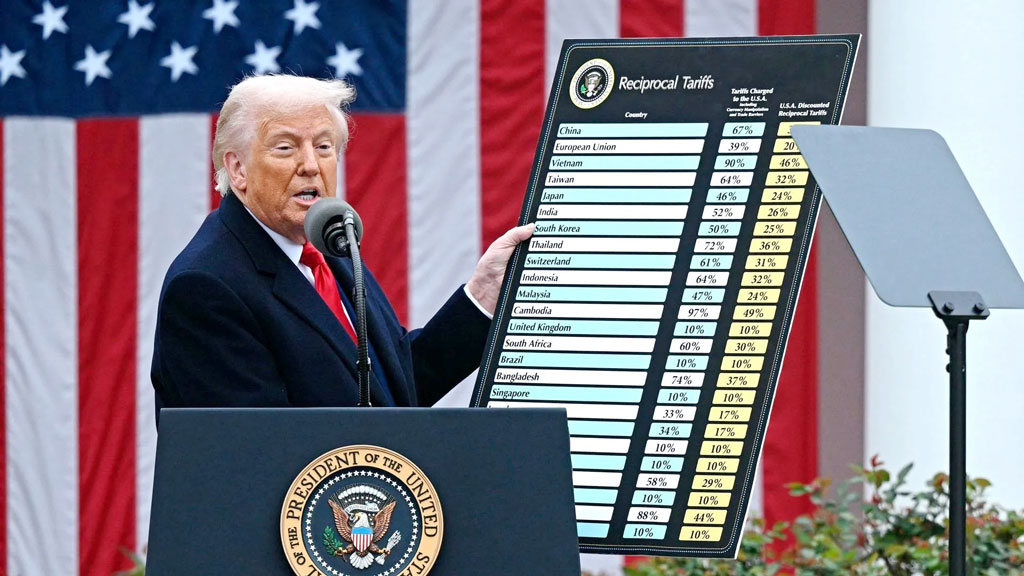
The Wall Street Journal had earlier reported that the investigation's findings could be released this week. The USTR began the excess capacity investigation last March. At the same time, a separate investigation was also launched against 59 countries and the European Union over allegations of failing to properly enforce laws on forced labour. Through tariffs imposed under these two investigations, the administration wants to rebuild Trump's announced global 'Liberation Day' tariff system, which the US Supreme Court struck down last February.
The Trump administration has identified China as the biggest source of excess industrial production capacity. It alleges that China is supplying the world market with huge quantities of steel, aluminium, electric vehicles, household appliances, solar power equipment and other products. China has rejected the allegations, saying its exports are growing because of its competitive advantage.
Chinese investment in several Southeast Asian countries is also a major target of the investigation. Those countries include Vietnam, Indonesia and Cambodia. There are allegations that China produces goods in these countries to export products to the US market and to evade previously imposed tariffs.
Under the US-China trade truce expiring on January 10, the Trump administration has capped tariffs imposed in its second term on Chinese products at 20 percent. Beyond that, roughly 25 percent tariffs imposed in Trump's first term also remain in effect. The United States has already imposed a 12.5 percent tariff on all Chinese imports over forced labour allegations, leaving room to raise the rate by another 7.5 percent to reach the 20 percent ceiling.
Meanwhile, the report said the United States and China are also working on reducing tariffs on $30 billion worth of non-strategic products in each other's markets.