Why Kentucky's Fugate Family Was Born With Blue Skin: The History of a Rare Hereditary Blood Disorder
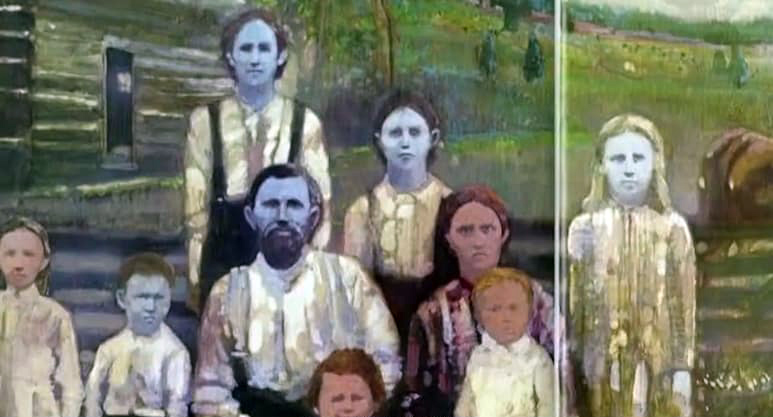
The risks of genetic disease have come under renewed discussion in India after a petition to India's Supreme Court seeking a law to discourage marriages between blood relatives. In that context, the astonishing history of a family in Kentucky, in the United States, has resurfaced — several generations of the family had blue skin, caused by a rare hereditary blood disorder in medical science. The family became known as the 'Blue People of Kentucky'.
History records that in 1820 an immigrant named Martin Fugate travelled from France to the United States and married an American woman named Elizabeth Smith. Four of their seven children were born with bluish skin. Apart from the unusual skin colour, however, they showed no significant physical problems in their daily lives.
The family lived in Troublesome Creek, a remote rural area of Kentucky. With limited transport links and a sparse population, there were few opportunities to marry outside the area, so marriages took place among a small number of families over successive generations. Through this, the blue-skin trait spread among the descendants of the Fugate family.
In medical science the condition is called methemoglobinemia. It is a rare hereditary blood disorder in which the blood's normal process of carrying oxygen is disrupted. While the level of methemoglobin in an average person's blood is below one percent, in members of the Fugate family it was 10 to 20 percent.
In 1960, haematologist Dr Madison Cawein and nurse Ruth Pendergrass treated and examined two blue-skinned siblings, Rachel and Patrick Ritchie. Their research revealed the cause of the condition in detail, and Dr Cawein also found that the disorder could be controlled with medicine.
Over time, the presence of the trait among family members declined. The last report of a blue-skinned member of the family came in 1975.
On Wednesday (25 November), NDTV reported that Charvi S, a law student from Bengaluru, has petitioned India's Supreme Court demanding a reconsideration of the legal validity of consanguineous marriage. Her petition states that marriage between blood relatives increases the likelihood of homozygosity — the presence of the same type of gene — in children, which can raise the risk of hereditary disease, congenital defects, hearing and vision problems, developmental disabilities and infant mortality.