Children's Hospitals in Britain Close Beds and Cut Staff to Meet NHS Savings Targets
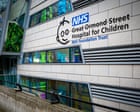
Children's hospitals in Britain are closing beds and shedding staff to comply with strict cost-cutting targets set by NHS chiefs to stop the health service overspending. Sheffield Children's Hospital, Liverpool's Alder Hey and London's Great Ormond Street are making cuts amid efforts to achieve major savings.
Great Ormond Street Hospital (Gosh) in London has closed 28 beds and is cutting its workforce by 300 as it struggles to identify how to make £50.6 million of savings by the end of March.
Reports to the hospital's board show that it has closed one ward and reduced the number of beds on several others in recent months. In April it shut Hedgehog ward, which had 10 beds and cared for patients with complex and in many cases life-threatening conditions, both from the UK and abroad. The trust said the move followed a fall in the number of children and young people travelling to the hospital for inpatient medical care from the Middle East, partly as a result of the conflict in the region.
Board reports also disclose reductions on the Koala and Alligator Endo-Met wards, which treat children with brain conditions, and the Panther ear, nose and throat ward. The loss of beds on Koala ward sparked concern that the hospital may not have enough capacity to look after everyone who needed its help, documents presented to the board show.
It is shrinking its workforce by 300 posts even though the same board reports state that many of its units, which are world-renowned for their expertise, do not have enough staff. Two-thirds of its £31.5 million cost improvement programme for 2026/27 is due to come from workforce cost reductions.
Great Ormond Street admitted it was facing financial challenges but stressed that the changes would not affect patient care. A spokesperson said: 'At Gosh we care for some of the sickest and most complex children in the country and it is incumbent on us to ensure that any decision we take does not compromise our ability to deliver high-quality and safe care to our patients.' The spokesperson added: 'Our cost improvement programme has delivered significant savings and we are on track to break even at the end of this financial year.'
Similarly, Sheffield Children's Hospital has closed eight of its surgical beds and is also cutting 300 of its 3,500 full-time equivalent staff as it seeks to save £17.7 million this year, about 5 percent of its total budget. It closed the beds due to a fall in demand for surgery, it said. Ruth Brown, the trust's chief executive, said: 'This is not just about making short-term savings. We are reimagining how we provide care, so our services are sustainable and respond to the changing and increasingly complex needs of children and young people.'
The Guardian revealed on Sunday that dozens of NHS trusts in England are cutting staff and services. Both Sheffield and Alder Hey children's hospital in Liverpool have declared their difficult financial situation as a major risk to their ability to function smoothly. Both trusts have given that possibility a rating of 20 out of 25 in their latest register of the risks they are facing.
Alder Hey, which has to save £24 million before next April, has halved the number of beds from 32 to 16 on ward 4C, a general paediatric ward. However, it said that it did so because it was looking to admit fewer children than before and manage more at home through virtual wards, in line with the government's ambition for the NHS to provide more care in or close to people's homes. It is also reducing its 4,000-strong workforce. A spokesperson said: 'At Alder Hey, we are caring for more children and young people than ever, many with long-term conditions and long waits for treatment, while we face some of the toughest financial pressures in our history. Like all NHS organisations across England, we are expected to make savings and lower our overall pay costs. To be financially sustainable and meet our financial targets for 2026/2027, we need to save in the region of £24 million.'
The body that represents the UK's children's doctors voiced unease about the cost-cutting and warned that it could limit hospitals' ability to cope with a surge in ill children over winter. Dr Ronny Cheung, the officer for health services at the Royal College of Paediatrics and Child Health, said: 'It is deeply concerning that hospitals are being forced into such difficult decisions in order to stay within their budgets.' He added: 'As a paediatrician, I know that every winter hospital wards are full to bursting, so the last thing my colleagues and I want to see is wards closing and staff being redeployed at a time when we already struggle to have enough beds to look after sick children. Children are already facing unacceptably long waits for care, while emergency attendances and mental health presentations continue to rise year after year. These pressures on hospitals are the inevitable result of a lack of national focus and sustained investment in children's health services over the years.'
An NHS England spokesperson said: 'While many specialist NHS children's services are continuing to see more patients than ever before, it is right that they make the best use of taxpayers' money and are transparent about the measures they are taking to mitigate any risks.' The spokesperson added: 'Children's services remain a priority for the NHS, which is why we are working on a plan to improve care for young people including boosting community support to relieve pressure on hospitals.'