
Trump Administration Renews Discussion of Assassinating Iran's Top Leaders
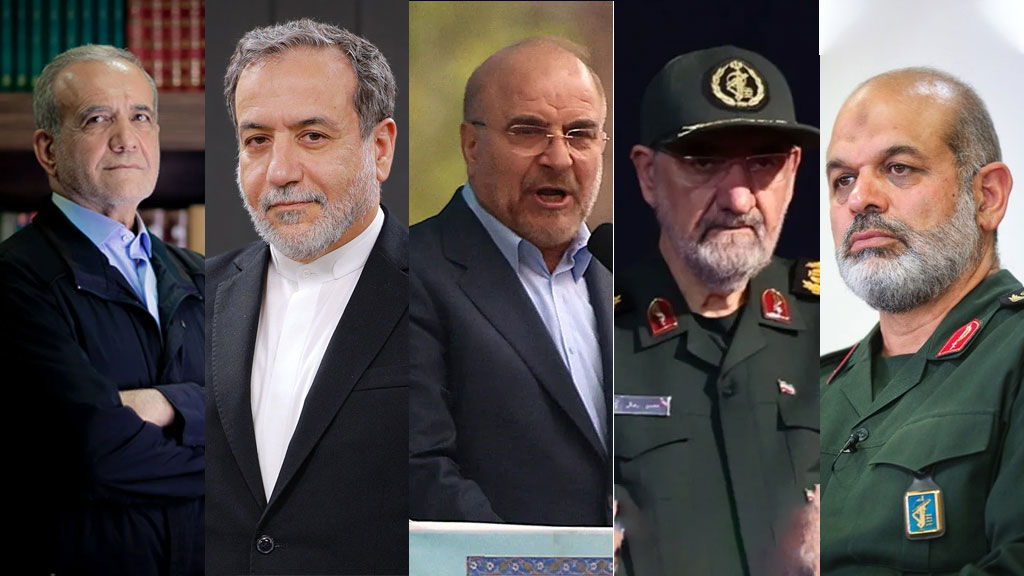
In US President Donald Trump's administration, discussion has begun anew about carrying out assassination operations targeting Iran's top leaders. Some administration officials believe such an operation could end the war. Opponents of the plan, however, fear it would raise the risk of an Iranian counterattack and obstruct future diplomatic efforts to stop the conflict. NBC News reported these details on Tuesday.
Citing a US official and another person familiar with the discussions, NBC News said some Trump administration officials believe that killing Iran's leaders would send a clear message to the rulers of the country's Islamic Republic that Washington can kill them at any time if it wishes.
Opponents of such an operation believe it would put US officials at greater risk of retaliation from Tehran. At the same time, Iranian leaders who survive might become even more rigidly entrenched in their positions. The US position in future diplomatic efforts to stop the conflict could also be harmed.
The two sources said the assassination of Iran's leaders had always been under consideration. However, amid Trump's discussions about the future of the war, the subject has been discussed anew in recent weeks.
In a statement to NBC News on the subject, a Trump administration official said the US naval blockade against Iran would continue at 'full effectiveness'. The official added: 'President Trump has many options. He will make the best decision to ensure that Iran can never obtain a nuclear weapon.'
In February this year, an Israeli attack killed Iran's then supreme leader Ayatollah Ali Khamenei and several other top leaders of the country. The conflict has continued for months since then, with no resolution yet. The war began with the aims of destabilising Iran's ruling system and destroying the country's ballistic missile and nuclear programmes.
Because of this conflict, which has lasted nearly nine months, Trump is under political pressure inside the United States. In this situation, he is considering whether to resume large-scale attacks against Iran. At the same time, discussion has begun again about the possibility of a new US and Israeli military operation.
On Sunday, Israel's public broadcaster Kan reported an unnamed source's claim that Israeli Prime Minister Benjamin Netanyahu is pressuring Trump to attack Iran 'as soon as possible'. According to that source, however, Trump has not yet made any decision on the matter and is reluctant to launch an attack.
Israel's Channel 12, meanwhile, reported that the country's military intelligence officials have warned Prime Minister Netanyahu that an Israeli attack on Iran could give birth to a larger regional conflict, in which Lebanon, Syria and Gaza could also become involved.
On Tuesday, US Ambassador to Israel Mike Huckabee said Trump is ready to take military action against Iran again if diplomatic efforts fail. Speaking at the US think tank Institute for National Security Studies, Huckabee said: 'In the past year and a half, the President has already shown twice that he is ready to take military action. He has made it very clear that, if necessary, he is ready to do so again.' Huckabee said Trump would prefer a diplomatic solution. But he stressed that Iran must accept that the country can never acquire a nuclear weapon.
Meanwhile, Iran's chief negotiator and the speaker of the country's parliament, Mohammad Bagher Ghalibaf, has again said Tehran will not hold any talks with the United States until Iran's seven conditions are met. Iranian state television reported this. The Iranian authorities have not yet publicly given details of those seven conditions. However, reports in the country's state media have said the conditions include lifting sanctions, ending the US naval blockade of Iranian ports and returning seized Iranian assets. Ghalibaf also warned: 'If the enemy makes a mistake, we will expand the geographic scope of the conflict.'


