Myanmar Will Not Follow All ICJ Rohingya Genocide Ruling Directions, Min Aung Hlaing Says in First Public Comment
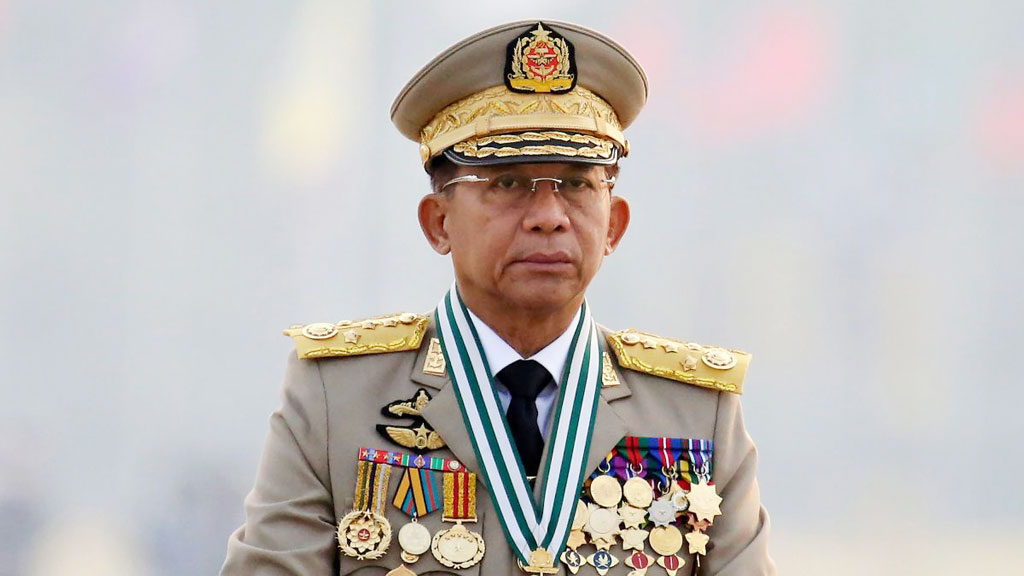
Myanmar's government will not implement all of the directions given by the International Court of Justice (ICJ), which held Myanmar responsible for genocide in the 2017 military operation against the Rohingya. Min Aung Hlaing, who rose from military junta chief to president, has said his administration will not follow the directions it considers inappropriate.
Reuters reported the information on Thursday (November 26). This is Min Aung Hlaing's first public comment since the court's verdict.
Last week, the UN's highest court ruled that genocide was committed against the Rohingya in the 2017 operation by the country's security forces. Min Aung Hlaing commented publicly on the verdict for the first time at a meeting on Wednesday (November 25). Citing state media, Reuters reported that he rejected the ICJ verdict, saying the word 'genocide' had damaged Myanmar's image.
Min Aung Hlaing said Myanmar, as a responsible state, would take necessary steps. But it would not implement the directions it considers inappropriate. He did not give details of which of the court's directions his administration considers inappropriate.
In last week's verdict, the ICJ said the military's 2017 operation against the mainly Muslim Rohingya minority in Myanmar's Rakhine State amounted to genocide. Thousands of people were killed in that operation, hundreds of villages were burned and widespread sexual violence took place.
The UN court directed Myanmar to stop ongoing violations of the Genocide Convention. It also told Myanmar to bring swiftly under investigation, trial and punishment those reasonably suspected of involvement in the 2017 military operation, and to give guarantees that such crimes will not happen again in future.
The verdict also directed support for the repatriation of displaced Rohingya, restoration of their lost property or compensation arrangements, tracing of missing persons, rehabilitation of victims of torture, and protection of the Rohingya from discrimination and persecution. For losses that cannot be made good by returning property, the court also directed Myanmar to pay compensation to the Rohingya.
The verdict further said Myanmar must submit to the court, within two years, a detailed account, including a compensation plan, of the steps taken to implement these directions.
The ICJ verdict has been described as final; it is the ICJ's first verdict holding a state responsible for genocide. However, the court's power to compel implementation of its verdict is quite limited.
Myanmar's government has consistently claimed that the security forces' operations in northern Rakhine State from 2016 to 2018 were a counter-terrorism operation against an insurgent group. The country's foreign ministry previously said those operations were not conducted with genocidal intent; rather, their scope and duration were limited and they ended within a few days.
However, facing the 2017 military crackdown, more than 730,000 Rohingya fled Rakhine State and took shelter in neighbouring Bangladesh. The number of Rohingya in Bangladesh's various refugee camps has now risen to about 1.2 million.
Another account of the ICJ judges said about 10,000 Rohingya were violently killed in that operation and about 815,000 Rohingya were in some way targeted by it. The ICJ panel of judges from different countries delivered the verdict by a 9-6 majority, also finding Myanmar guilty of violating several other articles of the 1948 Genocide Convention. The verdict is final and there is no scope for appeal against it.
In 2019, The Gambia filed a genocide case against Myanmar at the ICJ. The case centred on the military's alleged 'clearance operation' in Rakhine State in 2017; large numbers of Rohingya Muslims lived in that area. Myanmar has denied the genocide allegation; it claims the military conducted the operation in response to attacks by armed groups.