Macy's Thanksgiving Day Parade Postponed for the First Time Ever, Moved to Saturday

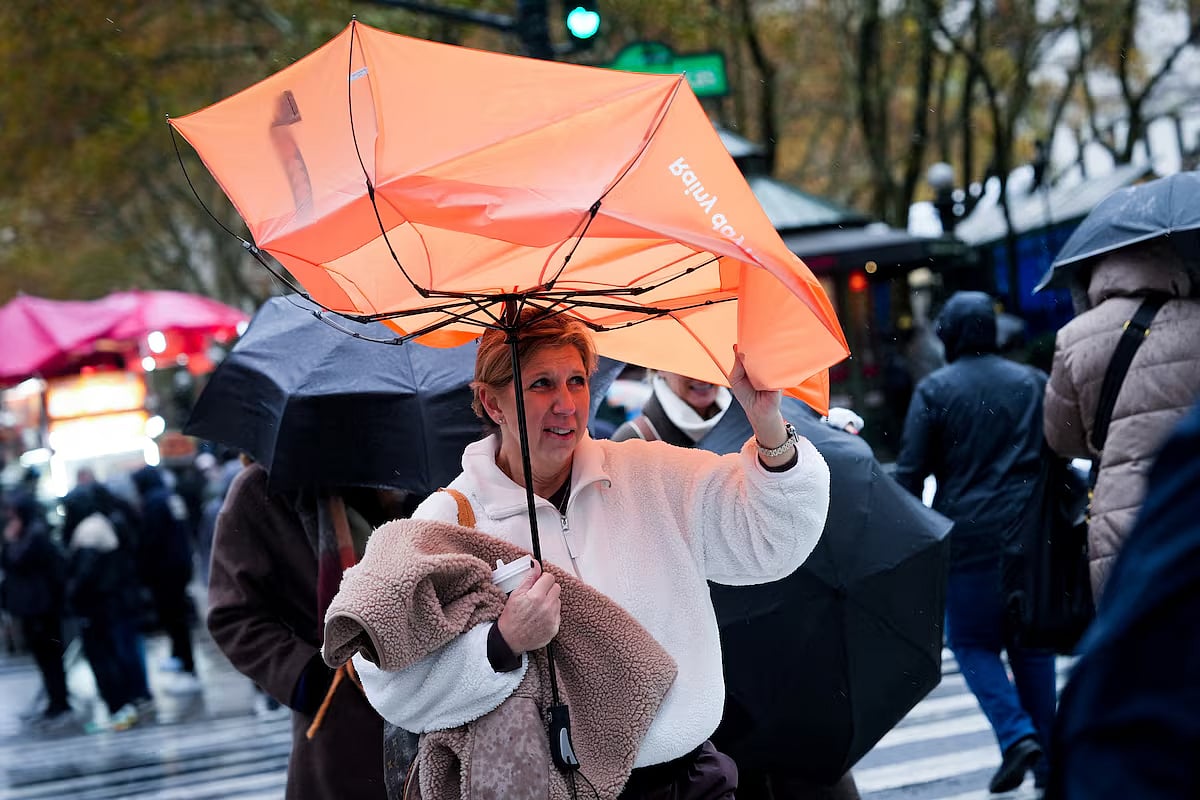
Severe weather has forced the 100th Macy's Thanksgiving Day Parade to postpone until Saturday for the first time ever. New York City officials announced Wednesday evening that this year's march would move to Saturday, Nov. 28 at 8:30 a.m.
According to FOX Weather, a powerful coastal storm is bringing heavy rain and damaging wind gusts between 60 mph and 70 mph to the Northeast and New England. Forecasts projected Thursday morning gusts between 35 mph and 45 mph, exceeding safety limits requiring sustained winds below 23 mph and gusts under 34 mph for balloons to fly.
In its century-long history the holiday tradition has only been canceled three times — a three-year hiatus for World War II. Even when severe weather threatened past parades, organizers historically kept the march moving on Thanksgiving Day, grounding all of the giant balloons only once, in 1971, when heavy rain and high winds kept the inflatables deflated while floats and marching bands continued down the route.
The city's current wind limits were adopted after the 1997 parade, when 40 mph gusts blew the 'Cat in the Hat' balloon into a lamppost and injured spectators.
To find the only years the parade was canceled altogether, you have to step back more than eight decades to the World War II home front. Following the Dec. 7, 1941, attack on Pearl Harbor, American factories shifted to wartime production, and critical supplies like rubber and helium were needed for the military. For three straight years — 1942, 1943 and 1944 — Macy's canceled the Thanksgiving Day march so its materials could support the war effort.
Rather than issuing a dry corporate notice, Macy's ran a 1942 newspaper advertisement written from the perspective of its grounded balloons. According to the American Rosie the Riveter Association, the advertisement read: 'We Macy balloons have always stood for peace and plenty of fun for all. We were a weaving and bobbing symbol of democracy at play. Fear never marched in our ranks.'
The ad continued: 'But now we've a war to win and we've enlisted, to help make the world safe for future parades full of merriment and good will.'
On Nov. 13, 1942, Macy's Jack Strauss formally donated the giant balloons to New York City Mayor Fiorello La Guardia and the New York City Salvage Committee. During a dramatic City Hall ceremony, La Guardia dressed as St. George and symbolically slayed an air-filled, 60-foot dragon balloon with a knife, converting the parade stars into 650 pounds of scrap rubber bound for military tires, life rafts or dirigibles.
Canceling the march also conserved helium, metal cylinders, tires and gasoline while freeing up New York police officers to guard warehouses and docks instead of managing a 2-million-person crowd, Macy's noted at the time. Even with the streets quiet, the department store kept some holiday magic alive with its mechanical window displays designed by Russell Patterson, which opened at 9 a.m. on Thanksgiving Day with a 26-float show titled 'The Funny Page Parade'.
When the parade finally returned in 1945, the pent-up excitement turned the route down Central Park West from 106th Street to Herald Square into what was described as a second victory parade. An estimated 2 million spectators lined the streets, including more than 30,000 people packed into Times Square. Seven bands and 20 floats marched past a large model of the Statue of Liberty in Times Square as NBC broadcast the event on television for the very first time.
Helium-filled giants returned to the Manhattan skyline, including a 45-foot 'Bobo Clown' holding 6,600 cubic feet of helium, a 40-foot teddy bear, a triple-scoop ice cream cone and a 16-foot aerialist swinging from a 25-foot balloon that required occasional top-offs of helium along the route when its head began to sag.
Since that triumphant 1945 comeback, the march has rolled on through other national crises until this week's storm. In 2001, following the Sept. 11 terror attacks, Macy's Public Relations Vice President Ronnie Taffet said there was no discussion of canceling the event, noting officials 'from the mayor on down' felt holding the parade was vital. In 2020, during the COVID-19 pandemic, there was no audience along the parade route and organizers cut down the march from two blocks to one.