Makkah defence alliance holds third meeting in Islamabad, with Iran war and Yemen crisis on the agenda
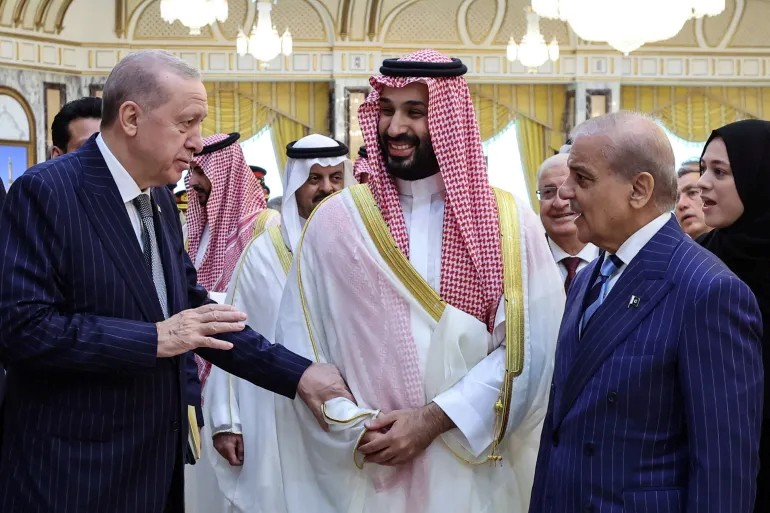
The third meeting of the Strategic, Political and Defence Committee (SPDC), the highest decision-making body of the trilateral Makkah defence alliance, begins on Friday in Pakistan's capital Islamabad. The two-day meeting is expected to discuss the conflict between Saudi Arabia and Yemen's Houthi fighters, the Iran war and the wider regional security situation.
Pakistani newspaper Dawn reported that the Pakistan government has declared a public holiday in Islamabad on Friday for the high-level meeting, and special movement restrictions have been imposed. A local holiday has also been declared in Rawalpindi.
A Pakistan government official, speaking on condition of anonymity, said coordination among the three countries' political, defence and military institutions would be a priority at the meeting. Finalising standard operating procedures (SOPs) for running the alliance and establishing an implementation framework would also be discussed.
Pakistan's defence minister Khawaja Asif said on Thursday that the foreign and defence ministers of Saudi Arabia, Turkey and Pakistan would attend. He said: 'The ongoing instability in the south of Saudi Arabia will definitely be an item on the meeting's agenda.' He described the matter as extremely important.
Yemen's Ansar Allah movement, or the Houthis, has repeatedly attacked Saudi cities, oil facilities and shipping routes. The attacks have taken place since fighting in Yemen's civil war intensified in July.
Khawaja Asif said: 'Under the agreement, any threat to Saudi Arabia is also a threat to Pakistan and Turkey. The agreement is absolutely clear on this.'
The three countries signed the Makkah joint defence agreement on 7 August. Under it, an armed attack on one member country will be considered an attack on all three, and the other two must assist the attacked country in every possible way, including military support.
The SPDC, made up of the three countries' foreign ministers, defence ministers and chiefs of the defence forces, is the alliance's main decision-making body. A permanent secretariat has been established in the Saudi capital Riyadh to coordinate the alliance's work. Pakistan's retired Lieutenant General Nauman Mahmood has been appointed its first secretary general for three years, and an executive committee of officials from the member countries is also working.
With Turkey's ratification of the agreement, all three member countries have completed the accession process. But Khawaja Asif said the alliance's institutional and operational framework is still at an early stage. He said: 'Initially we will have to meet frequently so that the things being developed can be taken forward properly. Everything has to be ready within the next few months so that we can move ahead after that.'
The alliance's military doctrine, force structure, command and control system and method of collective military response have not yet been publicly determined.
Earlier, at an emergency SPDC meeting in Riyadh on 5 October, calls were made for effective steps to implement the collective defence pledge, including arrangements for the rapid deployment of agreed forces and capabilities. However, those steps must be implemented under each member country's own laws.
Khawaja Asif declined to comment on how the alliance would respond if Iran directly attacked Saudi Arabia. But he named Israel as a possible threat to other countries in the region, saying: 'There is a risk of conflict or aggression from Israel. That is why the countries of this region need to be united among themselves.'
Khawaja Asif said Pakistan had played a 'very, very constructive role' between Washington and Tehran, but the outcome of the ongoing mediation efforts remained 'fragile', and peace had not yet been established in a way that could be called permanent, as people expect.
Pakistan's recent military deployments include JF-17 fighter jets, drones and the HQ-9 air defence system. A security source said these were deployed under bilateral cooperation before the alliance was formed, and that from now on such existing cooperation arrangements will also be part of the three countries' trilateral framework. Turkey, meanwhile, has stressed the defensive character of the defence pact and maintained a cautious position on taking a direct part in the ongoing war in Yemen.