Shrimp do have blood, but it is not red: hemocyanin makes it bluish
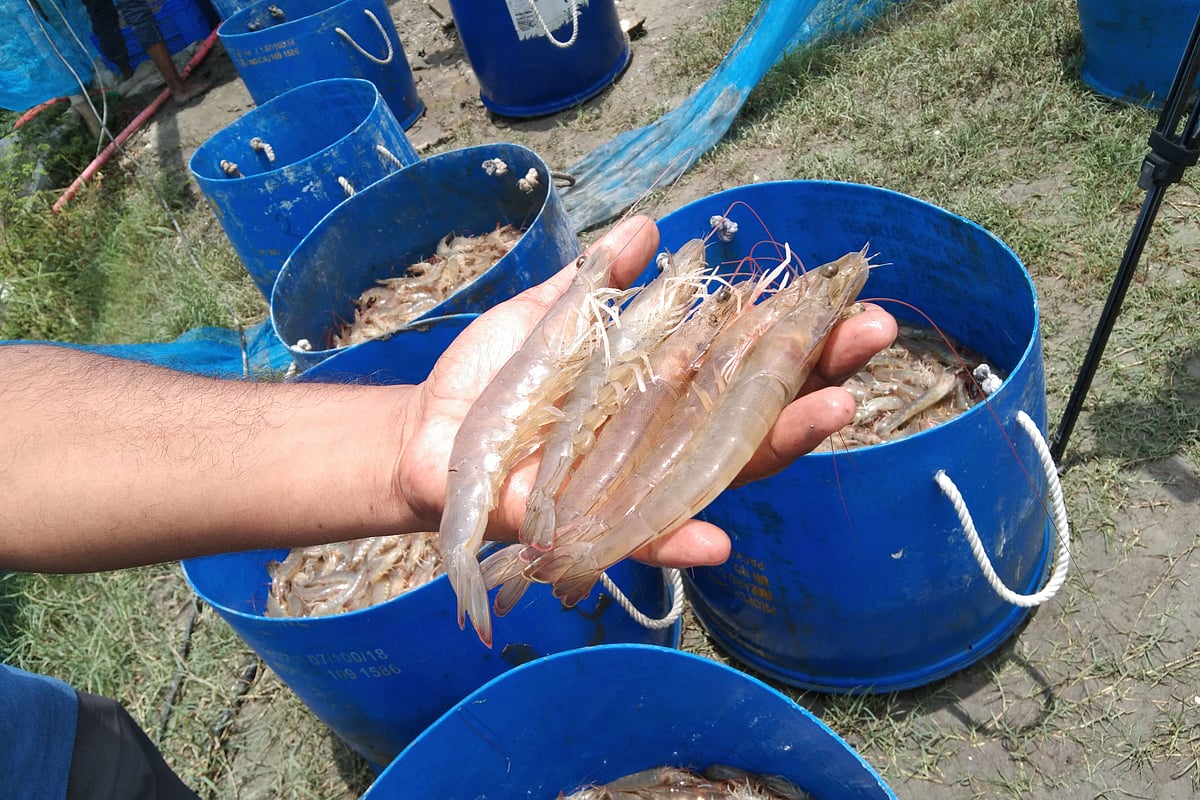
When a shrimp is cut, no stream of red blood is visible the way it is in humans. Yet shrimp do have blood; its colour is not red like human blood and can appear bluish.
Human blood is red because of a protein called hemoglobin. Hemoglobin contains iron, and its job is to carry oxygen from one part of the body to another. Hemoglobin bound to oxygen is what makes human blood look bright red.
In a shrimp's body, the work of carrying oxygen is done by a different protein called hemocyanin. While hemoglobin contains iron, hemocyanin contains copper.
Hemocyanin takes on a bluish colour when it is bound to oxygen. When it is not bound to oxygen, it stays almost colourless. A shrimp's blood can therefore look bluish or nearly transparent depending on the amount of oxygen present.
Scientists call a shrimp's blood hemolymph. It does not only carry oxygen; it also helps move nutrients and waste products between the body's organs. Hemolymph also plays an important role in the shrimp's immune defence.
Shrimp also have a system for circulating blood, but the blood does not always travel inside blood vessels as it does in humans. A shrimp's circulatory system is open: after leaving the heart, hemolymph flows into the open spaces around the body's organs and then returns towards the heart.
A shrimp has a heart as well. It sits on the back side of the body, beneath the shell, and pumps hemolymph to different parts of the body.
A shrimp's body is small, and a hard shell covers its inner parts. That is why no stream of red blood appears when a shrimp is cut; its hemolymph is usually transparent or pale bluish, so it is not easily noticed either.