From a Saint Martin cleanup drive to a PADI instructor: the journey of a Bangladeshi woman diver
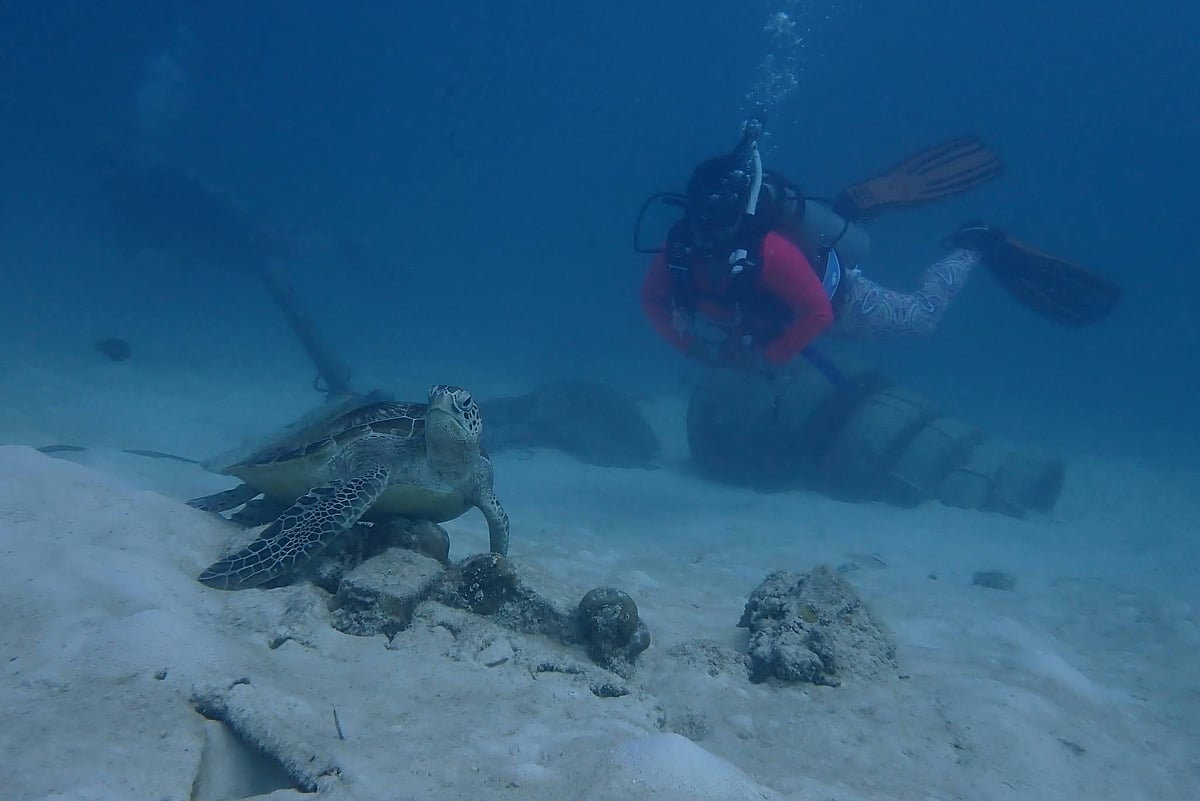
Her first encounter with the underwater world came in 2015, when she joined a cleanup drive at Saint Martin's Island. After that experience she went to Malaysia and learned scuba diving. Course by course, she is now an internationally recognised diving instructor. In her own words, she is the first Bangladeshi woman to become a scuba diving instructor trained by PADI, the Professional Association of Diving Instructors.
In 2018 she travelled to Malaysia and decided, while touring, that she would learn scuba diving. She already had some small experience of getting into the water back home. Largely out of interest she completed the first course, and life under the sea captivated her. She finished a second course on the same trip before returning home.
Step by step she then completed the Open Water, Advanced, Rescue and Emergency First Response (EFR) courses. After that came the Dive Master course, and finally the course to become an instructor.
In November 2025 she went to Mabul Island in Malaysia for the Instructor Development Course. Before that she had spent six months on study and physical preparation. The course included theory, practical training, in-water skills tests and presentations.
The biggest obstacle for that course was money. She raised the funds from her own savings, online fundraising and sponsorship from various organisations. In total it cost about 10 lakh taka.
As an instructor she can now train students from beginner divers up to Dive Master level. Once students complete the required skills and tests, the certification process begins. She can also teach emergency first response.
Her first experience as an instructor came during her internship, when experienced instructors observed her teaching. She first gave one student a DSD (Discover Scuba Diving) experience. Her first full-course student afterwards was a young woman of Afghan origin who had grown up in Australia.
She says you cannot talk underwater; communication happens through signals, so an instructor has to watch the student every moment. Taking responsibility for that student's safety felt both thrilling and frightening to her. The student later completed the training successfully.
On working in the profession as a woman, she says she never considered diving an obstacle for herself just because it is physically demanding work. She previously ran a car modification business, another male-dominated field. But once, while training several students, a woman student felt more comfortable being trained by her male colleague instead of her. She felt the student may have assumed she was less skilled because she is a woman, and that hurt her.
She has twice been in danger while diving. The first time was during her own Advanced course: when descending, divers must equalise the air pressure inside the ears with the water pressure outside at regular intervals. That day, in her excitement, she forgot. She felt intense pressure in her ears and sinuses and her vision darkened. She signalled to the assistant instructor and got out of the situation.
The second incident came after she became an instructor. She had dived repeatedly without rest and went back into the water again. Her ears would not equalise, and she had trouble ascending as well. Taking slow breaks, she returned to the surface safely. The experience taught her that rest and physical condition matter greatly in diving.
On the potential for scuba diving tourism in Bangladesh, she says the country's long coastline and Saint Martin's Island offer real possibilities, but there can be no compromise on safety. The training methods and safety standards of international bodies such as PADI, SSI (Scuba Schools International) and SDI (Scuba Diving International) must be followed.
In her view, diving could be arranged at Saint Martin within the fixed period when tourists are allowed to travel there. Beyond that, the possibility of taking tourists out to sea on special vessels for diving could also be explored. Government support and oversight would be needed for that.
Her goal is to build a PADI-recognised scuba diving centre in Bangladesh, and she has begun collecting the necessary equipment. But importing equipment involves various taxes and licensing complications, and arranging the money is now the biggest obstacle. Still, she is moving forward slowly. Her dream is that divers anywhere in the world will find a Bangladeshi dive centre listed on PADI's website, and that foreign tourists will come to Bangladesh for scuba diving itself.