Invisible gases in septic tanks keep killing in Bangladesh: which gases are dangerous and how to stay safe
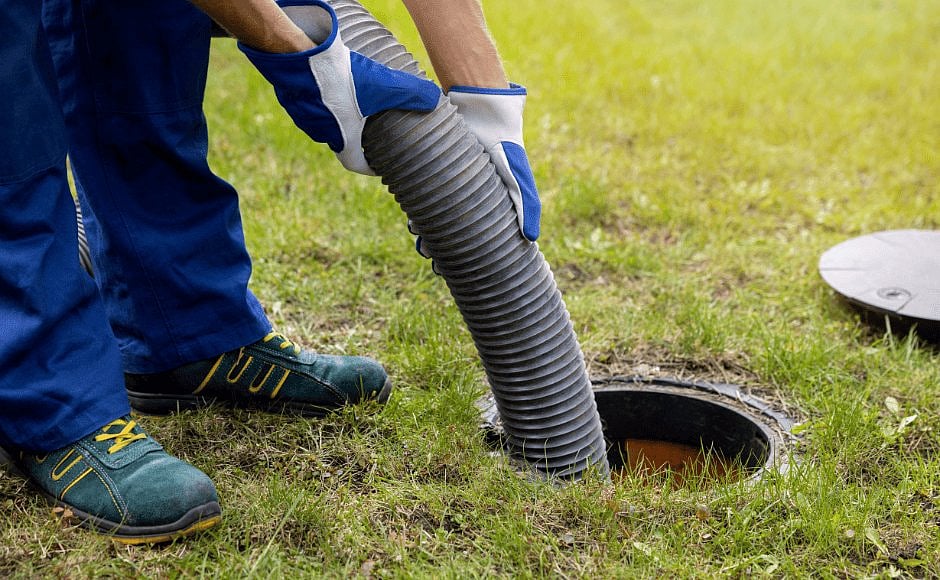
A mobile phone suddenly falls into a septic tank. One person climbs down to retrieve it. After a while, there is no response from him. Another climbs down to rescue him, and he too loses consciousness. One by one, several people enter the tank, and in the end none of them comes back alive. Incidents like this keep happening in Bangladesh.
In July 2025, four people died in Sreemangal, Moulvibazar, after entering a septic tank to retrieve a mobile phone. In August the same year, three workers lost their lives after climbing into a tank in Dhaka's Bashundhara residential area. Most recently, on 24 November 2026, two people were reported dead and two more ill from septic tank gas in Kaliganj, Satkhira.
In every incident, people have lost their lives while cleaning a tank, doing construction work, or trying to rescue someone else. The culprit is the gas accumulated inside the septic tank. The questions are: what gases are actually in a septic tank, how do they form, and why does a rescuer fall into the same danger when someone inside loses consciousness?
A septic tank is part of a home's sewage system. Waste from toilets collects there, and bacteria inside the tank break down the organic matter. In this process, some of the waste decomposes, some becomes liquid, and some solid matter settles at the bottom.
Oxygen levels inside a tank are very low, so the bacteria at work there can live without oxygen. They are called anaerobic bacteria. As they break down waste, they produce various gases, including methane, carbon dioxide and hydrogen sulfide.
Under normal conditions these gases escape through the tank's vent or air pipe. But if the tank stays closed, the ventilation does not work properly, or gas production inside is high, a dangerous situation can develop.
One of the best-known septic tank gases is hydrogen sulfide. It is colourless, and at low concentrations it smells like rotten eggs, which is how many people recognise it as the stench of drains or sewage. Hydrogen sulfide forms when bacteria break down sulfur-containing organic matter in waste.
If inhaled, the gas can irritate the eyes, nose and throat. Headaches, dizziness, nausea and breathing difficulties can also occur. At high concentrations it can render a person unconscious very quickly and can even cause death.
The most frightening thing is that hydrogen sulfide's smell cannot be trusted. At high concentrations the gas can temporarily destroy the nose's ability to detect odours. The gas may still be present even though the person no longer smells it. Someone may think the danger has passed because the smell is gone, when in reality the danger is then even greater.
Another important gas in septic tanks is methane, produced by anaerobic bacteria as waste decays. It is colourless and odourless. Mixed with air in certain proportions, methane can catch fire and even explode, so lighting a fire or using a match or lighter near a septic tank is dangerous.
Methane does not itself act like a poison in the human body, but accumulating in an enclosed space it can displace the oxygen in the air. A person then cannot get enough oxygen, and without oxygen a person can suffocate to death.
Carbon dioxide is also produced in septic tanks. We exhale this gas from our lungs when we breathe out, but in an enclosed space at high concentrations it reduces the proportion of oxygen in the air. A person may keep breathing yet the body does not receive the oxygen it needs, leading to dizziness, breathing difficulties, unconsciousness and death.
Death inside a septic tank is not always caused by one specific toxic gas. Sometimes it is hydrogen sulfide poisoning, sometimes oxygen deficiency caused by methane or carbon dioxide, and sometimes the combined effect of several gases turns fatal. In oxygen-deficient air a person weakens quickly, can lose balance and eventually faints, with no chance of climbing out under their own strength.
The air inside a tank is not always the same. Gas levels depend on the type of waste, the degree of decomposition, temperature, tank design and ventilation. So having once entered a tank and come out safely is no guarantee it will be safe the next time.
Accidents often follow a pattern: after one person enters and loses consciousness, another climbs down to rescue them, then another follows. That is how several people die in the same tank. From outside, it seems the unconscious person could be saved by pulling them out quickly, but the air inside is still lethal; the rescuer is exposed to the same gas on entering and loses consciousness from lack of oxygen.
Such places are called confined spaces — limited, enclosed areas where air circulation is poor and the environment inside can quickly become dangerous. Drains, manholes, septic tanks and deep pits are examples of such risky places.
Before working in a septic tank, the air inside must be tested. Trained workers can check oxygen levels and the presence of toxic or flammable gases with special gas detectors, and arrange ventilation as needed. Entering a tank requires training, proper protective equipment and a rescue arrangement.
An ordinary cloth mask or a gamchha tied over the face gives no protection from these gases when climbing into a tank, and such a mask cannot make up for a lack of oxygen either. Anyone attempting to enter a tank wearing only a mask or cloth must be stopped.
Most importantly, if someone loses consciousness inside a tank, do not climb down yourself to rescue them. Inform the Fire Service and Civil Defence quickly. Trained rescuers will carry out the rescue using the necessary breathing equipment. Rescuers have also died from toxic gas in the past.
From outside, a septic tank may look like an ordinary pit. But inside it can hold gases that cannot be seen and are not always detectable by smell. So the safety rules must be known before opening a tank lid or climbing inside. A mobile phone, a tool or a small job is never worth risking a life.