Sucker fish spreads through 24 rivers including the Padma, raising fears for native species
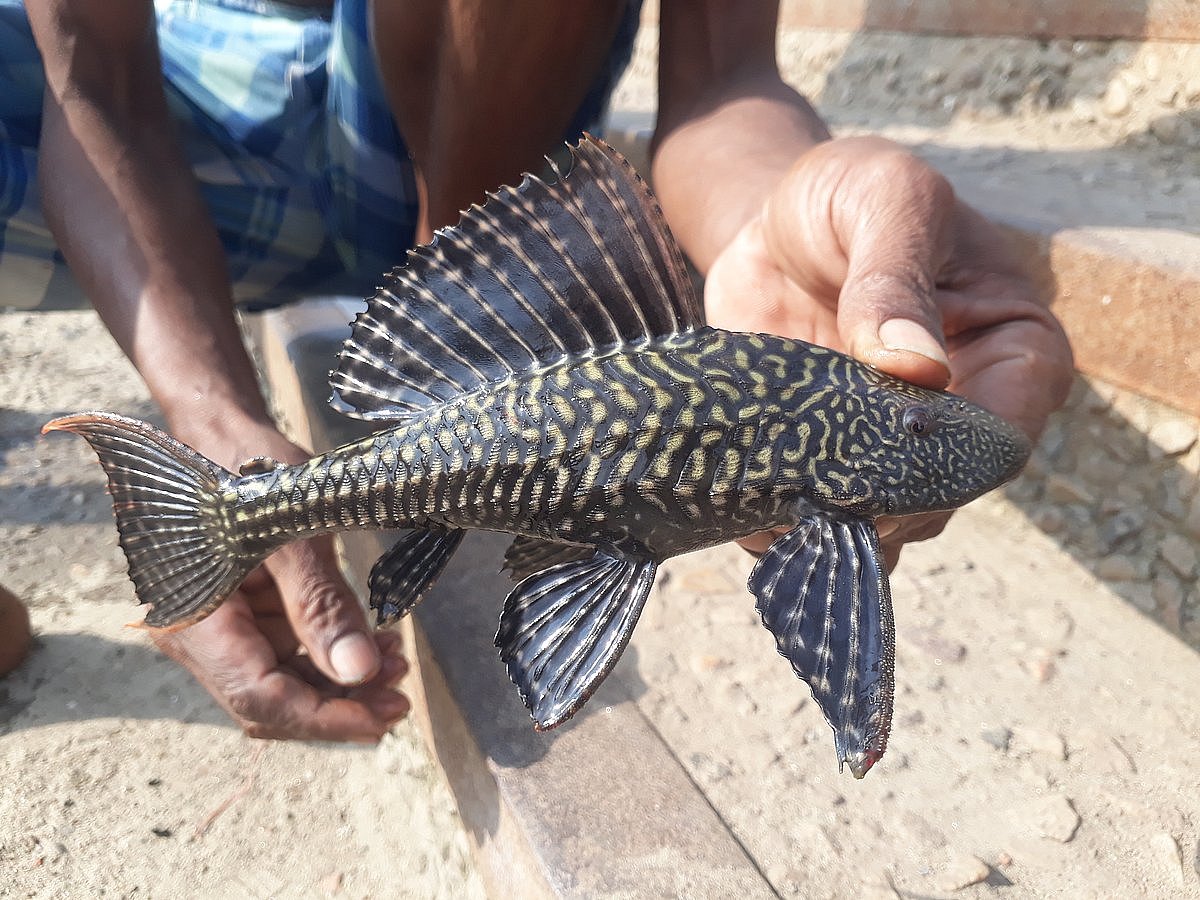
At a fish landing centre at Aricha Ghat on the Padma, zoology professor M A Aziz of Jahangirnagar University stopped short when he spotted a strange-looking fish among many species. On a closer look he realised it was a sucker fish. When he asked the fishers about it on 17 October, they replied that sucker fish now also come up in their nets in the Padma.
The Padma is one of the most important habitats of hilsa. The presence of sucker fish in that river surprised Professor M A Aziz. On 7 November he said he had until now known sucker fish to be found mainly in the rivers around Dhaka. Later, while searching for dolphins in rivers, he also saw the fish at the mouth of the Meghna.
A team of researchers has found evidence of sucker fish in 24 rivers, one lake and one haor across the country's eight divisions. In 2023, researchers from Bangladesh Maritime University, Jagannath University and the zoology department of Dhaka University carried out the study jointly with researchers from the University of Freiburg in Germany, Ataturk University in Turkey and Colorado University in the United States. The study was published in the Bangladesh Journal of Zoology.
Among the rivers around Dhaka, sucker fish has been found in the Buriganga as well as the Shitalakshya, Turag and Dhaleshwari. Researchers have also found evidence of the fish being caught in fishers' nets in the Brahmaputra and the Padma. It has spread to the Sangu, Halda and Karnaphuli rivers and Kaptai Lake in the Chattogram division. The species has also been found in the Meghna. Its presence has been detected in the Bilas and Surma rivers and in Hakaluki Haor in the Sylhet region. Sucker fish has also spread to the Jamuna, Dharla, Teesta, Chitra, Baleshwar, Bhairab and Bishkhali rivers.
The fish was once brought in to beautify aquariums and clean algae. The sucker fish is native to South and Central America, especially the Amazon River in Brazil. In Bangladesh, the first record of a sucker fish being identified dates to the 1980s in Kahalu upazila of Bogura. However, the 2023 study notes that it was first documented after being caught in Gulshan Lake in 2008.
Professor Mir Mohammad Ali of the aquaculture department at Sher-e-Bangla Agricultural University said sucker fish was brought to Bangladesh to clean aquarium dirt and add beauty. But when the fish grows large, people become reluctant to keep it in an aquarium. Many then release it into rivers, lakes or ponds. That is how it spread into natural water bodies.
Professor Niamul Naser, former chairman of Dhaka University's zoology department, who took part in the study, said the movement of sucker fish is increasing in the country's rivers and haors. The fish could also spread through hilsa breeding grounds and sanctuaries. He believes, however, that the risk to hilsa is comparatively low, because hilsa usually moves in the deep parts of rivers while sucker fish is more active in shallow areas. As a result, it can pose a major risk to native fish.
The country has six hilsa sanctuaries. The longest stretches 190 kilometres from Hizla to Mehendiganj in Barishal. The Kalapara-Andharmanik sanctuary on the Andharmanik River in Patuakhali is 40 kilometres long, the Char Rustam-Tetulia sanctuary on the Tetulia River in Bhola is 100 kilometres, the sanctuary on the Meghna from Ilisha Ghat to Charpial is 90 kilometres, and the sanctuary from Shatnol in Chandpur to Alexander in Lakshmipur is 100 kilometres long.
The 2023 study said sucker fish disrupts the aquatic food chain. It uproots aquatic plants that other fish use as food. Professor Mir Mohammad Ali said sucker fish survives by eating algae, organic matter and tiny aquatic creatures on the riverbed, which damages the habitat of aquatic plants and small creatures there. In his view, research-based and coordinated steps are needed to control its spread.
In September 2022, the government banned the farming, sale and import of sucker fish. Yet its spread in rivers has not stopped despite the ban. The Department of Fisheries says plans are being taken to control the spread of the fish. Professor Niamul Naser said it is urgent to determine what impact sucker fish is having on native fish, and the government must take the initiative.