Fraudsters clone an acquaintance's voice and take Tk 3.5 crore as cybercrime rises
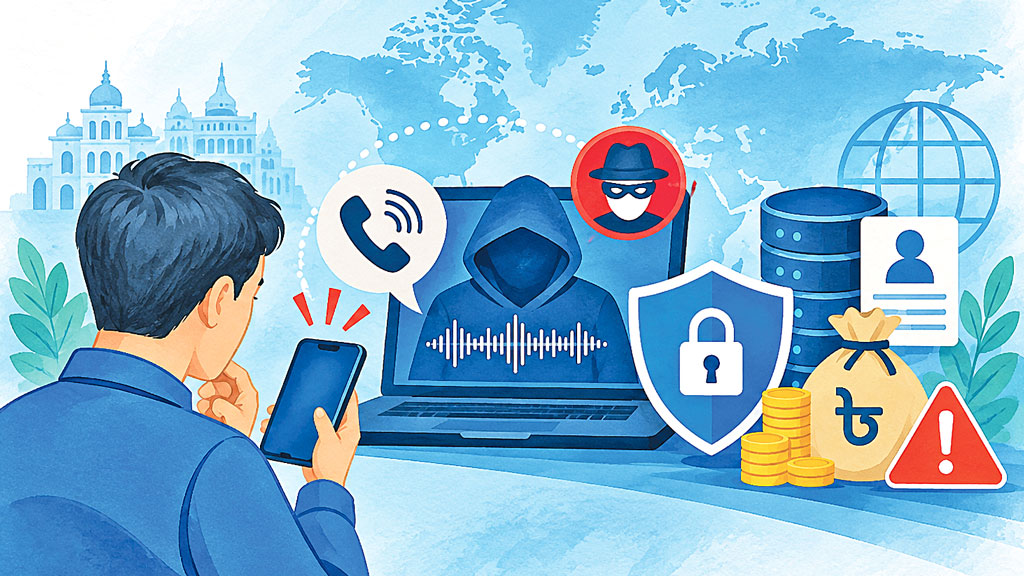
A businessman in Khulna received an offer on WhatsApp, in the voice of someone he knew, to buy machinery from an old industrial plant. Hearing nothing suspicious in the voice or the conversation, he paid the person Tk 3.5 crore in two instalments. It later emerged that artificial intelligence (AI) had been used to clone the acquaintance's voice and trap him. Police sources said four people were arrested in the case in September 2026.
The incident proves that in this digital age, even a familiar voice is no longer a reliable way to confirm someone's identity. The methods of crime are changing alongside advances in technology. A fake identity or forged documents once sufficed for fraud; now voices, photos and videos can all be artificially created.
This is not an isolated incident. In 2016, international hackers sent fake messages through the SWIFT system and moved $101 million out of Bangladesh Bank's reserves. Of that, $81 million went to the Philippines. In 2026, a claim that a huge volume of customer data was stolen from Pathao's server also raised fresh concern about the security of personal information.
According to a report published by Bangladesh Sangbad Sangstha (BSS) on 23 October this year, the police Criminal Investigation Department (CID) recorded 191 cybercrime cases between 1 September 2025 and 23 September 2026. A total of 101 people were arrested in those cases. The figure, however, covers only recorded cases; many people do not complain out of social shame, fear or the apprehension of getting no remedy.
Takeovers of social media accounts, fake investment lures, blackmail with personal photos and videos, data theft and fraud in mobile financial services — together, cybercrime is now striking directly at the economy, personal security and social trust. It has also become hard to prove when someone is framed using edited photos, fake screenshots, artificial voices or out-of-context conversations.
The Cyber Security Act, 2026 is in force in the country. The government has also sought public opinion on a proposal to amend it. The amendment proposal, however, cannot be treated as the same as the law in force.
To ensure effective remedy, the need has been stressed for easy complaint systems at police stations and online, quick coordination among the police, banks and mobile financial service providers, and more trained investigators and modern digital forensic facilities at district level. It is risky to reach any decision without verifying where digital evidence came from, who collected it and whether it was altered.
Citizens have also been advised to stay alert. If a familiar voice asks for money, one should call that person's known number oneself to confirm the identity. Not entering unfamiliar links, using separate and strong passwords for each account and keeping two-factor security turned on are also important. Victims of fraud have been told not to delete messages, phone numbers, links, transaction receipts and screenshots, and to complain quickly to the police and the relevant financial institution.