From a Village School Lab Without Instruments to the Diana Award: The Story of Science Bee's Anwoy Debnath
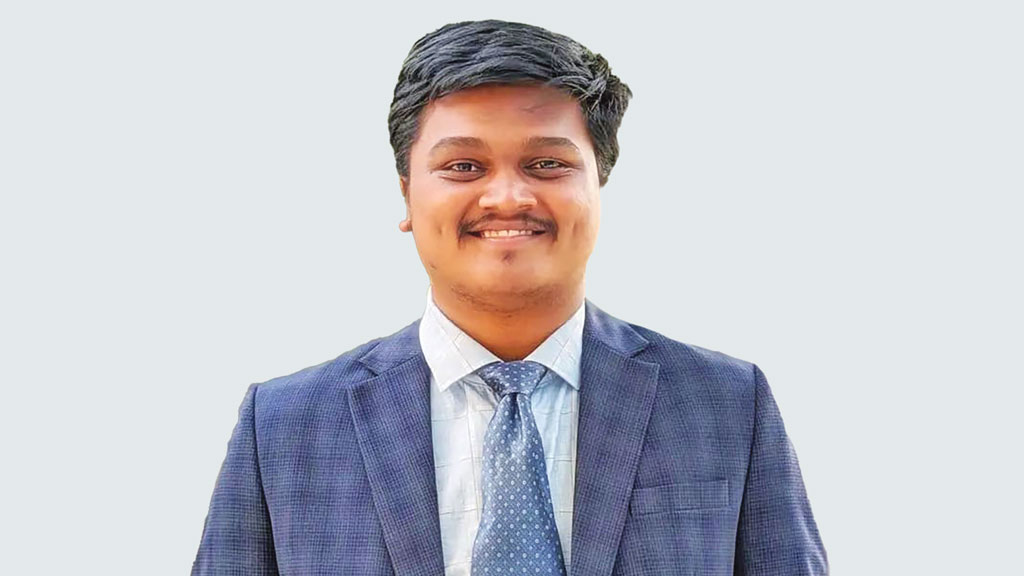
As a child, Anwoy Debnath studied science at a village school but never had the chance to learn it practically. The school had a science laboratory, but it lacked the necessary instruments. Later, after moving to Dhaka, he got the opportunity to attend regular practical classes. It was then that a question arose in his mind: why should the opportunity to learn science differ between city and village? From that thought, he took the initiative to bring science to students in a simple and enjoyable way.
Anwoy is now the co-founder and head of programmes of the science-based educational platform Science Bee. In recognition of his contribution to spreading science education, he has received the Diana Award 2026. He says he is the first student of Bangladesh University of Textiles (BUTEX) to win the award.
Anwoy's father worked at Grameen Bank. Because of his father's job, he had to live in various places in his childhood, including Kushtia, Meherpur and Jhenaidah. He saw the limitations of science laboratories in the educational institutions of those areas from close quarters. Later, while studying at Dhaka Residential Model College, he got the chance to learn science hands-on, and realised how important practical experience is in science education.
During the Covid pandemic, while preparing for his higher secondary examinations, he came across Science Bee on social media. He liked the platform's simple presentation of science topics. He applied through the website and joined its activities. Working with founder Mobin Shikdar, he found they shared the same thinking about making science accessible to everyone. He later joined as a co-founder.
Science Bee works both online and in person. According to information given by Anwoy, their three science-related Facebook groups have about 2.2 million members. The website has 800,000 registered students. The number of students connected through various online channels is about 2 million. So far, the platform has reached more than 50 million people.
The organisation does not only publish science content; it also works to interest students in research. It arranges sessions on reading research papers, research methods, and opportunities for higher education and research abroad. Science workshops are also held in schools and colleges. Such events have taken place in Munshiganj, Manikganj, Dhaka Residential Model College and BUET.
Anwoy and his team have also faced many obstacles along the way. Even when offering free workshops, getting permission from many educational institutions was difficult. At a school in Manikganj, the plan was to teach science hands-on, use Rubik's cubes and microscopes, and gift books. But some science teachers considered Science Bee a rival. They have also faced negative comments and personal attacks online, especially when science explanations did not match popular beliefs.
Alongside Science Bee's work, Anwoy has managed his studies at BUTEX and responsibilities in various organisations. He was a member of the BUTEX Business Club and later served as vice-president of its creative activities and administration wing. He also worked on a project to make shoes using water hyacinth and denim. That work, linked to sustainable development and innovation, also featured in his Diana Award nomination.
Marzia Binte Dulal, a teacher in BUTEX's Department of Textile Engineering Management, nominated him for the award. The referees were Md Golam Sarwar Raihan, a teacher in the same department, and Science Bee co-founder Mobin Shikdar. The main basis of the nomination was Science Bee's science-education activities.
The deadline for submitting nominations was 31 October 2025. Nearly a year later, in July 2026, Anwoy received the news of the award by email. At first he thought the nomination had perhaps been rejected. After reading the message, he became sure of his achievement. According to him, 200 people from 44 countries around the world received the award this year.