In Pirojpur's Purba Jalabari, the Village Is Still Known by the Name of the Travellers' Rest House
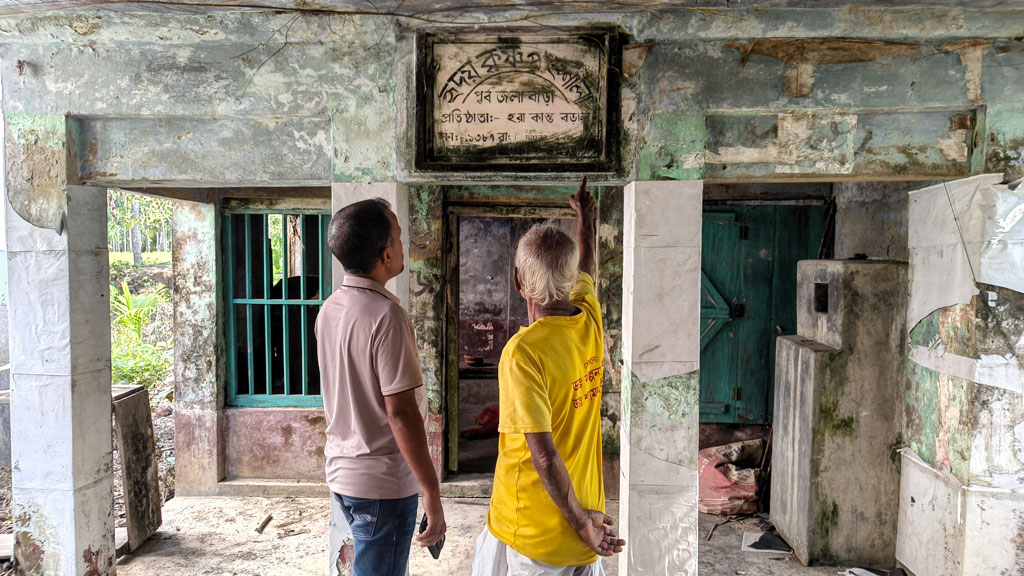
Purba Jalabari is a remote village in Jalabari union of Nesarabad upazila in Pirojpur. Although the village's name in government records is Purba Jalabari, people in several surrounding areas still know the place as 'Panthashala' — after a small rest house that once quenched travellers' thirst.
At one time there were no shops or houses within four or five miles of the village. On both sides of its winding earthen path lay vast green fields, trees and bushes. As evening fell, pitch darkness descended, jackals could be heard calling from all around, and people's movement after dusk was limited.
Back then, working people of the village had to go to the market at the upazila headquarters for essential shopping and other work. Leaving home at dawn, they had to walk miles of earthen paths. The exhaustion of the long journey, especially thirst in the intense summer heat, made pedestrians suffer.
Thinking of the pedestrians' hardship, the late Harlal Kanta Baral took a humane initiative. In the Bengali year 1387 he built a panthashala — a travellers' rest house — on the bank of a canal beside the village's earthen path. The small shelter was made with a roof of golpata leaves on bamboo poles. There was no fence around it and no elaborate arrangement — only a little shelter for travellers and a way to quench their thirst.
One or two earthen pitchers of drinking water were kept at the panthashala, with earthen glasses and batasa sweets beside them. Tired travellers arriving after walking a long way would drink the cool water from the pitcher, eat batasa and rest for a while leaning against a pole. Especially for people crossing the scorching path in the heat of Chaitra, a glass of water became a source of deep relief.
Anil Chandra Baral, a local elderly retired schoolteacher, said: 'At one time there were no houses or shops within several kilometres of this area. While travelling along the difficult path, water could not be found anywhere. Especially in the intense heat of the month of Chaitra, pedestrians would become thirsty. Thinking of their suffering, Harlal Kanta Baral built the panthashala on the canal bank for his own peace of mind.' He said drinking water was kept filled in earthen pitchers there, with batasa beside them; pedestrians would drink water, eat batasa, rest for a while and then resume their journey. With time, the area's communications have improved and numerous houses and shops have grown up around it — so the panthashala's necessity has ended.
A temple now stands at the site of the panthashala. Local followers of the Sanatan religion hold various pujas and religious programmes there throughout the year. A fair is held in the month of Baishakh, along with puja and naam kirtan. Hundreds of people gather from far and wide for these events.
The temple's priest, Amrita Lal Halder, said: 'Harlal Kanta Baral once built a rest house for travellers with bamboo poles and a golpata-leaf roof. He regularly gave water and batasa to tired and thirsty people. This is how the place gradually became known. Later, on the initiative of local people, a small temple grew up there. The temple was afterwards built courtesy of the Hindu Religious Welfare Trust.' He said a wooden house has been built beside the temple and kept as a panthashala to preserve its memory. Travellers no longer come there to drink water as before, but many people gather every year for puja, naam kirtan and the Baishakhi fair.
Local UP member Subrata Kumar Baral said Harlal Kanta Baral built the panthashala thinking of pedestrians' momentary relief. Especially in the month of Chaitra, he would give tired travellers water to drink along with batasa and puffed rice. This is how the panthashala's name spread across the whole upazila. The need for the panthashala has now ended, but the place's identity remains as before.
With the change of time, the picture of Purba Jalabari has changed. Improved communications have replaced the earthen path, houses and shops have grown up in the once-deserted settlement, and people's way of life has changed. The old arrangement for quenching travellers' thirst has disappeared. But the small panthashala built for people's welfare still survives in people's memory and in the area's identity.