Facing the Possible Loss of His Tongue, Poison Drummer Recorded His Voice for His Children; Now Cancer-Free for a Decade
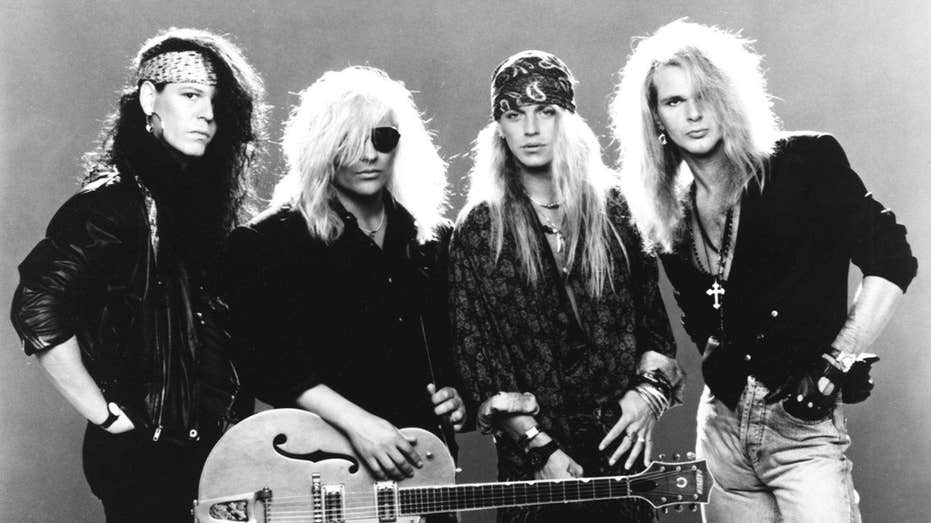
Poison drummer Rikki Rockett faced a terrifying possibility in his battle with cancer — doctors might have to remove his tongue. After chemotherapy and radiation failed to stop the disease, he began recording messages for his young children so that they could remember the sound of his voice.
Rockett, whose real name is Richard Allan Ream, says he was recording bits of information for his children so they could watch them, because the next step, if necessary, would have been to remove his tongue. He wanted the children to know what he sounded like, what his advice for them was as they grew up, and he wanted them to hear it from him himself.
During treatment, Rockett's weight fell to 161 pounds. The prospect of losing his tongue filled him with the fear that he might not live much longer. In his words, he probably would have had to use a feeding tube; although some people live a long time after such treatment, given the way things were progressing in his case, he did not believe he truly would have survived.
Now 65 years old, Rockett has said he has been cancer-free for a decade. His memoir 'Ghost Notes: My Life in Poison' recounts his rise to stardom during the exuberant days of the eighties and his difficult health battle. The book is now available, according to the report.
In 2015, Rockett said, he and his family had sore throats. Everyone was given antibiotics, but while the others recovered, his symptoms remained. He went back to the doctor; the doctor examined his nose and throat with a scope and saw something suspicious.
As Rockett recalls, the doctor told him he did not know whether it was cancer, but that it was suspicious and a biopsy would be needed. Rockett says his life changed at that very moment.
According to the Head and Neck Cancer Alliance, in 2015 Rockett was diagnosed with HPV-related throat cancer. The disease had affected the base of his tongue. According to the memoir, for more than a month he had a sore throat and a swollen lymph node, and it hurt every time he swallowed.
After the diagnosis he underwent radiation and chemotherapy. In the memoir he wrote that within a short time he could no longer eat solid food; unable to handle anything but soup, shakes and water, his weight dropped dramatically, and eventually he could not eat or drink anything at all.
He said he eventually reached stage four. He says the treatment failed despite three months of radiation five days a week and weekly chemotherapy. Doctors then discussed removing his tongue. In the memoir he wrote that at the time he believed his chance of survival was only 40 or 50 percent, yet he did not give up.
He then took part in an experimental drug combination at the UC San Diego Moores Cancer Center, and he says it worked unbelievably well. In his words, when such a drug works it is extraordinary, and when it does not it feels like a waste of time — so he had to take the risk, and fortunately the outcome went in his favor.
According to UC San Diego Health, Rockett took part in a clinical trial of a combination of two drugs — pembrolizumab (Keytruda) and epacadostat. In July 2016 he was declared free of throat cancer.
The toll of the treatment was no less severe. At one point Rockett's tongue swelled so much that he feared he would suffocate. But soon a scan brought hopeful news. He wrote that the very first PET scan showed 90 percent of the cancer was already gone, and on the second PET scan it had all gone — which seemed unbelievable to him. He wrote that the doctor was also astonished at the result, but treatment had to be continued to reduce the risk of the cancer returning.
The health challenges did not end there. He wrote that over a process of about eight months, even though nothing else was found, his white blood cell count kept coming back high. Later he was diagnosed with chronic myeloid leukemia — CML — which the report says is linked to an acquired genetic abnormality known as the Philadelphia chromosome. Facing one cancer after another, he was deeply shaken.
But his hematologist took the matter calmly and told him he had picked possibly the best kind of leukemia there is — it is highly treatable and sometimes curable. Rockett wrote that Dr. Jamison has been his doctor for the long future ahead. He is still taking the new medicine; although it has some bad side effects, he said the CML is in 100 percent remission with no detectable presence. Now, alongside celebrating a decade of being cancer-free, he has presented to readers in the memoir the story of that whole fight.