

Mother Hilsa Still Being Caught on Day 11 of Ban, Open Illegal Markets on the Padma Banks
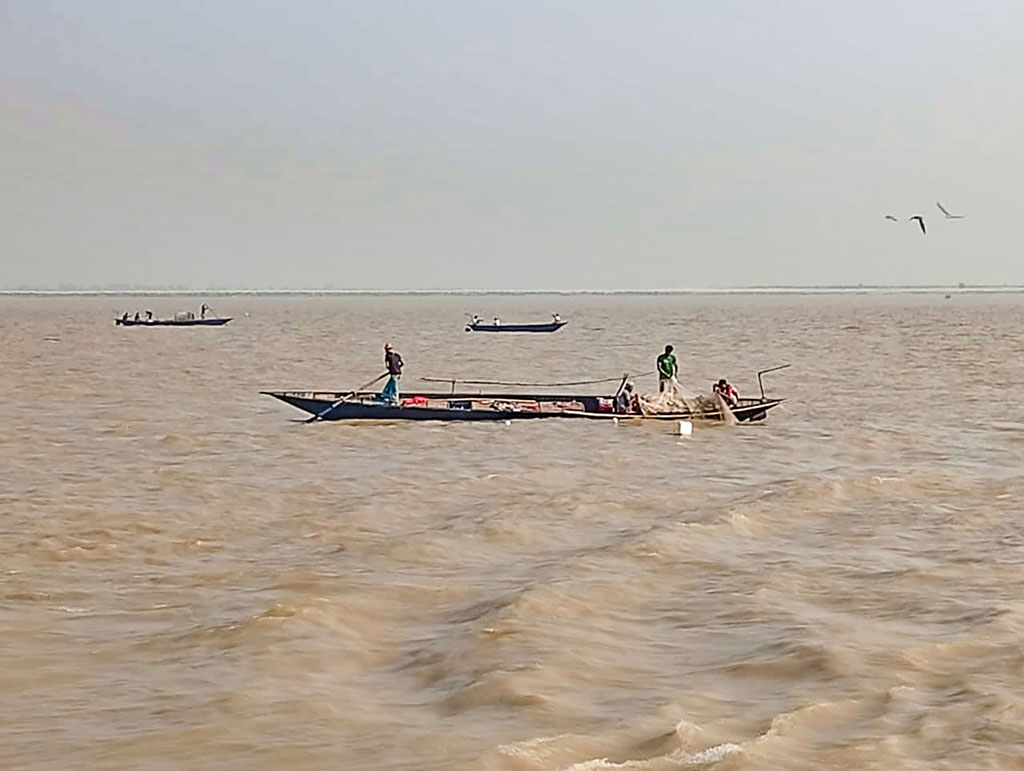
A 22-day ban on catching hilsa in rivers and the sea is in force to ensure safe breeding. Yet even after 11 days of the ban, the catching of mother hilsa has not stopped. In Shibchar of Madaripur and in Rajbari, fishers are catching hilsa illegally in the Padma river every day and selling it openly; the same scene has been witnessed in the Tentulia river in Bauphal upazila of Patuakhali.
The Department of Fisheries imposed the 22-day ban from October 8 to October 29. During this period, catching, transporting, storing, marketing and buying or selling hilsa are all prohibited, so that mother hilsa can release their eggs safely. Sunday marked the end of the 11th day of the ban.
Despite drives by the Department of Fisheries and upazila administrations — with nets seized and fines and jail terms imposed — the activities of dishonest fishers have not stopped. Fish caught in defiance of the ban is being sold openly on the riverbanks, and hundreds of buyers are flocking to buy egg-laden hilsa.
In Shibchar upazila of Madaripur, mother hilsa is being sold freely every day on the Padma banks at Kazirsura in Bandarkhola Union and near Hirakhar Bazar in Charjanajat Union. The fish are caught from the Padma and brought ashore by boat, and buyers crowd the river chars every morning and afternoon.
A visit on Saturday afternoon found a temporary hilsa market set up beside Kazirsura Bazar at the edge of Bandarkhola Union on the Padma bank. Trawlers were arriving one after another, and fishers were selling hilsa while seated on the trawlers. Because the fish is caught illegally, it sells somewhat cheaper than usual, which draws crowds of buyers.
Residents of the Kazirsura area said: "Fish caught at night starts selling at dawn. Crowds build up right after the Fajr call to prayer. The morning market breaks up by eight or nine. Then the day's catch is sold from after Asr until eight or nine at night. Fish is also available at night at various char areas of the Padma."
Sultana Begum, the wife of an expatriate who came from Bhanga in Faridpur to buy hilsa, said: "Because of the ban, fresh Padma hilsa is available at this time. These are not kept on ice. That is why I come to buy." Many believe this buyer demand is further encouraging the illegal catch.
Several fishers who defied the ban, speaking on condition of anonymity, said new fishers also arrive during this period. Fish is caught from various parts of the Padma, with the biggest hauls in nets cast at midnight. Enquiries found illegal hilsa markets operating at four to five spots in the Padma char areas, including the Banglabazar-Charjanajat border area and the riverbank near Hirakhar Bazar.
Shibchar Upazila Fisheries Officer Satyajit Majumdar said: "Because of a manpower shortage, ensuring one hundred percent surveillance across the whole area is difficult. But when we receive specific information, we conduct drives quickly." Shibchar Upazila Nirbahi Officer (UNO) H M Ibne Mizan said: "Regular drives are under way to protect mother hilsa. A large coordinated drive will be conducted soon to shut the illegal temporary markets that have grown on the Padma banks."
The same picture appears in Rajbari. Hilsa is being caught freely in the Padma across the district, with selling markets sitting on the riverbanks in broad daylight. Catching and selling have been seen at Urakanda, Godarbazar and Mechoghata in Rajbari Sadar, and at Antar Mor, Kushahata and Kolarbagan in Goalanda upazila.
Babu, a fisher of Sadar upazila, said: "Genuine fishers are not catching fish in the river in defiance of the government ban. But seasonal fishers are catching freely at this time. This is harming genuine fishers as well as the mother hilsa conservation effort." Rajbari Sadar Upazila Fisheries Officer Anwar Islam Pilot said drives are limited by manpower shortages and a lack of funds, and that unlike last year, Coast Guard support is not available this year. District Fisheries Officer Md Mahbub Ul Haque said: "We are conducting drives on the river as best we can. Even so, dishonest seasonal fishers are catching fish away from public view."
In the Tentulia river in Bauphal upazila of Patuakhali, mother hilsa is also being caught freely in defiance of the ban. On Friday around 8 am, fishers were seen catching fish from many boats in the Charbarret area; nets were hauled and cast until 1 pm, after which the fishers returned undisturbed to the ghat with their catch. Fishers are setting out in trawlers across a wide stretch from Dhulia Launchghat to Bogi-Tulatala and from South Charwadel to Char Raisaheb. A visit found fishers catching from trawlers in the Charbarret area under the patronage of a local Jubo Dal leader, who became angry when asked about it by phone.
Bauphal UNO Saleh Ahmed said there is some difficulty because law-enforcement members are deployed for Puja security, but drives will be strengthened. Bauphal Upazila Senior Fisheries Officer M M Parvez said: "We have continued drives on the river. But it is not possible to watch every part of this vast river at all times."
The picture in all three districts carries the same message: despite a strict ban on paper, a lack of surveillance on the ground has put the mother hilsa protection effort at risk. How effective the administration's promised coordinated drives prove to be in the remaining days of the ban will determine this season's breeding protection — and hilsa production in the days ahead.

