Ahead of the Midterms, Republicans Are Wobbling Even in Rural Trump Country
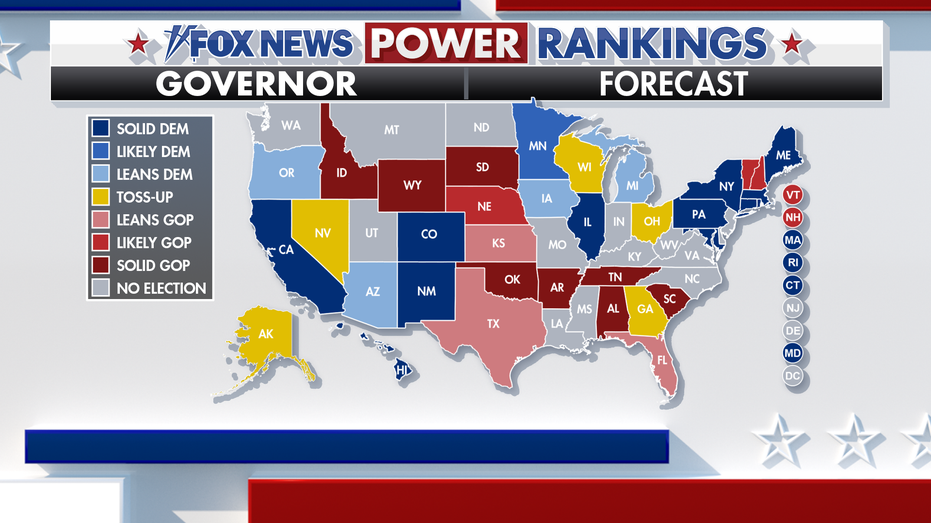
As the United States midterm elections approach, the Republicans' biggest worry has become their traditional stronghold — rural America. The latest Fox News Power Rankings analysis says the cost of living, unemployment and concern over artificial-intelligence data centres are reshaping the political arithmetic in regions known as President Donald Trump's country.
Republicans have had their share of good and bad election nights this century, but they have usually been able to count on the heartland. Once evenly divided, rural voters have become substantially more Republican over the past two decades, and nearly two-thirds of them backed Trump in the 2024 election.
But the picture is now changing. Today, just under half of rural voters say they will support the GOP again in November — meaning a major crack has appeared in the support of the very group that was the party's most dependable base.
The biggest reason behind this is economic pressure. Like other groups, rural Americans are concerned about paying the bills. In a recent survey, 19 percent of rural voters said the rising cost of living is their biggest economic problem, with gas and energy costs not far behind.
The Trump administration has partly tried to counter those anxieties by talking about job growth and the AI boom, but rural voters are frustrated about those issues too. Less than a quarter of rural voters say the economy is in good shape. Unemployment is also a focal point: 8 percent called a lack of jobs and unemployment their biggest economic issue, and only 28 percent thought there were good or excellent job opportunities in their communities.
Data centres have also entered the rural political discussion. Only 2 percent called them their biggest economic problem, but the analysis notes that the number is larger than it seems — for one in fifty rural voters, data centres are a bigger problem than housing, the cost of living or getting a job.
These factors have put the Republicans in a tough spot all over the map. This rural discontent is seen as a reason why heartland states like Ohio and Iowa have been competitive most of the year, and why more rural districts — including some Trump won by double digits — are becoming margin-of-error races.
Even beyond the polls, there are signs that the rural vote is on shakier footing. TV viewers in Wyoming will see ads this week for Republican candidate Chuck Gray that do not mention Trump or the GOP at all. Two years ago, Trump won 71.6 percent of the vote in that state — his best performance in any state, in any election.
The analysis warns that low rural turnout or party switching would make many races closer than the GOP would like, including in Florida, Mississippi and South Carolina.
Another complicating factor has joined this picture: the rise of independent candidates. This year, prominent independents are running for the Senate against Republicans in four rural-heavy states — Idaho, Montana, Nebraska and South Dakota. They are pushing anti-establishment policies such as congressional term limits and lobbying bans, with a heavy focus on corruption, which was the top voter concern in last week's Fox News poll.
All four independents say they will not caucus with either party, or would form their own independent caucus if elected. With the Democratic brand still relatively weak around the country and weaker still in these states, the party has effectively stepped out of the race in three of the four; in Montana, a Democrat is staying on the ballot, though support for her has declined.
Normally, frustrated partisans stay home in scenarios like these, leaving the incumbent party to win by a more modest margin. This year, however, those voters have the option of turning out for a different candidate, so the margin may get narrower still. For the rest of the midterm campaign, this mood among rural voters will remain the Republicans' biggest test.