

Ishraq's Resignation a Warning to Ruling-Party Leaders: Stepping Down Does Not End the Question of Legal Accountability
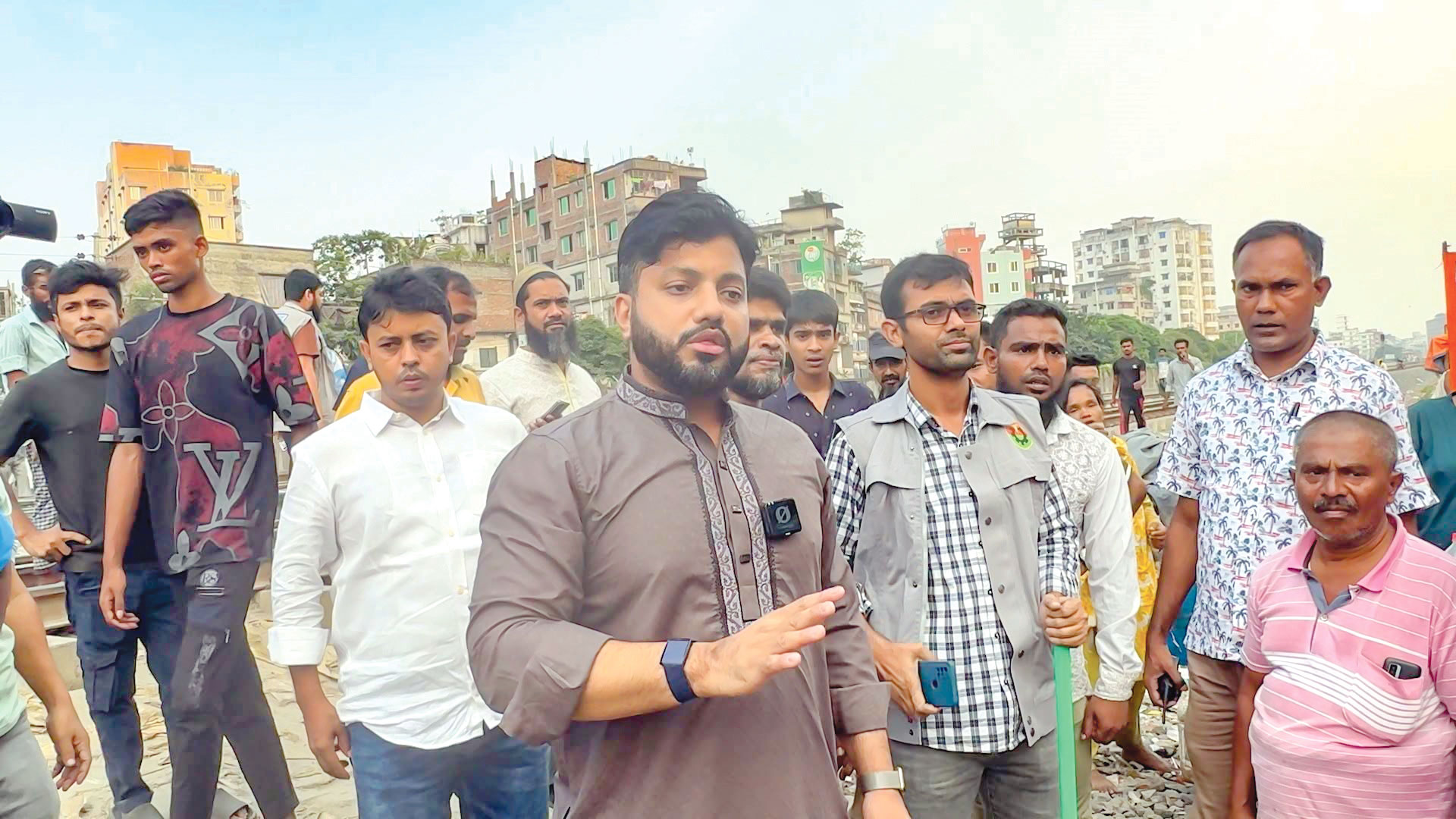
The episode of Ishraq Hossain, who was forced to step down as state minister for Liberation War affairs, is being seen as a major warning to leaders of the ruling party. He had to leave the post amid widespread controversy after a video of his activity with a firearm during an anti-drug raid in Gendaria in the capital spread widely.
Ishraq Hossain, son of the late mayor and freedom fighter Sadeq Hossain Khoka, had built a strong identity of his own through political inheritance, street movements and his fight to become mayor. Becoming a state minister upon being elected a member of parliament for the first time was a major achievement in his political journey.
But discussion has pointed out that in the end he could not show the responsibility needed to hold on to that achievement. The Dhaka-6 lawmaker's actions in Gendaria have been described as a blatant display of power and an example of political immaturity.
There is no doubt that the aim of eliminating drugs is positive. Drugs are now one of the country's main problems, a curse for hundreds of thousands of families, putting countless people, including future generations, at grave health risk. But whether a good aim justifies taking the law into one's own hands, or publicly displaying a firearm even if it is licensed, is the question at the centre of the controversy.
The discussion notes that taking effective action against the drug trade is primarily the responsibility of the state machinery, and that action is to be taken by the government's relevant authorities. As the elected representative of the area, Ishraq's duty was supposed to remain limited to assisting law enforcement agencies if needed; whether he could cross that line and take on the role of law enforcer himself is a question that cannot be avoided.
Before and after announcing his resignation, Ishraq Hossain said he had carried his licensed firearm for self-defence. He said he had information that he might be attacked by armed criminals at the scene. The discussion also noted that his statement must be taken into account in any investigation.
By telling Ishraq Hossain, without delay and in clear terms, to resign, Prime Minister Tarique Rahman has sent a message to others in the party and the government. Against a backdrop in which excesses and irregularities by influential figures of the ruling party are often overlooked, the prime minister's move is being seen as an example in establishing accountability — crossing the limit carries a price.
The significance of the episode is not limited to the resignation of one state minister. It is thought to have set out an unwritten but clear indication of how far leaders and ministers of the ruling party and its associate organisations can go in exercising power, and what consequences may follow if they exceed the limit.
In connection with the Ishraq episode, the recent resignation of Ferdousi Ahmed Misty, a lawmaker from the party's reserved women's seat, over the attack on the Radda Barnen health centre in Mirpur has also come up. These episodes suggest that if the unwanted conduct of ruling-party members crosses the limit or creates a major controversy, the top leadership may take extreme action.
However, another aspect has also been highlighted with importance — party disciplinary action and accountability under the existing law are not the same thing. Through resignation, someone may lose a government or party post, but that does not settle the question of whether the law was broken in the relevant episode and whether attention is being paid to it. The rule of law means ensuring the same legal standard for the powerful and for ordinary citizens.
The 2020 Dhaka South City Corporation election has also been mentioned in this context. Ishraq first came into major discussion by contesting for the mayor's post. Later, the election tribunal's verdict declaring him mayor was a milestone in his political life. But the movement by his supporters over taking charge as mayor eventually led to the siege of Nagar Bhaban, locking of its gate and disruption of civic services for a long time, for which he was also criticised.
Controversy had also arisen over Ishraq's speech at a reception for the families of July uprising martyrs and July fighters. Questions were raised over his language in response to objections by leaders of the National Citizen Party, and the discussion said it was not responsible political behaviour.
The background includes the end of Sheikh Hasina's long rule on 5 August 2024 through the July mass uprising, and the BNP's return to power after a long 19 years with a promise of change. The people did not only want a change of ruler; they also expected change in the culture of politics and state governance — and whether the conduct of those in power matches that expectation is a question now being raised by the opposition and various quarters.
Ishraq Hossain will remain in politics as a member of parliament; losing the state minister's post is not the end of a political life. But this episode has created an opportunity for self-reflection for him and for other leaders and activists of the ruling party — if power is not used with restraint and responsibility, it quickly turns into a liability.



