Jury Awards MIT Scientist Sabatini $6 Million, Rejects the Sexual-Misconduct Claims that Ended His Career
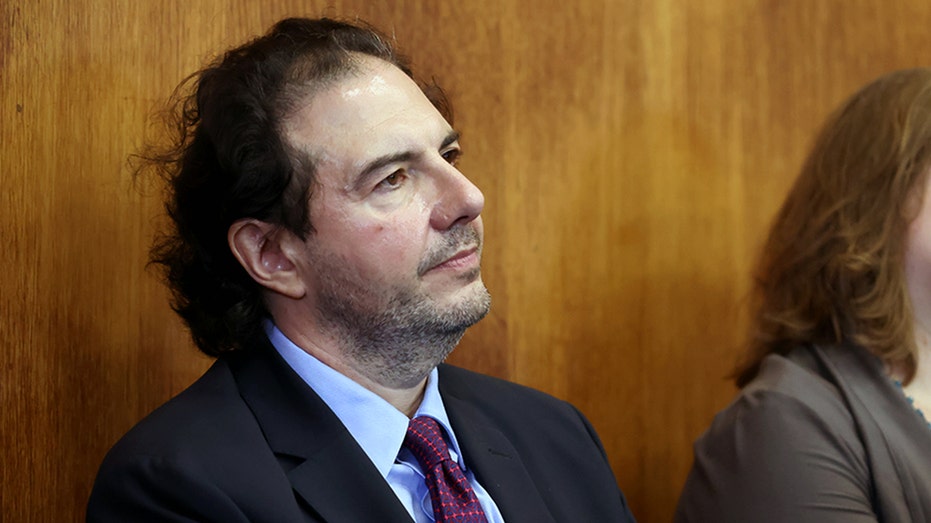
A Massachusetts jury has awarded scientist David Sabatini $6 million and rejected the sexual-misconduct claims that had ended his career at the Massachusetts Institute of Technology (MIT) and shuttered his research laboratory at the Whitehead Institute.
The verdict by the jury of seven women and six men supports what Sabatini has long maintained: that his accuser, Kristin Knouse, had lied. But the legal fight took years of his life and nearly ruined him financially.
Before 2021, scientists revered Sabatini as one of the greatest molecular cell biologists alive. He ran a major lab at Whitehead, held a professorship at MIT, served as a Howard Hughes Medical Institute investigator and received tens of millions of dollars in federal funding.
His groundbreaking research could yield new cancer and aging therapies and save countless lives, and predictions swirled that he would one day win the Nobel Prize.
It all came crashing down. Evidence at trial indicated that Knouse — who led her own lab — launched a campaign she termed 'covert operation dethrone' to topple Sabatini after he ended their roughly year-and-a-half-long relationship. She messaged one friend that Sabatini was going to be 'Weinstein'ed out of science', and another that she was 'out for blood'.
Knouse told colleagues that Sabatini had harassed and assaulted her, and in the fall of 2020 she took her claims to Whitehead's new director, Ruth Lehmann.
Whitehead eventually hired a law firm to conduct an investigation, but later reporting and trial evidence indicate the investigation had a largely predetermined outcome. The firm's final report reached no conclusion on whether Sabatini's and Knouse's relationship had been consensual.
The report mostly faulted Sabatini for not reporting his relationship with Knouse to HR and for a 'sexualized undercurrent' in his lab — an environment which it deemed, along with the relationship, to violate an anti-harassment policy. It also took umbrage with his focus on 'science above all else' and his propensity to praise those demonstrating scientific success.
The fallout was immediate. The Howard Hughes Medical Institute quickly fired Sabatini; that same day, after Whitehead told him it would dismiss him, he resigned.
Lehmann later denied, in a deposition, making some of the comments attributed to her, according to the case record.
After the verdict, some commentators argued that the trial exposed how thin the case against Sabatini had been all along, that MIT and Whitehead owe the public a reckoning, and that the Trump administration should investigate both institutions.
The $6 million verdict is a major legal victory for Sabatini, but the scars of the years-long fight will not fade easily. The case has revived debate in American academia over how the career of a leading scientist can be destroyed through an accusation and an investigation process.