
Iran's Hardliners Press President Pezeshkian and Seek Foreign Minister Araghchi's Impeachment
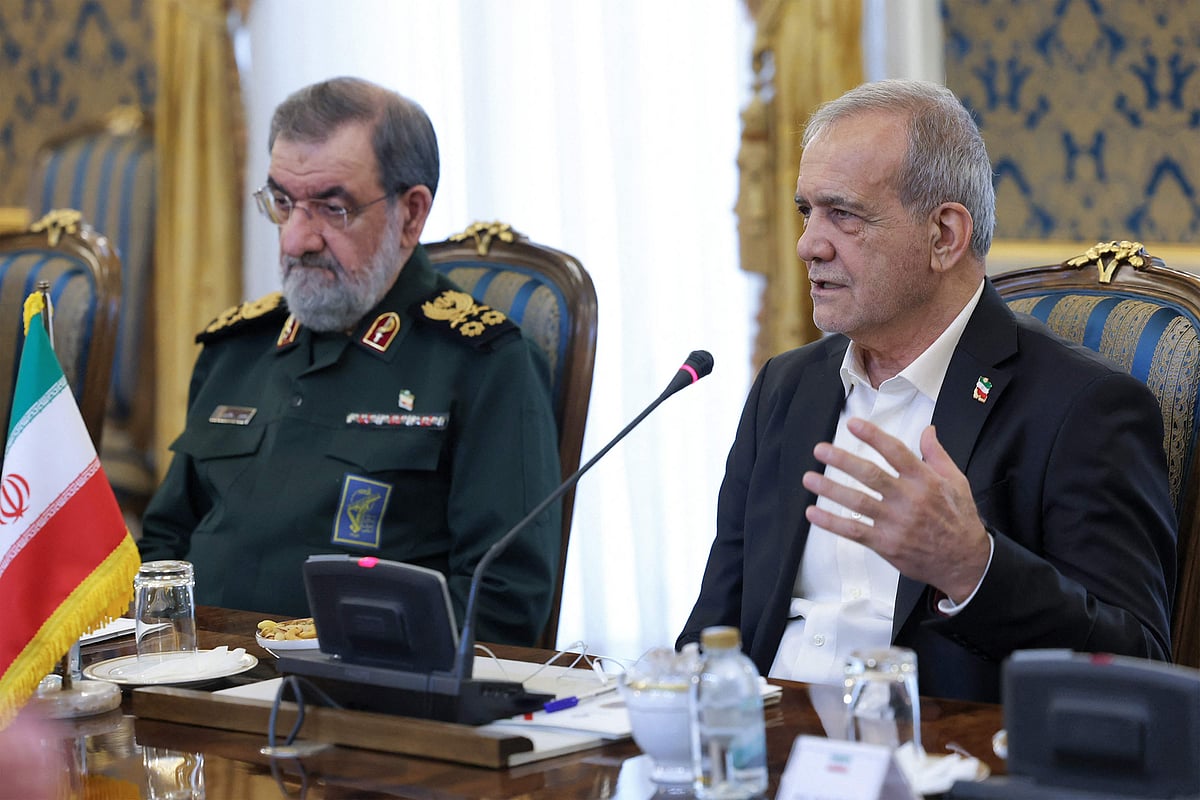
Iran's anti-negotiation hardliners have taken a position against President Masoud Pezeshkian over talks with the United States. As fears of a new war with the United States grow, they have called for starting the process of taking Iran out of the Nuclear Non-Proliferation Treaty.
This hardline faction is the Front of Islamic Revolutionary Stability, also known as the Paydari Front. It has called on Iran's parliament and the Supreme National Security Council to take Iran out of the non-proliferation treaty. The step is being seen as a call for Iran to build nuclear weapons. The Paydari Front has said these military initiatives must be taken as soon as possible.
This is the latest example of the hardliners' uncompromising message against Washington. On the allegation that Tehran is trying to build nuclear weapons, the United States and Israel started a war against Iran on 28 February.
Because of the war, shipping through the Strait of Hormuz has largely stopped. Missile and air strikes have caused extensive damage to infrastructure in Iran and Arab countries. Global energy supplies have also been severely disrupted.
Over the past eight months, alongside the war, a power struggle for political survival has also continued inside Iran. On one side are liberals and moderates such as President Masoud Pezeshkian, who generally favour talks with the United States. On the other side are the Paydari Front hardliners, who do not want talks.
The liberal camp wants a quick end to the conflict to save Iran's broken economy. The hardliners believe Washington understands only the language of force, and that the war must continue until the United States accepts Iran's demands and submits.
The picture of this internal rivalry can be seen in the squares of Iran's big cities. For 200 days, supporters of the hardline group have held nightly gatherings there. At first, through these gatherings people publicly showed support for the government and protested the United States' unprovoked war against Iran. Over time, the gatherings turned into organised political rallies, where political activists strongly oppose liberals' efforts to end the war through diplomacy.
Among the hardliners' slogans are 'No compromise, no surrender — we want a fight against America' and 'Negotiating with the enemy is betrayal of the motherland'. They also protested in September when President Pezeshkian returned to Tehran from the United Nations General Assembly session. At that session, Pezeshkian condemned the United States' war and also highlighted the benefits of diplomacy. The protest was seen as a way to deliver their anti-negotiation message to the president.
Beyond these political activists, the group also holds considerable power. Hardliners have a strong position in Tehran's city administration and in parliament. They also have influence among religious speakers and elegy reciters, and a strong position in education and the media.
Amir Hossein Sabeti, a member of parliament close to the Paydari Front, said in a statement that talks with Washington will not begin without the withdrawal of the United States' blockade or sanctions on ports in southern Iran. He said the enemy has not moved away from its goal of destroying Iran and is waiting for the right time to launch another surprise attack. Those who thought talks could prevent war, or that the United States would lift sanctions through talks, did not understand how the world works, he said, adding that the world understands only the language of force.
The political group to which Amir Hossein belongs has submitted to parliament a proposal to impeach Iran's Foreign Minister Abbas Araghchi. The proposal was brought after his visit to New York to attend the United Nations General Assembly session. Iran's parliament is also considering a law that would treat giving interviews to foreign media as a criminal offence.
The process over the proposal to impeach the foreign minister is moving forward in parliament. However, the pro-government political camp continues to speak in favour of a diplomatic solution to the current conflict. Davoud Heshmati, a journalist known to be close to Pezeshkian, said some signs suggest US forces have moved away from the larger goal of overthrowing Iran's government and have instead chosen comparatively smaller goals, increasing the possibility of a diplomatic solution.
Heshmati also said those who say the Strait of Hormuz cannot be reopened believe the war should not end, but they do not explain what result they expect from the war. He said that to prevent war, all alternatives to military action must first be examined, and that talks and diplomatic agreements are among those alternatives and should always be given priority over war.
According to political analyst Negar Mortazavi, hardline groups are strong inside the country, but their influence on Iran's foreign policy is now limited. She said Iran's hardliners are not a marginal political force; they are organised and positioned deep within Iran's power structure. Their strength lies in their ability to organise supporters, set the course of political discussion and put pressure on the government.
Mortazavi also said political influence and the power to take final decisions should not be seen as the same. Decisions on war, peace and talks are taken at the highest level of Iran's leadership and national security structure. Those power holders include Supreme Leader Mojtaba Khamenei and the Supreme National Security Council. Hardliners have enough power to make diplomacy more complicated, but they do not appear to have the power to stop it.
Rallies against a peaceful solution to the United States and Israel's war against Iran will continue on the streets, and television programmes on the issue will also continue. However, setting a date for the foreign minister's impeachment hearing is being delayed. At the same time, diplomatic contacts with mediators to end the war are also continuing. All of this indicates that the liberals are still a force that cannot be ignored.


