France's Unrest a Warning Signal for Australia: Economists Sound Alarm on Debt and Public Spending
The explosion of discontent that led to major protests and violence in France and across Europe is a warning signal that Australia could follow the same path without an honest conversation about the budget, economists say. Australia's public debt may be well below that of France, but there are lessons to be taken from its economic woes, they said.
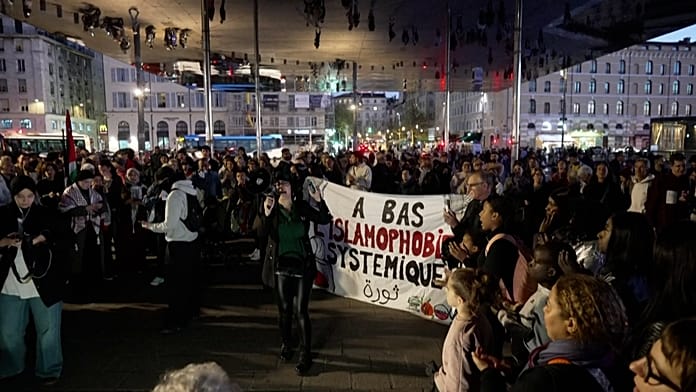
Hundreds of thousands marched in cities across France on Saturday to protest against school underfunding, as complaints of insufficient teacher numbers and dilapidated infrastructure mingled with broader discontent about cost-of-living pressures.
Luke Hartigan, a senior economics lecturer at the University of Sydney, said it was clear there was no single factor behind the discontent in France, but soaring energy costs were having a major impact. Fuel prices are up 36% this year in France, three times the increase in Australia. The US-Israel war on Iran has sent European gas prices soaring as the northern hemisphere approaches winter, the report noted.
More fundamental, however, is that France's finances are buckling under its generous welfare state, Hartigan said. France's high public debt, stagnant economy and universal social security benefits have created a binary situation, he said, where citizens' demands for better services and cost-of-living help are clashing with the country's increasingly dire fiscal position.
France has not balanced its budget since 1974. Meanwhile, total public debt as a share of the economy has swelled to nearly 120%, according to the International Monetary Fund.
Australia's total government debt pile looks benign in comparison at 53%. But a decade ago the debt was 40% of GDP, and a decade before that it was just under 10%. Hartigan said France's lacklustre economy had compounded its fiscal problems, underlining how Australia needed to work hard to boost productivity. He said France's challenges give an idea of where Australia could potentially be if it continues down this path.
Bob Breunig, the director of the Australian National University's Tax and Transfer Policy Institute, said there was a growing gap between what voters believed the government should be able to do and what politicians were able to deliver. He said the narrative that the government should be able to solve all problems has probably been pushed further in Europe than in Australia; it is failing in both places, but it is pointier there than here.
French public spending now accounts for 58% of the economy, IMF data shows. In contrast, Australia's total public spending is equivalent to 40% of national output, the highest in data stretching back to 1990 outside the pandemic, and at similar levels to the United States and the United Kingdom. Breunig said all the protesters are asking the government to help them out, but the government has maxed out the credit card, and France's debt was reaching levels that are unmanageable. He said the federal government in Australia can still borrow and has a lot of flexibility, and the French just have no money.
President Emmanuel Macron's decade in power has been marked with failed attempts to rein in spending. Breunig said there is a real sense that people don't know what to do.
The bond market reflects growing alarm with France's fiscal trajectory. France typically has to pay a higher interest rate on its 10-year debt than fiscally prudent Germany, and the gap between the two rates is now at its widest since the European debt crisis in 2011.
Amid structural pressures on the budget from an ageing population, the NDIS, higher interest rates, and the push for greater spending on national defence, Breunig agreed there were lessons for Australia in not allowing the country to drift too far and for too long. He said an honest public conversation is needed about what the government can be expected to do and what it can't, and then a conversation about how much that would cost and whether Australians are willing to pay for it. He said he was broadly agnostic whether repairing the budget involved lower spending or higher taxes, and that, at the end of the day, making these decisions is exactly what democracy is for.