'Scentronic' Technology to Send Smells Over the Internet: Ohio State Researchers' Artificial Nose Can Identify Five Scents
Sending photos, videos and messages over the internet is an everyday habit, but sending the smell of something online has not yet been possible. A new technology called 'Scentronic' could change that idea, researchers say.
The technology first identifies a scent with special sensors and sends that information over the internet to a device at a distant location. The corresponding scent is then created from that device.
Researchers at Ohio State University in the United States created the technology. The research team is led by Chunyu Yang, a doctoral student in the university's physics and engineering department. Their research was published in the science journal Science Advances.
The Scentronic system has an 'electronic nose', or artificial nose, which uses gas sensors to identify chemical components associated with different scents. A machine learning model then analyses the signal to determine the class of a known smell, and the information reaches the scent-making device at the other end through an online platform.
At present, Scentronic's artificial nose can identify five types of scent. They are beer, cake, coffee, orange and red wine.
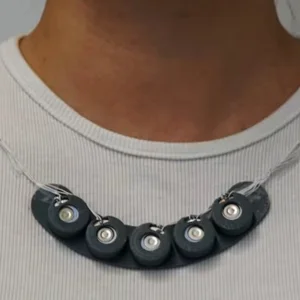
The scent-identifying device is about 15 centimetres in diameter. It is portable but not suitable to wear on the body. For the scent-making device, meanwhile, the researchers have made a wristwatch-like band version, a necklace version and a handheld version.
Tests verified the artificial nose's ability to identify scents and how accurate the recreated fragrances seemed to people, the research says.
According to the researchers, in future the technology could be used to send the smell of food to relatives far away, make virtual and augmented reality experiences more realistic, and check the fragrance of a specific product before buying online. Scents could therefore be added alongside images and sound in video calls, virtual reality and online shopping.
However, it is not yet possible to send just any scent. The artificial nose will have to be trained to identify a new smell, and the corresponding fragrance liquid must also be kept in the device at the receiving end, the researchers said.
The technology is still at the research prototype stage, and no company was involved in creating it. Before commercial use, challenges remain including accurately identifying mixed scents, creating more types of fragrance, reducing the device's size and production cost, and ensuring the safety of repeated fragrance use. In future the technology might be used by attaching a special accessory device to a smartphone, but the researchers said fitting everything directly inside a phone would be difficult because of the container for fragrance liquid and the necessary components.