In Karnataka's Ramanal, Women Sugarcane Cutters From Maharashtra's Beed Are Losing Their Wombs to Keep Their Work
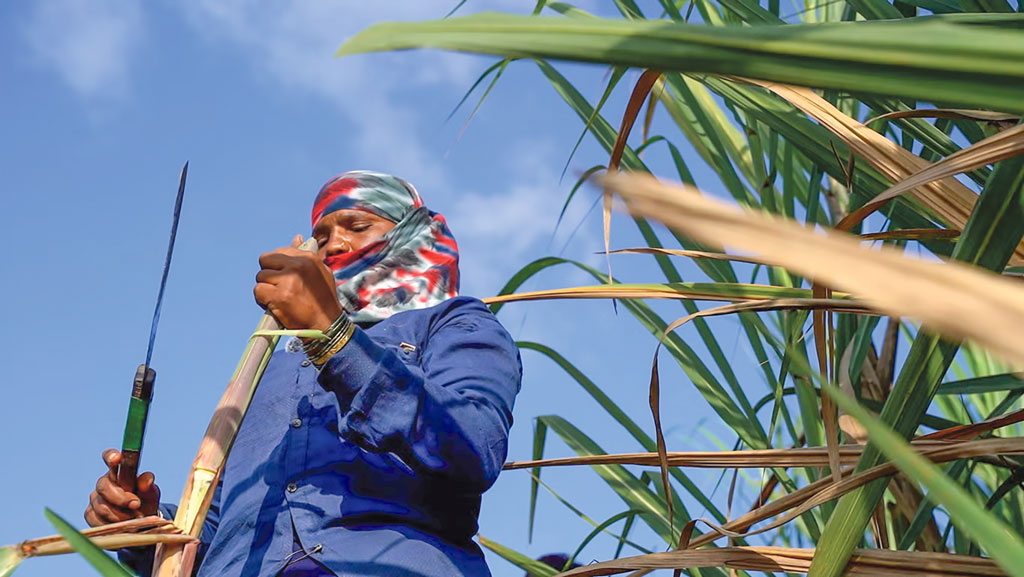
Ramanal is a remote area of India's Karnataka state. At 4am, the women staying in temporary tents there finish bathing before the men wake. One of them is Purnima, who has travelled more than 500 kilometres from her own village to work cutting sugarcane.
An estimated 1.5 million women and men work in sugarcane cutting, like Purnima. Many of them work about 14 hours a day and are paid only 400 rupees a day. After cutting cane from dawn to night, they also have to load it onto trucks.
About 16 percent of the world's sugarcane comes from India, and cane from this region is used in soft drinks made by companies such as Coca-Cola and PepsiCo. Most of these workers are residents of Beed district in central Maharashtra; with little work available in their own area, they do this hard labour to support their families.
To keep their work, many women are forced to take major risks with their reproductive health. With no chance of leave during menstruation, many consider hysterectomy surgery as a solution. The workers' temporary camps lack adequate toilets and clean water, and a large amount is deducted from wages for a single day's absence.
For many Beed families this seasonal work is the only source of livelihood. Every year contractors known as 'mukkadam' organise the workers; they liaise with sugar mills, arrange transport and give advance money. A husband-and-wife team is called a 'koita' in the local language. To repay the advance, each couple must cut an average of three tonnes of cane a day. The output and income of seven or eight koitas are counted together, so when one team cannot work the others come under pressure, and if a woman cannot go to work the other couples collect a fine from her.
Rights activist Sangeeta Chavan has worked on the issue for a long time. The high rate of hysterectomies in Maharashtra drew strong attention after a 2019 report by Dr Neelam Gorhe, a leader of the Shiv Sena (Eknath Shinde) party. Sangeeta alleges that instead of being sent to government hospitals for cheaper treatment, women are sometimes pressured to go to centres where surgery is performed without proper process.
In India, 'ASHA' workers link rural women to government health services at field level. Sangeeta said she had learned that some people receive money for referring patients for hysterectomy; however, speaking to ASHA workers in Maharashtra produced no confirmed information on this. Ganga Shevante, an ASHA worker in the Wadwani area of Beed, said she had heard of young women having hysterectomies but was not sure whether they took place in government or private hospitals, and that she herself had never taken money for a referral.
For many women the suffering has not ended after surgery. A worker named Sabita suffered bleeding and pain for months after her hysterectomy. In Pune she learned she had an infection, and she alleges she was not given her surgery report when she asked for it.
Sugarcane contractors say they do not force any woman to have surgery, but wages are not paid for absence from work, because with fewer workers less cane is loaded onto trucks and sugar mills may not want to give them work the next season.
In 2019 the Maharashtra government surveyed 82,309 women who had gone from Beed to cut cane. It found that 13,861 of them had had hysterectomies, and more than 45 percent of them reported physical and mental problems afterwards. The government then investigated the cases and took measures to improve migrant workers' living conditions. In March 2025 the Bombay High Court directed that registration, welfare and healthcare access for cane workers be increased; a follow-up report due in November 2025 was not published, and field-level workers say the situation on the ground has changed very little.
Purnima has suffered menstrual pain for three years. She spends about 50,000 rupees a year just on pain-relief medicine. On returning to her village this time she will have to have the surgery, and will have to borrow again for it. Beed's district collector, Vivek Johnson, who is responsible for district administration and public welfare, declined to comment when contacted.
Coca-Cola said it is working through a partnership with the international organisation Solidaridad Network to increase workers' access to clean water, sanitation, shaded rest places, tools to reduce physical labour and women's hygiene products. PepsiCo was asked for comment but did not reply.