
No bloc reaches 61 in Israel: Likud leads with 27 seats as coalition talks decide the next government
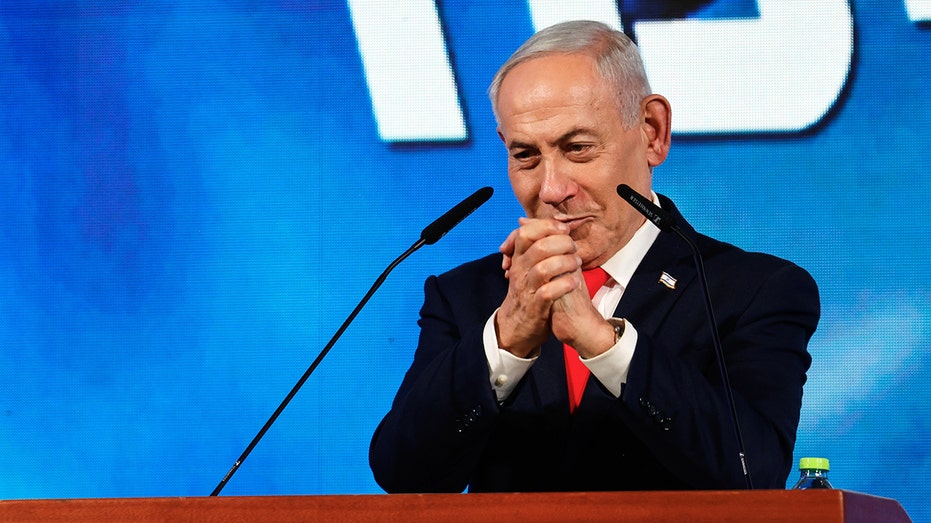
Israelis voted on October 27, but there appears to be no clear winner. The next government, like every government in Israel's history, will have to be a coalition, and the question now is who can secure at least 61 of the Knesset's 120 seats to form a government and become Israel's next prime minister.
Israel's parliament, the Knesset, has 120 seats. Parties win seats in proportion to their share of the national vote, provided they clear the 3.25 percent threshold to enter parliament. A government needs the support of at least 61 politicians to secure a majority, and neither of the main blocs has reached that number in the exit polls or the initial count.
Initial counting by the Central Elections Committee put Benjamin Netanyahu's Likud ahead as the largest single party, with 27 seats. Netanyahu's bloc was projected to win 54 seats, against 50 for Gadi Eisenkot's bloc.
Four exit polls published on election night showed how close the race is. Kan 11 and Channel 13 put Netanyahu's bloc and Eisenkot's opposition bloc level at 51 seats each. Channel 12 gave Netanyahu 52 seats to Eisenkot's 49, while Channel 15 was most favourable to the incumbent, projecting 55 seats for Netanyahu's bloc against 49 for the opposition.
The Arab-led parties Ra'am and the Joint List could hold the balance of power, with exit polls putting their combined support at between 16 and 19 seats. But the political obstacles are considerable. Netanyahu has described a coalition with Arab parties as 'shameful', while leading figures in the Jewish-led opposition have also ruled out governing with them. That leaves potential coalitions that may work on paper but face serious political barriers.
Netanyahu's bloc spans Likud, the ultra-Orthodox parties Shas and United Torah Judaism, and the far-right parties Religious Zionism, led by Bezalel Smotrich, and Otzma Yehudit, led by Itamar Ben-Gvir. Eisenkot's opposition bloc includes his Yashar party, the Together list associated with former prime ministers Naftali Bennett and Yair Lapid, Avigdor Liberman's Yisrael Beytenu and Yair Golan's Democrats.
Once the results are certified, the president gives the mandate to the member of the Knesset considered most likely to assemble a majority. That politician has 28 days to form a government, with a possible extension of up to 14 days. If they fail, another lawmaker can be given a chance. If no one can form a government, Israel may have to hold another election, as it did repeatedly between 2019 and 2022.
Netanyahu, Israel's longest-serving prime minister, with 19 years in office across three stints, remains caretaker prime minister while coalition negotiations unfold. He is also standing trial on corruption charges, which he denies.
Official results are due on November 4. Negotiations to form a government could take considerably longer.


