Israel Vote Count at 70%: Netanyahu Bloc Leads with 54 Seats, Majority Still Elusive

With about 70 percent of votes counted in Israel, Prime Minister Benjamin Netanyahu's right-wing and religious bloc stands at 54 seats in the 120-seat Knesset. The main opposition holds 47 seats and Arab parties hold 19, according to partial election results reported by Israeli media.
Netanyahu's Likud leads with 27 seats. Former military chief Gadi Eisenkot's Yashar party holds 20 seats.
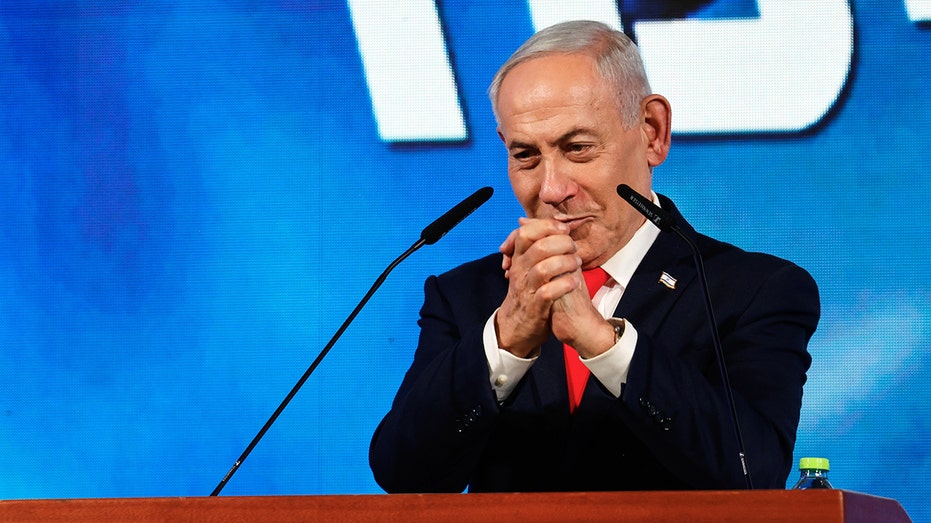
The results mark a shift from Tuesday night's initial exit polls, which prompted celebrations at Eisenkot's campaign headquarters in Tel Aviv. Eisenkot called on Netanyahu to accept the results and step aside, while Netanyahu declared from his headquarters in Jerusalem that Likud had emerged as the country's largest party and urged the formation of a strong right-wing government.
Despite Netanyahu's lead, the parties outside his governing bloc collectively hold 66 seats, a majority in the 120-seat Knesset, creating a potential path for the opposition to challenge his leadership if it can secure sufficient cooperation from Arab lawmakers.
The growing influence of Arab parties has emerged as one of the most consequential factors in determining Israel's next government. According to the partial results, the Joint List holds 13 seats and Ra'am, led by Mansour Abbas, holds six, giving Arab parties a combined 19 seats.
Abbas signalled openness to political negotiations, telling Israel's Channel 12: 'Everyone is talking to us, not just the change bloc.'
Democrats leader Yair Golan went further, openly calling for the formation of a new government in cooperation with Arab parties. He wrote on X that Netanyahu had lost and that 65 is greater than 55 in a count to 120. Golan also rejected Netanyahu's distinction between Jewish and Arab political support.
President Donald Trump took credit on Wednesday morning for Netanyahu's stronger-than-expected election performance. On Truth Social, he shared a statement from Irving C. Schwartz saying that when Trump endorsed Netanyahu, the whole tide turned. Later, speaking to reporters near Air Force One, Trump said he had heard the exit poll numbers were wrong and that his endorsement had helped Netanyahu a lot.
The contest has now shifted to a complicated battle over coalition-building. Netanyahu could attempt to expand his current coalition by winning support from at least seven lawmakers outside his right-wing and religious bloc, which would bring him to the 61 seats needed for a conventional parliamentary majority.
Alternatively, Eisenkot could seek enough parliamentary recommendations, potentially including those of Arab parties, to persuade President Isaac Herzog to give him the first opportunity to form a government. However, he would still need enough parliamentary support to secure a confidence vote. Eisenkot has previously expressed opposition to including Ra'am in his coalition.
A third possibility is another deadlock, with neither leader able to form a government and Israel potentially facing another election.
The final outcome remains uncertain as vote counting continues, including ballots cast by soldiers and other voters using special voting procedures. Official results are scheduled for 4 November, after which Herzog will consult with parliamentary factions and select a lawmaker to attempt to form the next government. That candidate will initially have 28 days to negotiate coalition agreements, with the possibility of a 14-day extension. Until a new government takes office, Netanyahu will remain prime minister.
This is Israel's first national election since the Hamas attack of 7 October 2023.