Four Chinese Research Vessels Near Alaska as One Breakdown Halves US Icebreaking Capability in the Arctic
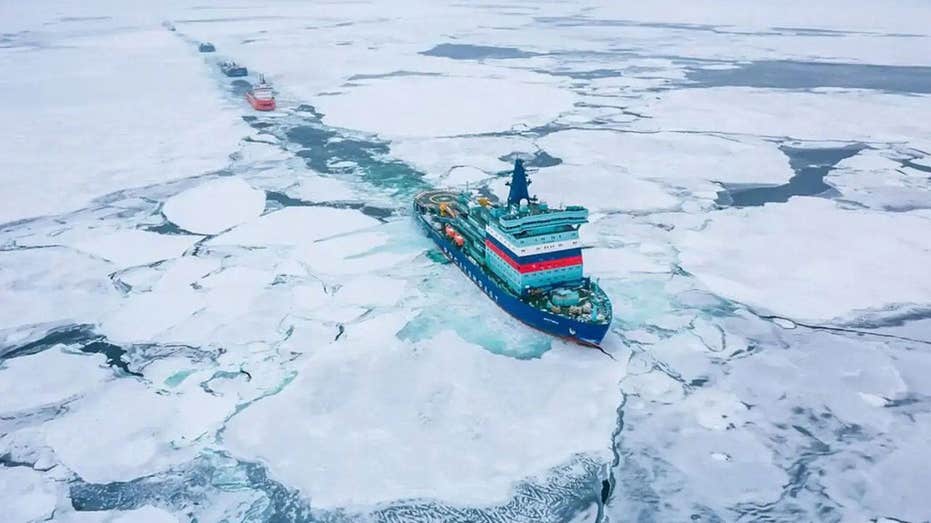
An unexpected mechanical failure on the US Coast Guard Cutter Healy cut the United States' icebreaking capability in the Arctic in half this summer. Rear Admiral Bob Little, commander of the Coast Guard's Arctic District, said the failure of the Healy left him with just one of the two icebreakers that had been slated to operate in the ice.
At the same time, four Chinese research vessels were operating in the region. Little said, 'Healy's unexpected mechanical failure cut in half my capability to operate up in the ice.'
Little said nearly $25 billion in recent funding will support 11 new Arctic Security Cutters, with the first expected to arrive in the region as early as 2028. He said, 'I can't get those icebreakers soon enough, given the operational environment.'
Declining sea ice is opening more navigable water around Alaska. Little said that as the new operational area becomes accessible, human activity for economic development and military advancement is increasing, and that activity is creating a need for additional Coast Guard missions.
Chinese research activity has also grown, Little said. He said it had grown from as few as one vessel appearing episodically to five last year, while four operated there this year. He said any research vessel operating in the Arctic can conduct scientific research and economic research for future exploitation of critical minerals and scarce resources, and that such research can also aid military activity in identifying seabed floors and navigating subsurface assets.
The Coast Guard Cutter Munro recently returned from a 112-day Arctic patrol that included monitoring Chinese research ships. Little said the Coast Guard did not observe activity on the surface that fell outside customary law or international norms.
Troy Bouffard, director of the Center for Arctic Security and Resilience at the University of Alaska Fairbanks, said China's research activity gives Beijing experience operating in an environment where it has historically had little. He said the vessels collect legitimate scientific data, but that information can have other applications, especially when it comes to submarine warfare planning. He also said getting a ship from Kodiak, Anchorage or Seattle into the Bering Sea can take several days.
Little acknowledged that Russia's much larger icebreaker fleet gives Moscow an advantage, allowing it to maintain access, sea lanes and logistical routes for commercial and military purposes. He said the Coast Guard has also observed joint Russian-Chinese military surface groups, cooperation between their coast guard forces and Chinese research vessels collaborating with Russia and likely sharing information, and that when the two work together the service watches closely to see whether they pose any threat to homeland security or a military risk to the United States.