Why California's midterm results take longer: mail ballots are the main reason
Although Election Day in the United States is 3 November, at least some of California's midterm election results may not be projected until days or even weeks later. Alaska and Pennsylvania could also see results later than other states.
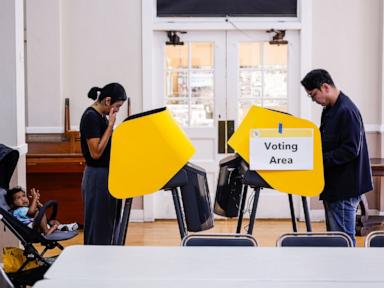
California is the most populous US state, with 23 million registered voters. A large number of ballots arrive by mail, some not until a week after voting ends — one major reason results take longer.
According to the California secretary of state's office, vote-by-mail ballots postmarked on or before Election Day and received within seven days after the election, as well as any provisional ballots cast, must still be counted.
Counting mail ballots and validating voters' signatures is also an arduous process, as each envelope signature must match the signatures on file. County election officials have up to 30 days after the election to count ballots.
Earlier this year, the Supreme Court upheld a Mississippi law allowing tabulation of late-arriving mail-in ballots so long as they were postmarked by Election Day. The decision was a loss for the Republican Party and the Trump administration, which has pushed to override state election rules by imposing strict federal limits on voting by mail.
Last month the Supreme Court also rejected the Trump administration's attempt to limit mail-in voting for now, keeping in place a lower court decision blocking the US Postal Service from implementing new restrictions.
According to Secretary of State Shirley Weber, more than 89 percent of Californians who voted in the 2 June primary election did so by mail. On 10 July, Weber announced that the primary results were certified.
Even in the primary, projections took time: Democrat Xavier Becerra was projected to advance to the gubernatorial general election on 5 June and Republican Steve Hilton on 9 June — about a week after the primary.
California's long counting process often draws criticism. President Donald Trump has frequently claimed, without evidence, that elections in the state are 'rigged'. In a Newsmax interview in early October he said, 'In the end, they're not going to let you win it. They just won't let you win it because it's a rigged state.'
In his fraud claims, Trump has also referenced Republican Spencer Pratt's loss in the Los Angeles mayoral primary. Pratt was initially in second place on primary night but was eventually edged out by Democrat Nithya Raman once ballots were fully counted. Trump claimed in early October that such a surge could only be explained by cheating, although the report said there is no evidence for the claim.
According to the University of Florida's Election Lab, as of 25 October, 50 percent of mail ballots accepted by California were from registered Democrats and 29 percent from registered Republicans, with the remaining 21 percent from voters with no party affiliation or registered with a minor party.
An October ABC News/Washington Post/Ipsos poll found that among likely California voters who said they would probably or certainly vote — or already had — 65 percent said they would vote by mail. Just 11 percent said they would vote in person at a polling place on Election Day.
Trump has spoken against mail-in ballots for years, despite himself voting by mail twice in Florida elections this year. A White House spokesperson said Trump supports 'commonsense exceptions' such as illness, disability, military service or travel, but opposes universal voting by mail because he considers it 'highly susceptible to fraud'.
A November 2025 analysis by the Brookings Institution found that voter fraud is rare in voting by mail. Campaigning ahead of the midterms, Trump has claimed without evidence that Democrats are sent multiple ballots and that Republicans sometimes do not receive a ballot at all.
Ahead of the general election, officials and state leaders have emphasised the security of California's elections and mail ballots. Weber said earlier this month, 'Voting in California is secure, reliable, and part of California's tradition of encouraging participation in our democracy.' Governor Gavin Newsom also said in October, 'Voting is safe, vote-by-mail is accessible to any and all who need it. And I encourage every Californian to make their voice heard this November.'
California is not the only state where results take an extended time. Alaska accepts some ballots up to 15 days after the election, and certification cannot be done before then. The Alaska Division of Elections says the 'process is intentionally slow and methodical so that accuracy is obtained.' Pennsylvania, meanwhile, prevents counties from opening ballots until 7am on Election Day, meaning early votes cannot be counted upon receipt.