Spain Declares Three Days of National Mourning After Train Crash, Sanchez Vows to Fix Any Safety Failures

Prime Minister Pedro Sanchez has declared three days of national mourning in Spain after the devastating train crash. The mourning took effect on Thursday (29 October).
The crash happened on Wednesday morning (28 October) in Toledo province in central Spain. A train travelling from Madrid to Seville barrelled into another train that was stationary on the tracks. At least 68 people were killed and dozens more injured. The force of the crash saw several carriages fall down an embankment.
The collision happened just after 09:00, around 140km (100 miles) south of Madrid. The stationary train, run by private rail operator Iryo, had 147 passengers on board. Iryo said its train was struck from behind by another train, run by Spain's state-owned railway company Renfe, which was carrying 397 passengers.
Transport Minister Oscar Puente said a computer failure followed by human error caused the collision. He explained that when there was a system failure, a control centre in Madrid took over and trains were automatically signalled to stop, but the official in charge then instructed the Renfe train to move again, despite a red light, without any speed restrictions. The Renfe train then struck the Iryo train standing 25 kilometres ahead. Puente described the decision as 'inexplicable'.
During a visit to the crash site, Prime Minister Sanchez said, 'The whole of Spain is grieving. Lives have been shattered, families have been torn apart, the pain is immense.' He also gave an assurance that if any flaw is found in the railway safety system, it will be addressed quickly.
Sanchez said another crash on the same rail line at the start of this year had killed many people. However, a preliminary review suggests the current crash bears no similarity to that earlier incident, he said, adding that only a thorough investigation would confirm this.
Stressing the need to restore public confidence in the high-speed rail system, Sanchez said it was unacceptable for a country like Spain to have two high-speed train crashes in the same year. The government will make its utmost effort to restore passengers' trust in the sector, he said, vowing to get to the bottom of this and determine if there was any negligence.
Survivors described harrowing scenes. Salvador Arriza, a 62-year-old passenger on the Renfe train, described the force of the crash as 'brutal', saying passengers started breaking windows to get out and some people could not move because they were trapped amongst the seats. Tangui Binier, 22, who was on the Iryo train, said suitcases started flying and people were screaming, and that his father carried a girl who had a broken hip out of the wreckage.
Dozens of ambulances rushed to the scene, and a helicopter evacuated those with the most serious injuries. Spain's Civil Guard said it would need DNA samples from relatives to identify some victims.
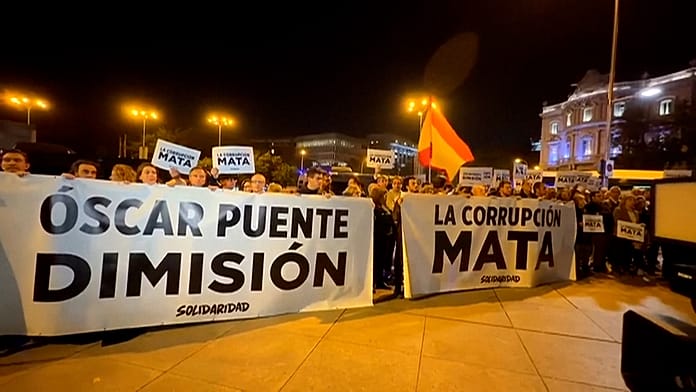
The crash has been described as one of the worst in Europe's modern history and Spain's deadliest train disaster since 2013, when 80 people died on the outskirts of Santiago de Compostela. Sanchez and other Spanish politicians cancelled all public engagements on Wednesday, including campaigning for next month's parliamentary elections. Alberto Nunez Feijoo, leader of the main opposition People's Party, said Spain has the right to know what is happening with its infrastructure. Spanish trade union CSIF has demanded the transport minister resign.