No Guarantee of an End to Houthi Attacks at Tehran Talks, but Parties Agree to Keep Talking
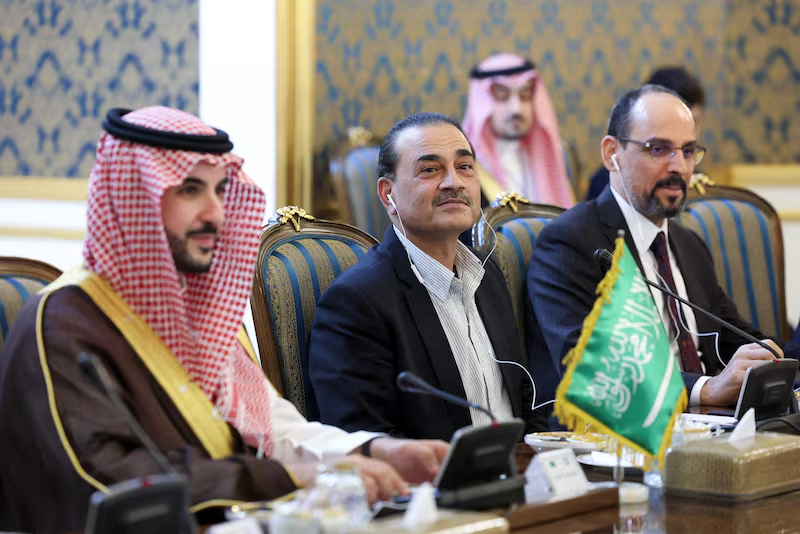
A meeting in Iran's capital Tehran between representatives of Saudi Arabia, Pakistan and Turkey produced no specific agreement on reducing tensions. The parties involved did, however, agree to continue the talks.
The meeting was held in Tehran on Monday as part of stepped-up diplomatic efforts to resolve the region's conflict. Saudi Arabia, Pakistan and Turkey are partners in the Mecca pact.
The delegation was led by Saudi Defence Minister Prince Khalid bin Salman. Pakistan's army chief, Field Marshal Asim Munir, and Turkey's intelligence chief, Ibrahim Kalin, also took part in the meeting.
After the meeting, Iranian state media said the parties had agreed to continue discussions. Regional sources briefed on the talks, however, claimed there had been no significant progress.
Representatives of Saudi Arabia, Pakistan and Turkey asked Iran to tell its backed Houthis to stop attacks on Saudi Arabia. Iran, however, claimed it does not have enough influence over its allies in Yemen to impose such a step.
No guarantee was obtained either on stopping Houthi attacks on Saudi Arabian cities. A Tehran source said Iran was ready to help on the issue, but the Houthis' position had not changed; their condition is that Saudi Arabia must lift its air blockade on Yemen before the fighting stops.
Instead, Iran asked its guests to use their close ties with the United States to persuade Washington to accept Tehran's proposal. Iran has proposed halting hostile activities across the whole region for two weeks; in return, gradually reopening the Strait of Hormuz would create a chance to restart negotiations, the sources said.
Another Yemeni source said Iranian officials had said final talks aimed at a lasting agreement with the Houthis should be held in Yemen's capital, Sanaa. A source close to Tehran said a second round of talks could be held soon, and the possibility of holding that second round in Turkey was not ruled out.
Tensions between Saudi Arabia and the Houthis began rising last July, when an airstrike hit Sanaa's international airport in Yemen's capital. The Houthis blamed Saudi Arabia; the Saudi-backed, internationally recognised Yemeni government admitted responsibility, saying the runway was targeted so an Iranian plane could not land without permission.
The Houthis then announced a policy of ‘blockade for blockade’ and declared a ban on Saudi shipping in the Red Sea. After shipping through the Strait of Hormuz was disrupted because of the Iran war, the Red Sea became an important alternative route for Saudi oil exports.
A regional source said one of the meeting's main agenda items was building a regional non-aggression network. Mohsen Rezaei, secretary of Iran's Supreme National Security Council, told state television the talks were ‘very good’ and that Iran and the three Mecca pact partners agreed regional countries themselves, rather than outside powers, must ensure their region's security.
Earlier this month, Iranian Foreign Minister Abbas Araghchi had offered help to facilitate dialogue between Saudi Arabia and the Houthis. Prince Khalid bin Salman last visited Tehran in April 2025, when he delivered a message from Saudi King Salman to Iran's then supreme leader.
Even after the Tehran meeting ended, signs of continuing tension emerged. The Saudi-led coalition in Yemen said it had intercepted and destroyed three ballistic missiles fired towards eastern Saudi Arabia, intercepted four drones aimed at the south, and later intercepted two more missiles fired towards Riyadh.