US and Japan agree to build a joint missile production facility in Japan for AMRAAMs
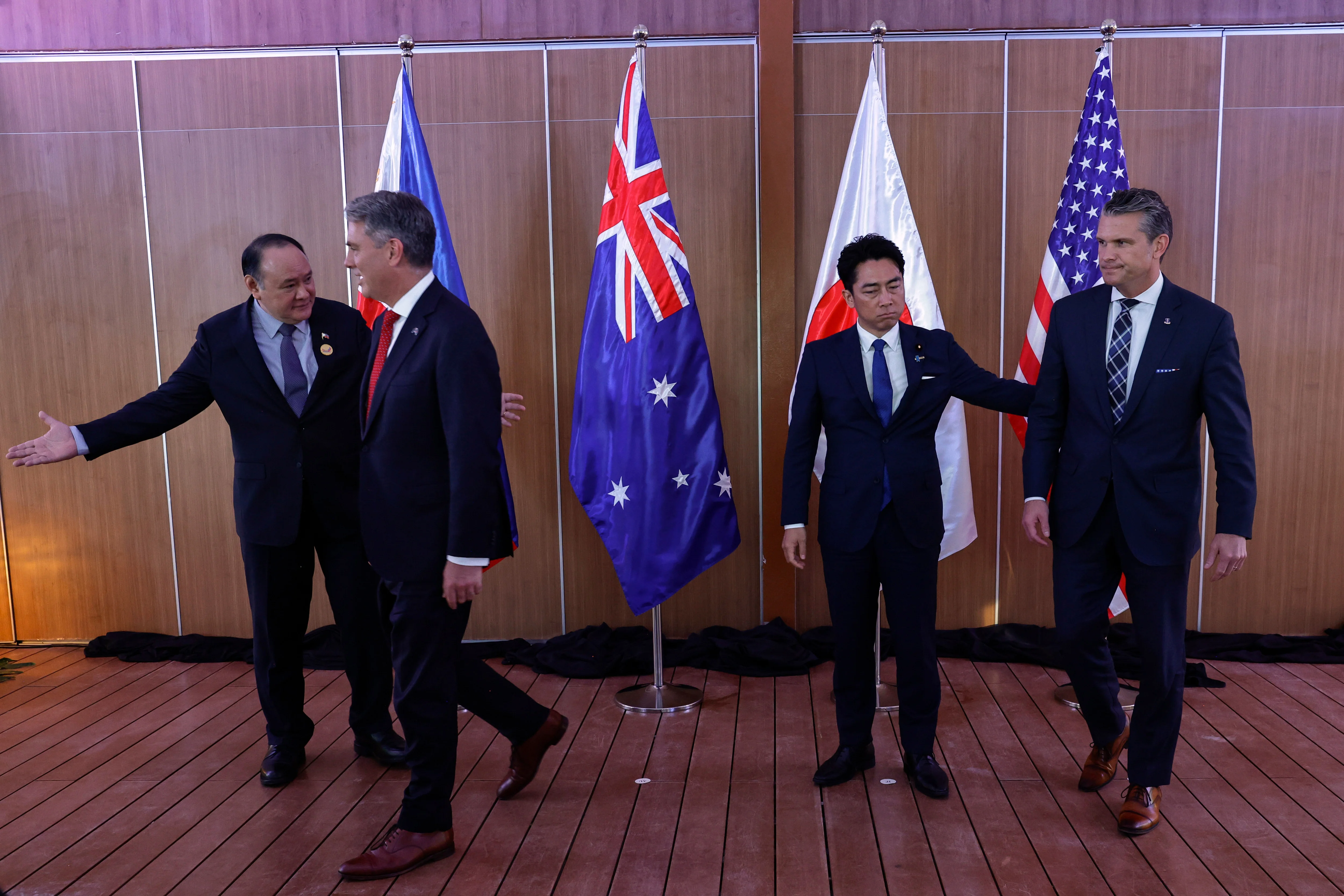
The United States and Japan have agreed to establish a facility in Japan for the joint production of advanced medium-range air-to-air missiles, Japan's defence chief has said.
It is the latest move by the allies, who have repeatedly expressed alarm over China's growing assertiveness in Asia.
Japanese Defense Minister Shinjiro Koizumi made the announcement at a news conference on Wednesday night in Cebu, in the central Philippines, where he met US Defense Secretary Pete Hegseth on the sidelines of an annual meeting of Southeast Asian defence chiefs and their major Asian and Western counterparts.
Koizumi raised concern on Thursday about China's increasing naval activity in southwestern Japan. He said three Chinese destroyers and a coast guard ship together crossed the Osumi Strait south of the southern main island of Kyushu this week and headed east to the Pacific Ocean. It was the first such fleet configuration his ministry has spotted, he said.
Koizumi cited the incident in a session on Thursday as an example illustrating the challenging security environment in the region. His ministry will keep watching the Chinese activity with a high level of interest, he said. Japan has been accelerating its military buildup in southwestern Japan to deter China.
The missiles to be produced under the joint effort, called Operation Supercharge, are essential for F-35 fighter jets, Koizumi said. The two sides agreed to build a final assembly and inspection plant in Japan for the Advanced Medium-Range Air-to-Air Missile, or AMRAAM. The US-made F-35s are among the world's most advanced aircraft and are also used by the Japanese military.
During his brief meeting with Hegseth in Cebu, Koizumi said he shared a sense of crisis regarding the increasingly severe regional situation, and that the two sides agreed to strengthen the deterrence and response capabilities of the Japan-US alliance with greater speed and intensity than ever before.
Koizumi said they reaffirmed the importance of a free and open international order based on the rule of law, which rejects any attempts to unilaterally alter the status quo through the use of force, coercion or other means.
Hegseth renewed the Trump administration's assurances of commitment to help deter aggression in the region in a separate meeting on Wednesday with ASEAN defence ministers, led by the host, Philippine Defense Secretary Gilberto Teodoro Jr. Like Koizumi, Hegseth did not mention China by name while expressing his security concerns.
Hegseth told the ASEAN defence chiefs that the approach being taken is strong, quiet and clear: strong enough to deter coercion and aggression, quiet enough to avoid needless escalation, and clear enough that friends, partners and potential adversaries understand precisely where the United States stands.
Hegseth assured the Philippines, Washington's oldest treaty ally in Asia, that the Trump administration will build robust deterrence against China's increasingly aggressive actions in the disputed South China Sea. Beijing claims the busy waterway, a key global trade route, virtually in its entirety.
Australian Defense Minister Richard Marles said in Cebu that his country's forces, along with allies like the US, will press on with efforts to defend the rule of law despite China's increasing assertiveness, including in the South China Sea. Australia protested last year after a Chinese J-16 fighter aircraft released flares and passed within 30 metres of an Australian P-8 Poseidon surveillance jet over the disputed waters. Freedom of navigation on the high seas is profoundly important for Australia, he said.
The Philippines, Vietnam, Malaysia and Brunei, all ASEAN members, along with Taiwan, also have overlapping claims in the South China Sea. Confrontations have particularly escalated between Chinese and Philippine coast guard and navy vessels in disputed shoals and outlying waters. Washington has warned that it is obligated to defend the Philippines if Filipino forces, ships and aircraft come under an armed attack, including in the South China Sea.
Beijing and Tokyo have a separate dispute over tiny Japanese-controlled islands in the East China Sea, with both sides often accusing the other of infringing on their maritime territory.