Israel's final results: Arab parties win a record 19 seats, no bloc reaches 61
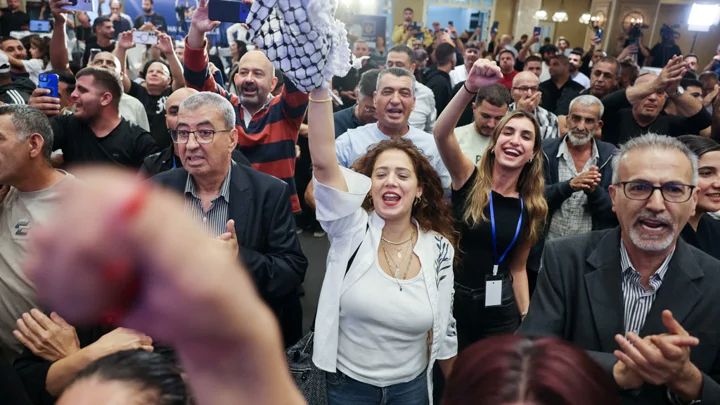
Arab-led political parties have won the highest number of seats in their history in Israel's 2026 national election. The Joint List and Ra'am together won 19 seats, the highest tally ever for Arab parties in the country's electoral history. In the previous Knesset the two parties held 10 seats combined; this time their total has nearly doubled. The result has increased the Arab parties' importance in the arithmetic of forming a new government.
Early on Friday, Israel's Central Elections Committee (CEC) published the final results of the 2026 national election. According to the results, the bloc led by Benjamin Netanyahu won 53 seats, the anti-Netanyahu bloc won 48 seats, and the Arab parties won 19 seats. However, no side achieved the 61-seat majority needed to form a government.
Despite the Arab parties' success, it has become difficult for the anti-Netanyahu bloc to make use of their support. Except for The Democrats, every other member party of the Zionist bloc has ruled out political cooperation with either Ra'am or the Joint List. As a result, although the Arab parties' 19 seats are positioned to give the anti-Netanyahu bloc a comfortable majority, whether that can be used in the political equation has become uncertain.
By party, Likud won the most seats with 27. Yashar won 21, B'Yachad 12, the Joint List 11, The Democrats 8, Ra'am 8, Israel Beiteinu 7, United Torah Judaism 7, Otzma Yehudit 7, Shas 6 and Religious Zionism 6.
Meanwhile, Yoaz Hendel's Reservists-Economic Party won 2.63 percent of the vote and failed to cross the 3.25 percent electoral threshold. Ofer Winter's People of Israel party won just 1.7 percent. The Haredi Public Party, which had promised an alternative political outlook for Israel's ultra-Orthodox Jewish community, won only 0.2 percent.
Overall turnout in the election was 77.9 percent, the highest in several decades. A total of 5,716,665 voters cast their ballots.
The Central Elections Committee has rejected allegations of widespread election fraud. In a statement published early on Friday, the committee restated remarks made the previous day by acting director Dean Livni. The fraud allegations surfaced after reports of a possible Qatari campaign to influence the vote outcome. On Thursday, Livni said: 'The reports published throughout the day have no basis.' He said the ongoing investigation into the allegations would not affect the final results submitted to the President, and that the investigation is not focused on any specific population group.
The full official report of the final election results is due to be handed to President Isaac Herzog next Wednesday. Before that, the Elections Committee will complete a final round of investigation into any errors or complaints about the results. The President will then hear recommendations from political party leaders on who should be tasked with forming the next government, meeting each party leader separately for that purpose.
Talks on forming a new government after the election are expected to continue for more than two months, since no side is close to achieving the required 61-seat majority. However, members of the new Knesset are due to be sworn in on November 10. On Wednesday, President Herzog urged party leaders to make every effort to avoid another election, saying: 'We must do everything possible to avoid another round of elections. So I expect everyone who comes here to take part in the discussions with an open mind.'
Both Prime Minister Benjamin Netanyahu and Gadi Eisenkot have expressed determination over forming the next government; both claim they will be the ones to form it. Tuesday's election was held after four years. Before that, Israel held five national elections in three consecutive years, the first four of which failed to produce a stable government. Although the new results have taken the Arab parties' seat count to a record level, the question of cooperating with them in government formation has now become one of the most important issues in Israel's political equation.