Spain train disaster clouds Sanchez re-election chances as minister points to human error

Another high-speed train collision in Spain, from which 69 bodies have been recovered, has plunged Prime Minister Pedro Sanchez's government into crisis. The bodies were recovered from wreckage strewn over the tracks and down an embankment in central Spain, just weeks before the snap general election he has called.
The disaster is a familiar one for Spain. Just nine months ago two trains crashed near Cordoba, killing 46 people. The new Toledo crash has shattered confidence in the country's rail network and in the Socialist-led government.
A formal investigation into the Toledo disaster has only just been launched, but the government moved quickly to take control of the narrative. From the first hours after the collision, Transport Minister Oscar Puente began suggesting human error was to blame.
On Friday Puente appeared before the press for a second time to set out what he called the objective facts of the crash and to counter growing criticism. The opposition People's Party (PP) is among those calling for his resignation as a moral and ethical move.
After expressing huge pain and sadness for the victims, Puente went on the offensive. He rejected talk of chronic underinvestment in infrastructure and insisted Spain's high-speed signalling safety system, the LZB, was neither old nor inadequate, noting that Germany and Austria use the same system.
The minister revealed the system has already failed 170 times so far this year, but called that normal and around the EU average. The problem, he said, surrounds what happens next, when the system fails and control of the line shifts to manual operation.
In this case, Puente highlighted a series of human errors: at one point a controller instructed a stalled train to restart, clearing it to advance at up to 160km/h (100 mph) even though a second train was stuck on the line up ahead.
The impending collision was clear from audio calls and on big screens in the control centre in Madrid. Puente confirmed the systems worked and those present could see what was happening, but the advancing train was never ordered to stop.
Asked whether he would resign, Puente said it was his duty to remain as minister, to face up to things, explain, improve the system and give confidence to people who want to travel by train and feel safe.
Paco Camas of pollster Ipsos pointed out that this is not only a very serious accident but the second in a very short time. An investigation into January's crash in Adamuz, near Cordoba, is still open, with initial reports suggesting a crack in the rails, very different from the latest collision. Camas warned such events destroy confidence not only in the railways but in institutions in general, and that in Spain people blame their government.
For Sanchez the crash is the latest in a spiral of crises. Allegations of corruption against his close relatives still persist, all denied. A sudden influx of migrants from Morocco this summer to the Spanish exclave of Ceuta drew opposition charges of incompetence and underfunding.
Later, the death of pensioner Maricarmen Abascal, who had been forcibly evicted from the home she lived in for more than 70 years, went viral and sparked housing protests across Spain. Most recent polls show the centre-right PP coming first and forming a coalition with the far-right Vox.
Prof Pablo Simon of Madrid's Carlos III University said that coalition has a majority in almost 95 percent of the simulations his team has run. He said Sanchez had been running a positive campaign to lure apathetic voters to the polls, but his side has now totally lost control of the agenda and the emotion of the campaign, making the election extremely difficult.
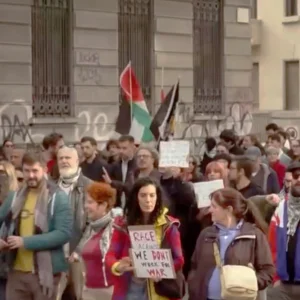
Small protests over the crash led by far-right groups have already taken place in Madrid, and large numbers of police are on standby this weekend ahead of further potential clashes organised online. Paloma, arriving at the city station on a half-empty train, said she is now scared of the high-speed network and angry at the government, adding that the crash would change everyone's votes completely. Lucia, who takes the high-speed AVE into Madrid each day, said she is scared too: two accidents with more than 100 dead mean things are really bad and have to change.