USTC in higher education for more than three decades, founded as Chattogram's first private university
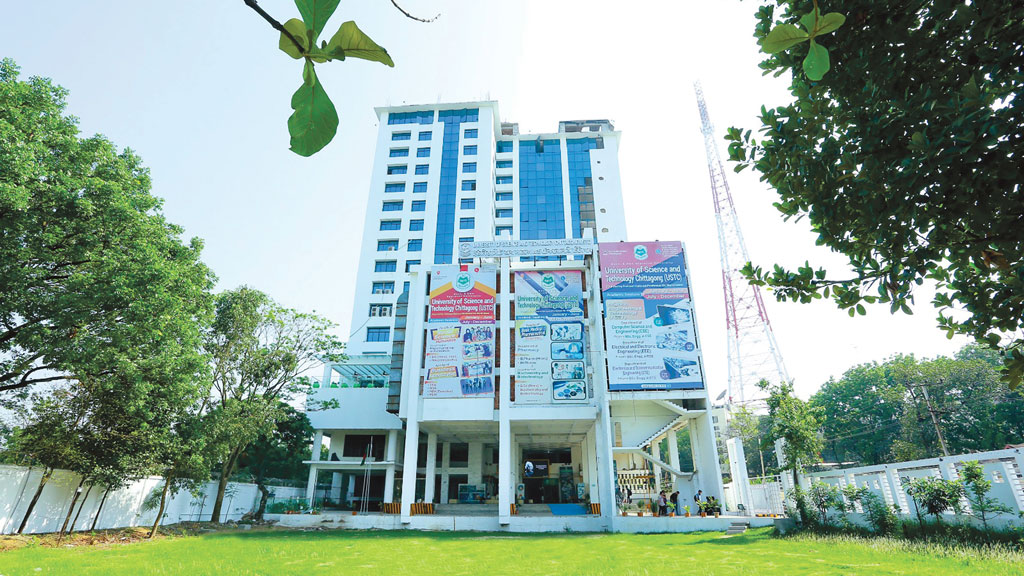
The University of Science and Technology Chittagong (USTC) has been contributing to higher education for more than three decades. It was founded as the first private university in the port city of Chattogram, and its founder was National Professor Nurul Islam.
The founder's vision was quality education, research and skilled manpower with human values. The institution says it has continued along that path towards modern, world-class higher education.
USTC's contribution to medical education is particularly notable. Its Institute of Applied Health Sciences (IAHS) began in 1989 with only 42 students. Now affiliated with Chittagong Medical University, the institute trains doctors as well as health workers with professional ethics, humanity and a research-oriented outlook.
Students from Bangladesh as well as Nepal, Bhutan, Sri Lanka, the Maldives, India, Pakistan, Saudi Arabia, the United Arab Emirates, Malaysia, Norway, the United States, Jordan, Palestine and Sudan have studied and are studying at USTC. Participation by students from different countries has created a multicultural learning environment.
Teaching is offered in subjects including Computer Science and Engineering, Electrical and Electronic Engineering, Biochemistry and Biotechnology, Pharmacy, Business Administration and English. Alongside theoretical education, emphasis is placed on practical training, technological skills and innovative thinking.
The permanent campus has smart classrooms, interactive flat panels, multimedia technology, high-speed internet, engineering and research laboratories, a central library, departmental seminar libraries, a modern auditorium and residential facilities. Debate, cultural activities, research, innovation competitions, sports and social service activities are also organised for students.
In line with the changing realities of higher education, USTC is emphasising implementation of Outcome Based Education (OBE). Its Institutional Quality Assurance Cell (IQAC) works on curriculum review, teacher training, modernisation of teaching methods and academic quality improvement. An accreditation process under the Bangladesh Accreditation Council (BAC) is also under way.
For research, the USTC Research Cell (URC) runs research activities for teachers and students. Initiatives include research grants, interdepartmental research, publication in international journals, research projects and opportunities to join international conferences. The institution's inclusion in the Nature Index is one aspect of its international research presence.
USTC is expanding international links through memoranda of understanding and collaboration with universities, research institutions and education organisations around the world. Joint research, teacher-student exchange, international training and seminars are part of that collaboration.
The institution's account says there is scope to widen research further in fields including artificial intelligence, health science, pharmaceutical research, biotechnology and engineering.