
Ebola deaths in Congo pass 5,000 with more than 10,300 confirmed cases
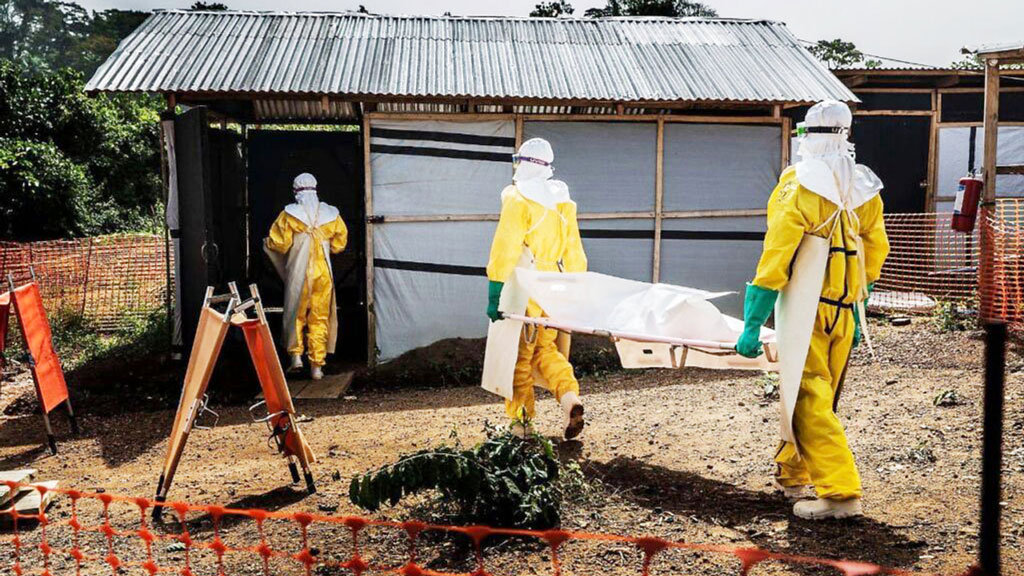
More than 5,000 people have died in the ongoing Ebola outbreak in the Democratic Republic of Congo (DR Congo) in Africa. According to government data from the country, Ebola infection has so far spread to 8 of its 26 provinces, and more than 10,300 people have been confirmed infected.
The outbreak began in May this year. Public health officials have said that in August it became the deadliest Ebola outbreak in the country's history. The death rate among those infected is currently 48.6 percent.
In its latest update, the country's health ministry said the epicentre of the Ebola epidemic is still Ituri province in the north-east. Because the region is conflict-affected, controlling the spread of the virus there has become difficult. Cases of Ebola infection have also been confirmed in Kenya, Nigeria and Uganda.
According to the United Nations, this is the 17th Ebola outbreak in the history of the Democratic Republic of Congo and, in terms of deaths, the second largest Ebola outbreak in the world.
The World Health Organization's (WHO) Africa office has said that to end this outbreak, key infection-control measures must be strengthened further. Access to affected areas must be increased, and communication and awareness work with local communities must be stepped up. Testing to identify the infected and treatment work are under way, and clinical trials of an Ebola vaccine are also in progress, it said.
According to a BBC report, the Bundibugyo strain of the Ebola virus is responsible for the current outbreak. However, no treatment or vaccine has yet been discovered against this strain of the virus.
The UN said DR Congo's previous deadliest Ebola outbreak ran from 2018 to 2020, when 2,299 people died. The deadliest Ebola outbreak in history occurred in West Africa from 2014 to 2016; according to WHO, more than 11,325 people died in that outbreak and the virus spread to several countries including Italy, the United Kingdom and the United States. The UN has warned that people are dying much faster in the current outbreak than before.
Ebola is a rare and deadly viral disease whose symptoms appear suddenly. When the disease becomes severe, vomiting and diarrhoea begin, and at one stage various organs of the body can fail. Some patients bleed inside and outside the body, though this does not happen to everyone. The virus can spread from one person to another through contact with infected bodily fluids such as the blood or vomit of an infected person.
Attacks on health workers have created a new challenge for efforts to treat the disease and control infection. Several health workers and a politician have been attacked while working to tackle Ebola.
At the start of this week, a nurse and another health worker were attacked while travelling to a place after receiving news of an Ebola infection; the nurse was killed and the other health worker seriously injured. According to UN-backed Radio Okapi, several local youths attacked them, accusing them of contaminating water sources and spreading the virus.
Last month, a politician was beaten to death for campaigning in favour of various Ebola prevention measures. In August, the Red Cross said its volunteers had been injured in 11 violent attacks in the first 100 days of the outbreak and an ambulance had been set on fire.
In Uganda, two people died and 20 infections were detected within days of the outbreak starting, though no new infections have been reported in the country since August. Travel restrictions on people entering Uganda from neighbouring DR Congo remain in force. In Kenya, 9 Ebola infections have been confirmed so far, and two of those people have died.
Nigeria's disease control centre said on Saturday that two people suspected of Ebola infection had been identified in the country; they have been kept in isolation and testing is under way. Earlier, at the start of October, an Ebola infection was confirmed in a woman in Nigeria, and she was later flown to Switzerland for better treatment. The European Centre for Disease Prevention and Control has said the risk of people in Europe being infected with Ebola is 'very low'.


