Middle East must not become an arena for big-power rivalry, Xi Jinping warns
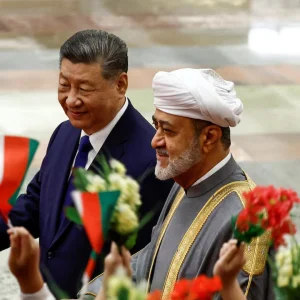
Chinese President Xi Jinping has warned that the Middle East and the Gulf region must not be turned into an arena for geopolitical rivalry and conflict between major powers. He made the remarks on Monday (2 November) in a meeting with Oman's Sultan Haitham bin Tariq Al-Said.
At the meeting, Xi said China is ready to work with Arab countries to establish lasting peace in the Middle East.
According to China's foreign ministry, Xi told the meeting that the world is currently going through a period of profound change. In his words, the Middle East and Gulf region should in no way become a field for big-power rivalry and geopolitical conflict, and protecting the region's peace and stability requires the joint effort and protection of all parties.
Saying China is always committed to ending war, he added that China is ready to offer its wisdom and solutions to resolve the security complexities of the region.
Xi said China is willing to strengthen communication and coordination with Arab countries, including the member states of the Gulf Cooperation Council (GCC), and to work together to restore peace in the Middle East and achieve long-term stability and security.
In a 20-point joint statement issued after the meeting, both sides expressed consensus on resuming normal and safe navigation in the Strait of Hormuz.
The same statement called on the United States and Iran to abandon any path of military conflict and choose peaceful means instead. It also urged a return to the agreement signed last June to resolve the conflict and to restart dialogue.
The report noted that while China has played a somewhat inactive diplomatic role in the Middle East, it has now stepped up its activity to ease tensions arising from the US-Israel versus Iran war.
Because of this conflict, shipping through the Strait of Hormuz has been disrupted, and energy and shipping costs in world markets have risen many times over, the report said.