California's proposed 5% billionaire wealth tax: two economists reach opposite conclusions
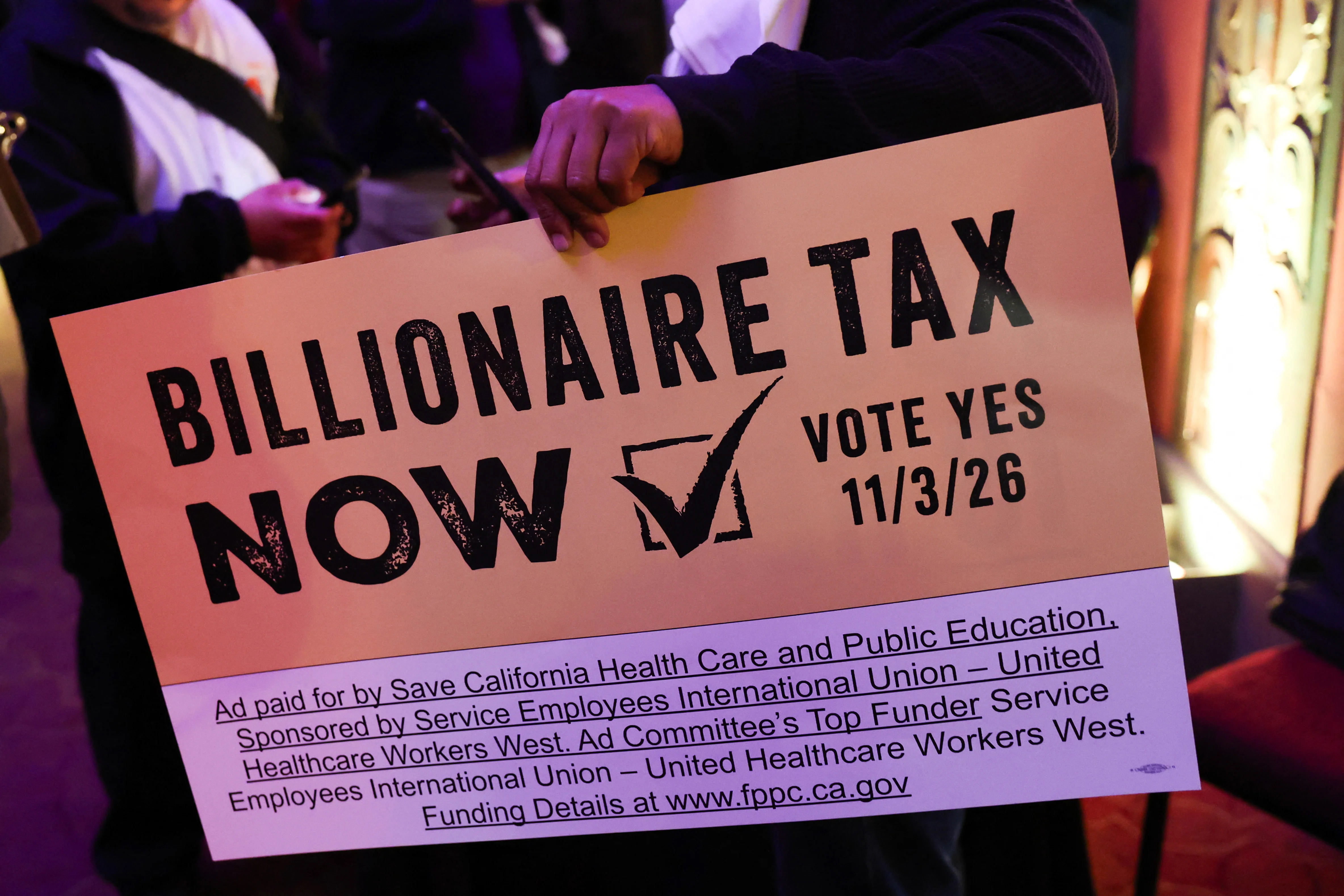
California voters are now deciding on a proposal that, if passed, would create America's first-ever wealth tax targeted only at billionaires. Called Proposition 40, the measure has split economists sharply. By one side's estimate, the tax would bring the state about $100 billion; the other side says it would instead cost the state $39 billion.
The structure of the proposal is fairly simple. A one-time 5% tax would be levied on billionaires' net worth, with some assets exempted. It would apply retroactively — to anyone who was a resident of California on January 1, 2026. Most of the money would go to healthcare for low-income Californians, helping to offset federal cuts to Medicaid.
California's tax history has seen big turning points before. In 1978, voters approved Proposition 13, a historic tax revolt that became an opening salvo of the Reagan revolution and its national movement to slash taxes. Proposition 40 could prove just as revolutionary — but in the opposite direction.
The most vocal economist in favour is Gabriel Zucman, who splits his time between UC Berkeley and the Paris School of Economics. He helped design the national wealth tax proposals of Senators Elizabeth Warren and Bernie Sanders during their presidential campaigns, and his new book carries a blunt title: We Need To Tax Billionaires. Zucman says that if California shows it can tax billionaires — the wealthiest, most powerful people in the world — it would be the beginning not only of a broader US-wide movement, paving the way for a federal wealth tax, but of an international movement as well.
According to the joint analysis by Zucman, Jasper Boll and Emmanuel Saez, California billionaires' wealth reached $2.3 trillion by mid-2026 — as large as all the annual income reported on the tax returns of all Californians. Fuelled largely by the AI boom, that wealth grew 144% between 2023 and 2025. Over the longer run, they found, the real wealth of the top 0.001% of households has multiplied 25 times from 1982 to 2026, while average real family income has only doubled.
That figure drives their revenue estimate. Taking 5% of the $2.3 trillion, then reducing the projection by 10% to account for avoidance, evasion and billionaires who ended their California residency before January 1, 2026, they estimate the tax could raise about $100 billion, with comparatively minor impacts on the income tax revenue the state already collects.
Zucman's argument is that a core problem with the existing tax system — in California, America and beyond — is that the superrich have seen their wealth snowball while paying relatively little in income taxes. Billionaires can structure their finances to generate little or no taxable income, making the income tax rate, in his words, totally irrelevant. He believes a wealth tax would help fight rising inequality, counteract the political power of the very rich and raise much-needed funds for everyone else.
On the other side is Stanford economist and Hoover Institution senior fellow Joshua Rauh. His analysis, co-authored with Benjamin Jaros, reaches a wildly different conclusion: the tax could drive billionaires out of California, damage the state's economy and blow a hole in the income tax revenue the state already collects from them. Rauh argues the tax would not raise $100 billion for the state; by their calculation, Proposition 40 would cost California $39 billion.
Rauh also argues that a 10% reduction for avoidance is too optimistic. By his count, at least seven famous billionaires had already left California before the January 1, 2026 residency cutoff — among them Larry Page, Sergey Brin, Peter Thiel, Don Hankey and Steven Spielberg — putting their fortunes beyond the tax's reach. Reports also note that some megabillionaires have fled the state since the tax was proposed.
The fight is not confined to research papers. According to a recent report in The New York Times, the superrich have poured a staggering $333 million into a group trying to defeat the proposition. On the other side, Senator Bernie Sanders led the campaign kickoff rally for the California Billionaire Tax Act at The Wiltern in Los Angeles on February 18, 2026, presenting the tax as an emergency funding source for the state's healthcare system.
A wealth tax is a bit like a property tax, except that it extends beyond real estate to a whole range of assets: stocks, superyachts, Basquiat paintings, dinosaur skeletons, Mercedes G Wagons and samurai swords — basically everything a rich person owns. Valuing assets that rarely change hands can get complicated: by the price originally paid, by what they might sell for today, or by how much they are insured for? That said, most of the wealth held by California billionaires is in publicly traded stocks, whose value is easy to determine.
Wealth taxes have been tried before around the world, however, and their track record is poor. Even Zucman, a wealth tax champion, writes in his new book that past wealth taxes have by and large been abject failures. France scrapped its wealth tax in 2018; its exemption for qualifying business assets, including shares in companies their owners ran, was a big loophole that drastically reduced revenue. Norway, by contrast, has had a wealth tax since 1892, and a recent working paper found that increases to it drove at most 100 rich people to leave, without doing much to dent the revenue gains. Critics note, though, that Norway is a nation, while moving from California to Nevada is a far smaller step.
To avoid those past failures, Proposition 40's designers have tried to plug the leaks. Unlike France's old tax, it would tax business holdings, including shares in companies that billionaires themselves run. And by making it a one-time, retroactive tax tied to where billionaires lived on January 1, 2026, they hope to stop billionaires escaping the bill simply by moving away. Whether those provisions will actually work is at the heart of the debate. Whatever the result, analysts say it could influence tax policy across the United States — and even spark a wider international movement on taxing the superrich.