
UK Settlement Wait Raised to 10 Years, Thousands of Bangladeshi Families Face Uncertainty
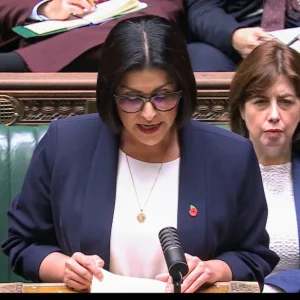
Home Secretary Shabana Mahmood has announced major changes to the rules and income thresholds for Indefinite Leave to Remain (ILR), the UK's permanent settlement status. Under the government's new ‘earned settlement’ framework presented to the House of Commons, the path to permanent residence for about 500,000 migrants lawfully living in the UK is set to become longer.
Those concerned say thousands of Bangladeshi migrants working as skilled workers and in various professions, along with their families, face uncertainty and financial crisis as a result.
They say the sudden policy will push many migrants into long-term uncertainty. While the government has described it as a fair and orderly immigration policy, migrant organisations are preparing to take a legal fight against it in the higher courts.
Under the new announcement, the default qualifying period for permanent residence in the UK has been raised directly from 5 years to 10 years. Until now, settlement could be applied for after completing 5 years subject to specific conditions.
The government has, however, kept some exemptions for high incomes and certain special professions. Those with annual income above 125,141 pounds, or who are on the Global Talent or Innovator Founder routes, will be able to apply for permanent residence after 3 years.
On the other hand, higher taxpayers, whose income is above 50,276 pounds, and certain important public sector professionals including NHS doctors, nurses and teachers, will keep the 5-year route to settlement. General skilled workers outside these categories will not be covered by the exemption and will have to wait 10 years.
A proposal initially to extend care workers' settlement period to 15 years was changed in the face of criticism. Subject to meeting a condition of at least 25,000 pounds in annual income, care workers will be able to obtain permanent residence on the old 5-year route. The exemption does not apply, however, to thousands of migrant workers in other sectors outside care.
Migrant rights activists and public law barristers have expressed anger over the retrospective effect of this rule. They say migrants who came to the UK hoping to complete 5 years are now in trouble.
Having to wait 10 years instead of 5 will mean families have to pay extra visa fees, the immigration health surcharge every year, and thousands of pounds in renewal costs. For a family of four, meeting this extended process and fees could mean a financial loss of more than 25,000 pounds, the report noted. The English language standard has also been made stricter, and the opportunity to reduce the time through voluntary work has been completely abolished.
A large portion of Bangladeshi migrants living in the UK are on care worker, various restaurant and business, and other skilled worker visas.
Barrister Salah Uddin Sumon said general skilled professionals outside the care sector and migrants who moved from the graduate route to work permits are trapped in this 10-year net. He said many families who dreamed of putting down permanent roots and whose 5 years were about to be completed have had their period suddenly extended, multiplying both mental and economic pressure.

