A New 'Voter Poll' for the US Election Day: The Survey That Will Explain Who Won and Why
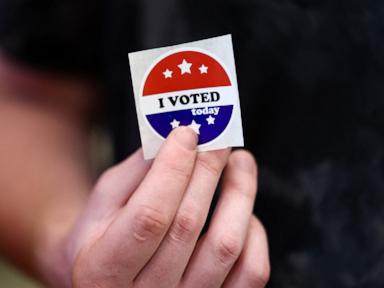
To answer who won and why in the United States election, ABC News is this year using a new survey method called the Voter Poll. The poll will provide much more data than the familiar exit polls of previous Election Day coverage, according to ABC News.
The Voter Poll will not only help answer who won and why; it will also explain what issues were important in the election and how important demographic groups voted. Anchors and analysts have long referred to exit polls during Election Day coverage, and for this year's hotly contested election the Voter Poll is being used in that role.
The poll is conducted by SSRS. This year there will be a Voter Poll in every state that has a Senate or governor's race — 45 states in all. There will also be a National Voter Poll covering all states, with a much larger sample size than in previous years.
The Voter Poll starts by contacting likely voters just before Election Day, using multiple methods including online contact, mailed postcards, text messages, email and phone calls.
Pre-election respondents who had not voted at the time of their initial response are recontacted starting at 5 p.m. local time the day before Election Day through poll closing time in each state on Election Day. Those recontacts confirm whether the person has voted, by what method they voted, and their final vote choices.
In addition, traditional exit polls are being conducted in a number of states, and those data will also be included in the Voter Poll. In an exit poll, interviewers stand outside polling places at randomly selected precincts and approach voters at specific intervals as they exit — for example, every fifth or ninth voter. Voters who agree to take part fill out a short, confidential questionnaire and place it in a ballot box.
Data from all of these methods of voter contact are then combined and appropriately weighted to provide a complete picture of all voters, no matter when or how they voted.
The Voter Poll questionnaire asks who people voted for, their demographics, their opinions about the candidates, and their opinions on important issues such as the economy, foreign policy, healthcare, immigration, crime and education.
Like any other survey, the Voter Poll is subject to sampling and nonsampling error. Before news organisations report its results or make projections, they conduct in-depth quality control checks, comparing the results to pre-election polls and the voting history in the state, and statisticians and political experts carefully review the data.
After the polls close, Voter Poll results are weighted using the actual vote to make the data more accurate. Voter Polls may be used to project the winners of races where the margin between the candidates is large, but most election projections are made after the polls close based on actual vote data.
On Election Day there is a strict embargo on any data from the early waves of the Voter Poll until 5 p.m. ET. By about 5:45 p.m. ET, some initial demographic information about voters and their views on key issues will be available on ABCNews.com. After the polls close in a state, the complete Voter Poll crosstabs — data tables showing how a variety of subgroups have voted — will be posted on ABCNews.com.
ABC News will not project a winner until the last scheduled poll closing time in each state. If a race is not projected at poll closing time, the projection will incorporate actual vote data and will be made as soon as the data warrant, with information updated constantly throughout the evening on ABCNews.com and on all ABC News programmes. The explainer was written by Dan Merkle, Executive Director of Polling, Elections, and Data Analytics at ABC News.