Trapped by its own spin habit: Bangladesh's domestic wickets keep hurting its Test cricket
Tony Heming, head of the BCB's turf management wing, asked in a WhatsApp group of the board's grounds policymakers for clarity on spin-friendly wickets. Grounds committee chairman Shahniyan Tanim replied to clear his doubt.
Heming said four-day cricket should keep a balance between bat and ball. If the selectors wanted spin to dominate, he said, scuffing the surface of the pitch before the toss would create spin-friendly behaviour for all kinds of slow bowlers.
Shahniyan replied that they wanted a wicket where spinners might get some extra help on the third and fourth days of a match.
The exact date of the exchange could not be confirmed, but a BCB source said it concerned this year's National Cricket League (NCL). A member of the selection panel claimed it was before the third round, when several Test cricketers were due to play as preparation for the Test series against the West Indies, and the demand for spin-helpful NCL wickets came from the team management.
Heming declined to comment in detail when asked, but he did not deny the conversation was about NCL wickets. He claimed it was not a Test-cricket conversation.
The BCB tried to bring some novelty to the NCL this year, with first-class cricketers receiving baggy caps and blazers for the first time. On the field, however, the picture is the same as before — spinners dominating as usual.
Explaining that dominance, the selector said the ball has changed this season. With the change of ball, fast bowlers are not getting much help, so spinners are bowling more. A spinner succeeding, he argued, does not necessarily mean the wicket is spin-friendly. In the previous three seasons the Duke ball was used, and pacers bowled 70 percent of the overs to the spinners' 30 percent. Now it is exactly reversed — spinners bowl 70 percent and pacers 30 percent.
After repeatedly struggling in Test cricket, the BCB had in recent years moved to change the character of domestic first-class wickets and the ball. That gave pacers such as Nahid Rana and Hasan Mahmud room to develop. In May, Bangladesh even dared to play Pakistan on a sporting wicket at home — and whitewashed them.
But without a proper Test culture in domestic first-class cricket and regular matches on sporting wickets, the problem remains. Preparing turning wickets by the old formula once shown by Chandika Hathurusingha does not bring good results either, as the latest West Indies series proved again.
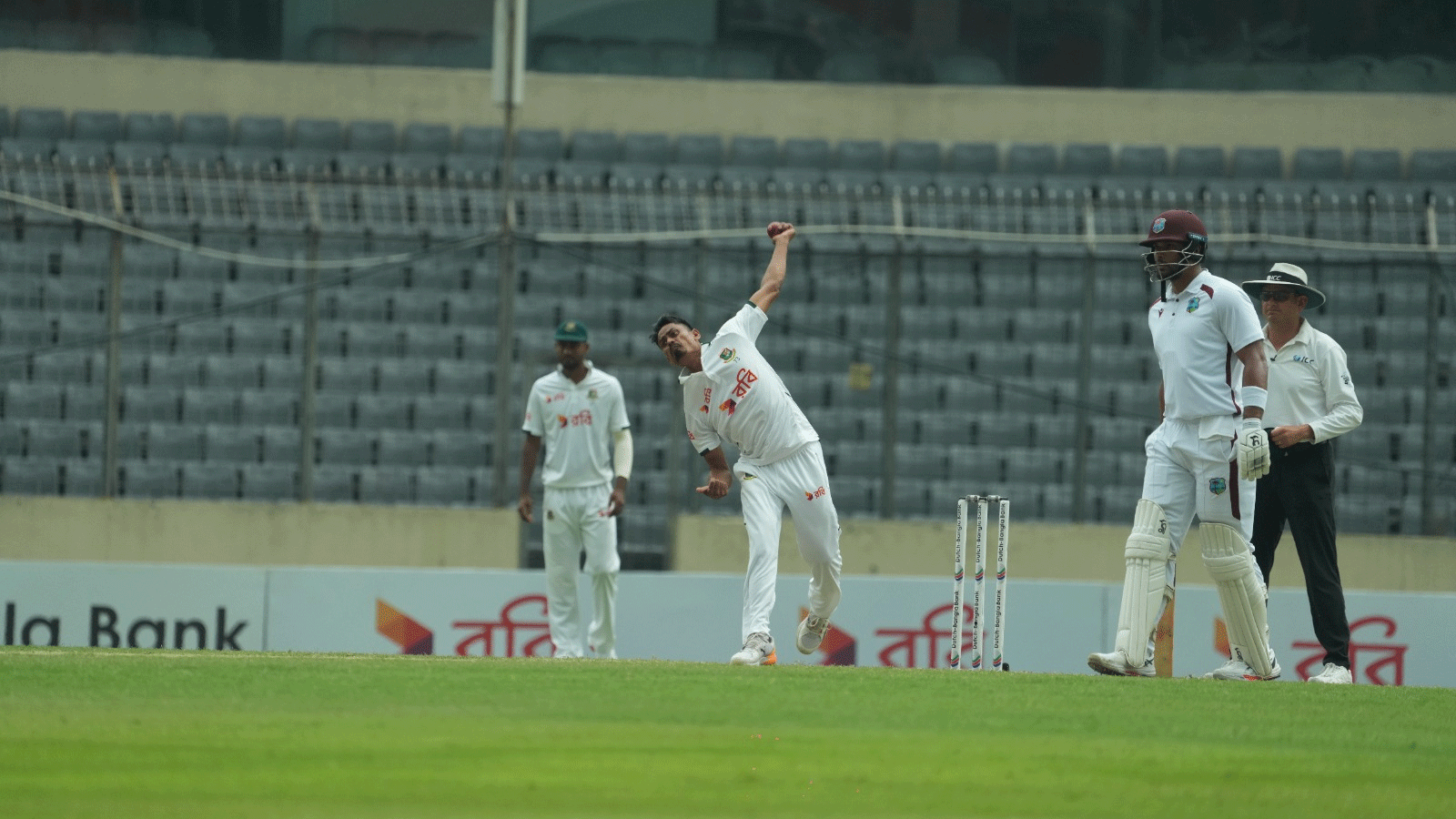
On the familiar Mirpur wicket, Bangladesh's three spinners took 8 of the 12 West Indies wickets to fall in the latest Test. The Caribbean spinners, by contrast, took 16 of Bangladesh's 20 wickets. Where the Warrican-led attack averaged 3.5 degrees of turn, Miraz and his colleagues could not get more than 2.5 degrees.
The spin dependence practised from domestic first-class cricket is the same trap Bangladesh falls into when it reaches Test cricket.