UK Apologises to Ukrainian Child Refugees Told to Study Russian, Announces Ukrainian GCSE
The UK government has apologised to Ukrainian child refugees who were told to study Russian in English schools, and has announced funding for a new GCSE in Ukrainian.
Schools minister Georgia Gould said so many students were pushed into having to do Russian. She said she was really sorry they were put in that position, and that it was really important they would have access to a Ukrainian GCSE.
The new qualification will be ready in England in 2028. It is being developed by the AQA exam board, with a £340,000 grant from the Department for Education.
Ukrainian government and community groups had lobbied for years on behalf of more than 30,000 Ukrainian children who fled to the UK after Vladimir Putin's invasion in 2022.
In a letter to the Department for Education in 2024, the education ministry in Kyiv said it was deeply concerned that, due to the lack of a Ukrainian GCSE, many Ukrainian children were being pressured by school staff to pass the Russian GCSE.
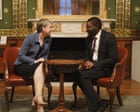
Gould made the announcement on a visit to St Mary's school in west London, the centre of a network of 13 Ukrainian-language schools in the UK. There she was introduced to Vitalii Andronik, 20, who had been urged to study Russian GCSE as a 15-year-old refugee. Gould told him she was really sorry he was put in that position.
Andronik welcomed the new qualification and the apology. He said it was too late for him, but he wanted future generations of refugees to study Ukrainian. It was, he said, a recognition of the trauma they went through, and brilliant news that children here would not have to study Russian in future.
Sofiia Chonka, 16, fled to London from Zakarpattia in south-west Ukraine in June 2024 with her family. She said she was told to study Russia in year 9 and said no; she did not want anything to do with Russia, which had killed her people and injured her family. Chonka, who has just started A-levels, said she would take the new exam when it was available.
Ukraine's education minister, Andrii Butenko, said he was grateful to the UK government. He said this would give Ukrainian children forced to leave their homes by Russia's war of aggression an equal opportunity to choose their native language as a GCSE subject, and that work with AQA and the DfE would continue to develop a high-quality and accessible qualification.
Inna Hryhorovych, head of St Mary's Trust, had been calling for the GCSE since Russia's annexation of Crimea in 2014. She said it was still hard to comprehend that they did not need to fight for it any more, and that her next campaign would be for a new A-level in Ukrainian.
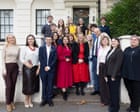
Gould said they were just doing GCSEs for now. She encouraged British children to study for the new qualification as an act of solidarity. When the plan was announced to a dozen Ukrainian pupils, they applauded and in unison said thank you in Ukrainian.